
Ask a room of recent nursing grads what finally made priority questions "click," and a surprising number say the same thing: the Mark Klimek lectures. The audio review has a near-cult following for one reason — it stops teaching facts and starts teaching decisions. This guide breaks down why that approach works, where it leaves gaps, and how to build the same instincts with modern tools.
What the Klimek lectures actually are
At their core, they're a rule-based review of the highest-yield, most-tested safety topics — acid–base, electrolytes, psychiatric medications, prioritization, and delegation. Instead of "here are 40 facts about potassium," you get a small number of decision rules you can apply to any question in that family. That compression is the point: the NCLEX rarely asks you to recall a number; it asks you to act on a patient, and rules travel to unfamiliar patients far better than memorized lists do.
Why the rule-based approach works on the NCLEX
The exam is a computerized adaptive test built around clinical judgment. A huge share of items are "what do you do first / which client do you see first." Students who memorize facts freeze on those; students who carry a decision order — ABCs, then Maslow, then safety, then acute-over-chronic — move quickly and correctly. That's exactly the muscle a rule-based review trains. We cover the same frameworks with worked examples in NCLEX Prioritization & Delegation Made Simple.
Where the lectures leave gaps
- They're a review, not a question bank. Rules tell you how to think; only practice under pressure tells you whether you actually can. You still need volume — thousands of questions with rationales.
- Audio-only is hard to search. When you're stuck on one rule at 11pm, scrubbing an audio file is slow. A one-card cheat sheet you can pull up in five seconds beats re-listening to a lecture.
- They pre-date the current NGN emphasis. The 2026 test plan leans harder on Next Gen NCLEX case studies — bow-tie, matrix, and unfolding items — which a classic audio review doesn't drill.
How to get the same wins in 2026
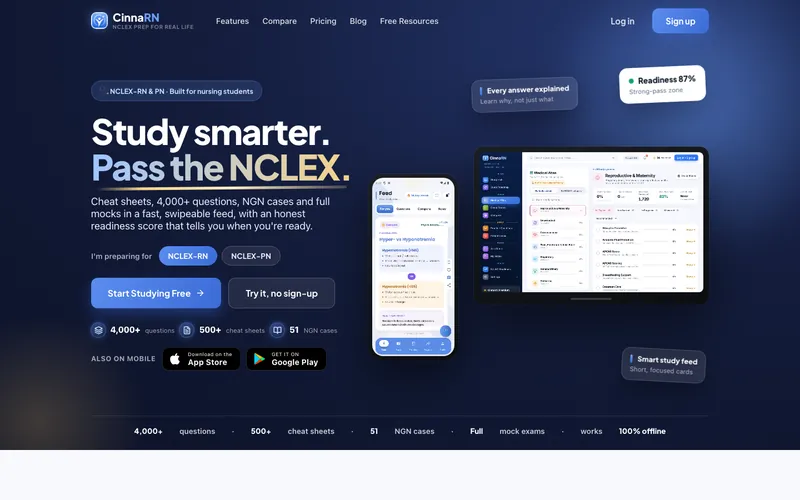
You don't have to choose between "rules" and "reps" — the strongest prep does both. That's the idea behind CinnaRN:
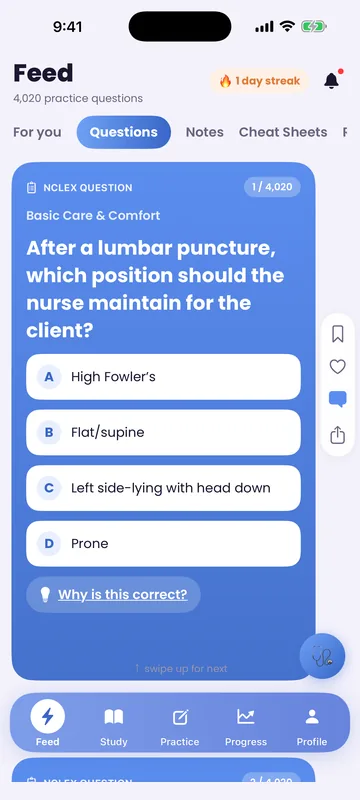
- Rule-based cheat cards. The same high-yield rules (acid–base, electrolytes, psych meds, priority order) condensed into swipeable cards you can review in any 5-minute gap — searchable, printable, and offline. Browse the free cheat-sheet library.
- "This vs That" compares. The lookalike pairs that trip people up — exactly what rules are meant to resolve — laid out side by side.
- Reps that stick. 4,000+ practice questions with rationales for every option, so the rules get tested, not just heard. Try it in the app.