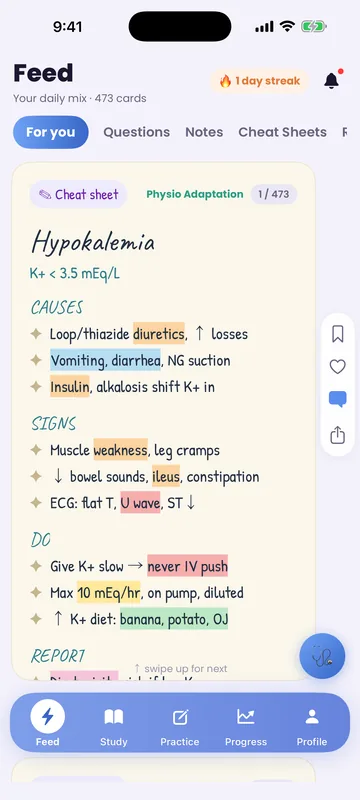
Hypokalemia from purging can cause fatal cardiac dysrhythmias - report low potassium immediately.
Before you read
Test yourself first: 2 questions
Question 1 of 2
A client with bulimia nervosa is at risk for which complication from repeated vomiting?
Answer: B. Self-induced vomiting causes electrolyte imbalance (hypokalemia → dysrhythmias), metabolic alkalosis, dental erosion, and esophageal tears. Monitor electrolytes and cardiac status.
Question 2 of 2
A client with anorexia nervosa is hospitalized. Which is a priority nursing concern?
Answer: B. Severe malnutrition causes life-threatening electrolyte imbalance and cardiac dysrhythmias; monitor electrolytes/cardiac status and watch for refeeding syndrome when nutrition resumes.
Keep the streak going with more questions like these, each with a full rationale.
What is bulimia nervosa?
Unlike anorexia, clients are often normal weight or slightly overweight, which can hide the disorder. Repeated purging causes serious electrolyte and dental complications.
Key points to remember
- Binge episodes involve eating large amounts with a sense of loss of control, followed by purging.
- Self-induced vomiting causes dental erosion, calluses on knuckles (Russell's sign), and parotid gland swelling.
- Frequent vomiting leads to hypokalemia and metabolic alkalosis, risking cardiac dysrhythmias.
- Clients often maintain near-normal weight, making the disorder less visible.
- Shame and secrecy surround the binge-purge cycle.
- Laxative misuse causes dehydration and electrolyte loss.
Signs & symptoms
- Binge then vomit / laxatives
- Russell's sign (knuckle calluses)
- Eroded enamel, parotid swelling
Nursing priorities
- Monitor electrolytes, especially potassium, and cardiac status.
- Supervise the client for at least one hour after meals to prevent purging.
- Help establish a normal, structured eating pattern to break the binge-purge cycle.
- Encourage identification of feelings and triggers that precede bingeing.
- Promote healthy coping skills and address self-esteem and control issues.
Labs & values
Patient teaching
- Rinse mouth with water rather than brushing immediately after vomiting to protect enamel.
- Eat regular structured meals to reduce the urge to binge.
- Report dizziness, palpitations, or weakness that may signal low potassium.
Red flags: report now
- Hypokalemia from purging can cause fatal cardiac dysrhythmias - report low potassium immediately.
- Metabolic alkalosis and dehydration from repeated vomiting require prompt correction.
- Hematemesis or severe esophageal pain may indicate an esophageal tear (Mallory-Weiss) and needs urgent evaluation.
References
Clinical references for this topic