Classic active TB signs are a chronic productive cough lasting more than three weeks, hemoptysis, night sweats, low-grade afternoon fever, and unintentional weight loss.
Before you read
Test yourself first: 3 questions
Question 1 of 3
A home health nurse is caring for a client with active pulmonary tuberculosis in the home. Which precaution is MOST important to teach the family?
Answer: B. Tuberculosis spreads by airborne droplet nuclei, so adequate ventilation and having the client cover the mouth when coughing reduce transmission. The client should remain home and away from crowds until cleared, but opening windows for ventilation directly addresses airborne spread. TB is not spread by sharing dishes or by casual surface contact.
Question 2 of 3
A client with AIDS is admitted with Pneumocystis jirovecii pneumonia (PCP). Which medication should the nurse anticipate as first-line treatment?
Answer: B. Trimethoprim-sulfamethoxazole (TMP-SMX) is the first-line treatment and prophylaxis for Pneumocystis jirovecii pneumonia. Isoniazid treats tuberculosis, acyclovir treats herpesviruses, and amphotericin B treats systemic fungal infections such as cryptococcosis, not PCP first-line.
Question 3 of 3
A nurse is fit-tested for an N95 respirator before caring for a client with active tuberculosis. What is the purpose of fit-testing?
Answer: B. Fit-testing ensures the N95 respirator forms a tight seal against the face so airborne particles cannot leak in around the edges. A user seal check is performed each time it is worn.
Keep the streak going with more questions like these, each with a full rationale.
What is tuberculosis?
It can be latent (infected, noninfectious, asymptomatic) or active (symptomatic, contagious). It matters because of its airborne transmission, drug-resistant strains, and the need for prolonged multi-drug therapy and strict isolation.
Tuberculosis illustrated
Key points to remember
- Classic active TB signs are a chronic productive cough lasting more than three weeks, hemoptysis, night sweats, low-grade afternoon fever, and unintentional weight loss.
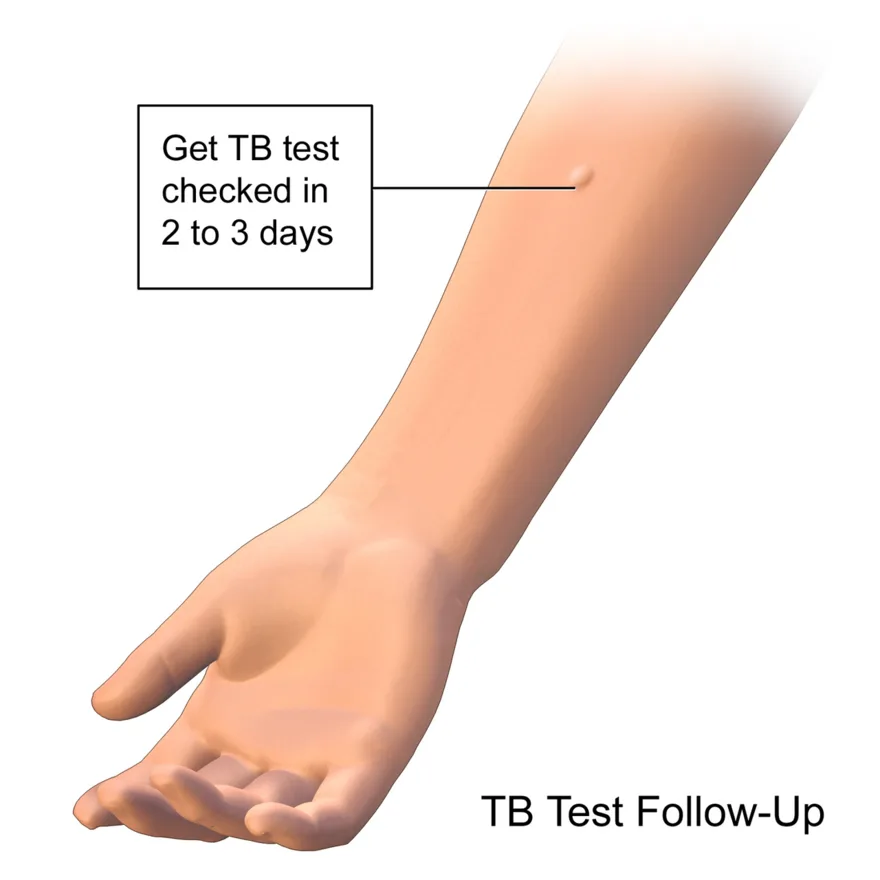
- A positive Mantoux (PPD) skin test shows induration, not redness, read at 48 to 72 hours; size threshold depends on risk group.
- A positive skin test or IGRA indicates exposure, but active disease is confirmed by sputum acid-fast bacilli smears and culture and chest x-ray.
- Three consecutive negative sputum AFB smears are required before airborne precautions can be discontinued.
- Latent TB is not contagious and shows a positive skin test with a normal chest x-ray and no symptoms.
- Rifampin turns body fluids (urine, sweat, tears) red-orange and is a harmless expected effect.
Signs & symptoms
- Chronic cough > 3 wk, hemoptysis
- Night sweats, weight loss, fever
- Fatigue, anorexia
Nursing priorities
- Place the patient in a negative-pressure airborne isolation room and use an N95 respirator.
- Obtain serial early-morning sputum specimens for acid-fast bacilli.
- Administer the multi-drug regimen (rifampin, isoniazid, pyrazinamide, ethambutol) and stress adherence.
- Use directly observed therapy to ensure the full 6 to 12 month course is completed.
- Teach the patient to cover the mouth when coughing and wear a mask when leaving the isolation room.
Labs & values
Patient teaching
- Take all TB medications exactly as prescribed for the full course, even after symptoms resolve, to prevent drug resistance.
- Take isoniazid with vitamin B6 (pyridoxine) to prevent peripheral neuropathy and avoid alcohol due to liver risk.
- Rifampin discolors body fluids orange and reduces the effectiveness of oral contraceptives, so use a backup method.
Red flags: report now
- Massive hemoptysis is a medical emergency requiring immediate intervention.
- Yellowing of the skin or eyes, dark urine, or right upper quadrant pain may indicate isoniazid or rifampin hepatotoxicity, hold the drug and notify the provider.
- Visual changes or color vision loss with ethambutol indicate optic neuritis and require stopping the drug.
- Stopping medications early breeds multidrug-resistant TB, a serious public health threat.
References
Clinical references for this topic