
Red flag to remember
Report severe abdominal pain, cramping, rectal bleeding, or no bowel movement after use.
What is bisacodyl?
It is used for constipation and bowel prep before procedures. It works in 6 to 12 hours orally and within 15 to 60 minutes as a suppository.
Key points to remember
- Stimulates colonic peristalsis by irritating the bowel wall.
- Oral tablets are enteric-coated and must be swallowed whole, not crushed or chewed.
- Do not take within 1 hour of milk, antacids, or PPIs because they dissolve the coating prematurely, causing cramping.
- Overuse can cause fluid and electrolyte loss (hypokalemia), dehydration, and laxative dependence.
- Suppositories act faster and may cause rectal burning.
- Should not be used with abdominal pain of unknown origin, suspected appendicitis, or bowel obstruction.
Nursing priorities
- Administer oral doses with water and separate from milk/antacids by at least 1 hour.
- Assess bowel sounds and rule out obstruction before giving.
- Monitor for bowel movement and document results.
- Monitor potassium and hydration with frequent or prolonged use.
- Encourage increased fluids, fiber, and activity for long-term bowel regularity.
Labs & values
Potassium3.5-5.0 mEq/L
Patient teaching
- Swallow tablets whole; do not crush, chew, or take with milk/antacids.
- Use only short term; chronic use leads to dependence.
- Increase water, dietary fiber, and exercise to prevent constipation naturally.
- Expect a bowel movement in 6 to 12 hours for tablets.
Red flags: report now
- Report severe abdominal pain, cramping, rectal bleeding, or no bowel movement after use.
- Report signs of hypokalemia such as muscle weakness, cramps, or palpitations with chronic use.
- Never give with suspected bowel obstruction, appendicitis, or undiagnosed abdominal pain.
References
Clinical references for this topic
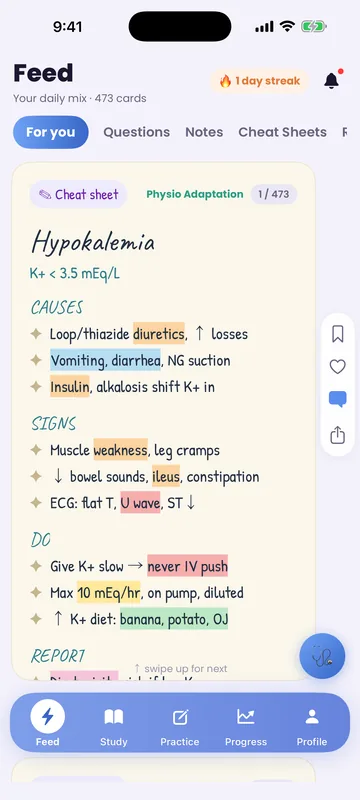
Study Bisacodyl in the app4,000+ NCLEX questions with a rationale on every answer, NGN case studies and timed mock exams.See how CinnaRN works
Start free Want more Pharmacological Therapies questions?We'll email you a free set on Bisacodyl. No account needed.
Was this helpful?