Virchow's triad (venous stasis, vessel wall injury, and hypercoagulability) explains why immobile, postoperative, and cancer patients are high risk.
Before you read
Test yourself first: 5 questions
Question 1 of 5
A nurse is caring for a Group B Streptococcus (GBS) positive client in labor. Which intervention is most important to prevent neonatal infection?
Answer: A. A GBS-positive client should receive intrapartum IV antibiotic prophylaxis, typically penicillin G, ideally at least 4 hours before delivery, to reduce the risk of early-onset neonatal GBS sepsis. Withholding antibiotics, treating only after birth, or relying on a vaginal wash does not provide adequate protection to the newborn.
Question 2 of 5
A nurse is caring for a client on the first postoperative day. Which intervention best prevents venous thromboembolism?
Answer: A. Early ambulation, along with prescribed measures such as sequential compression devices and anticoagulant prophylaxis, prevents venous stasis and reduces the risk of deep vein thrombosis and pulmonary embolism. Early mobility is a cornerstone of postoperative VTE prevention.
Question 3 of 5
A client with a fractured femur reports sudden chest pain, dyspnea, and confusion 24 hours after injury. Petechiae are noted across the chest. Which complication should the nurse suspect FIRST?
Answer: B. The classic triad of hypoxia/dyspnea, neurologic change, and a petechial rash 24-72 hours after a long-bone fracture indicates fat embolism syndrome. Deep vein thrombosis does not cause petechiae or acute confusion. Compartment syndrome is a limb finding, and pneumonia would not present with petechiae this early.
Question 4 of 5
Which assessment finding in a client 2 days after total knee arthroplasty most strongly suggests a deep vein thrombosis?
Answer: B. Unilateral calf swelling, warmth, and tenderness in the operative leg are the most reliable indicators of DVT after joint surgery. Bilateral ankle edema is common and nonspecific, serous incisional drainage and a low-grade fever on the first postoperative day are expected, and these do not point to DVT.
Question 5 of 5
A peripheral IV site is warm, reddened, and tender along the vein, with a palpable cord noted. What is the nurse's priority action?
Answer: B. These findings indicate phlebitis. The priority is to discontinue the IV, then apply a warm compress and restart in a different site. Continuing to infuse worsens vein irritation. Slowing the rate or only documenting does not address the inflamed vein.
Keep the streak going with more questions like these, each with a full rationale.
What is deep vein thrombosis prophylaxis?
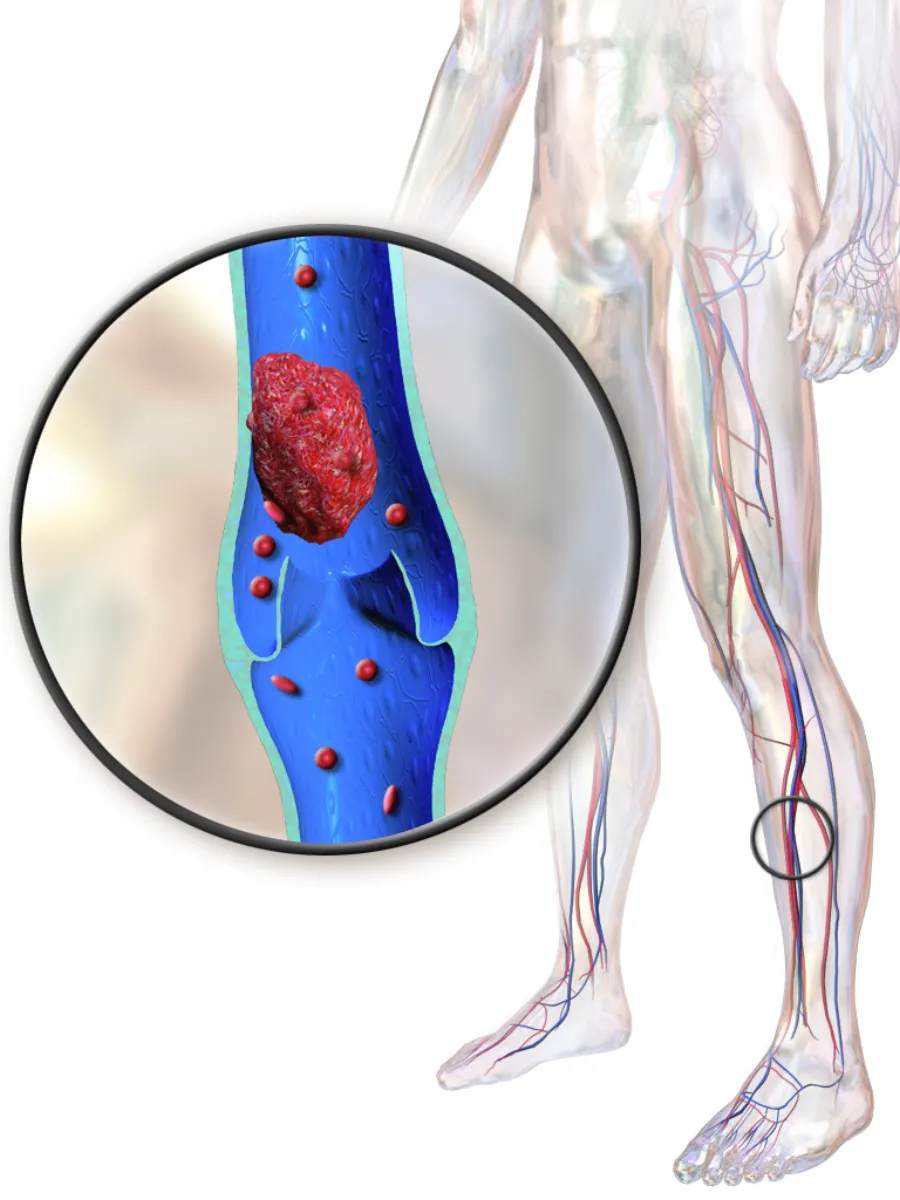
Risk rises with immobility, surgery (especially orthopedic), cancer, obesity, pregnancy, and clotting disorders, captured by Virchow's triad: venous stasis, endothelial injury, and hypercoagulability. Prevention combines mechanical methods (early ambulation, SCDs) and pharmacologic anticoagulation.
Deep Vein Thrombosis Prophylaxis illustrated
Key points to remember
- Virchow's triad (venous stasis, vessel wall injury, and hypercoagulability) explains why immobile, postoperative, and cancer patients are high risk.
- Mechanical prophylaxis includes early and frequent ambulation, leg/ankle exercises, sequential compression devices (SCDs), and graduated compression stockings.
- Pharmacologic prophylaxis commonly uses low-molecular-weight heparin (enoxaparin), low-dose unfractionated heparin, or fondaparinux for at-risk patients.
- Classic DVT signs are unilateral calf or leg swelling, warmth, redness, and pain or tenderness; many DVTs are asymptomatic.
- A sudden onset of dyspnea, pleuritic chest pain, tachycardia, and hypoxia suggests the clot has embolized to the lungs (PE).
- SCDs must stay on continuously except during ambulation and skin checks to be effective, and compression is contraindicated in an existing DVT.
Nursing priorities
- Encourage early and frequent ambulation and active/passive leg and ankle exercises to promote venous return.
- Apply sequential compression devices and/or graduated compression stockings correctly and keep them on except during ambulation and assessment.
- Administer prescribed prophylactic anticoagulants (e.g., enoxaparin) and monitor for bleeding.
- Ensure adequate hydration to avoid hemoconcentration and assess the legs each shift for swelling, warmth, and tenderness.
- Avoid pillows under the knees, crossing legs, and prolonged sitting that promote venous stasis.
Labs & values
Patient teaching
- Walk frequently, do ankle pumps and leg exercises, and avoid sitting or standing still for long periods.
- Stay well hydrated, do not cross your legs, and avoid tight clothing that restricts circulation.
- Report leg swelling, warmth, or pain, and any sudden shortness of breath or chest pain immediately.
Red flags: report now
- Sudden dyspnea, chest pain, tachycardia, and drop in oxygen saturation indicate possible pulmonary embolism; this is a life-threatening emergency.
- New unilateral leg swelling, warmth, redness, and calf pain suggest a DVT; do not massage or apply compression to the leg and notify the provider.
- Never apply or continue SCDs/compression stockings on a leg with a suspected or confirmed DVT, as this can dislodge the clot.
- Signs of bleeding from anticoagulant prophylaxis (bruising, blood in urine/stool, prolonged bleeding) must be reported.
References
Clinical references for this topic