
Red flag to remember
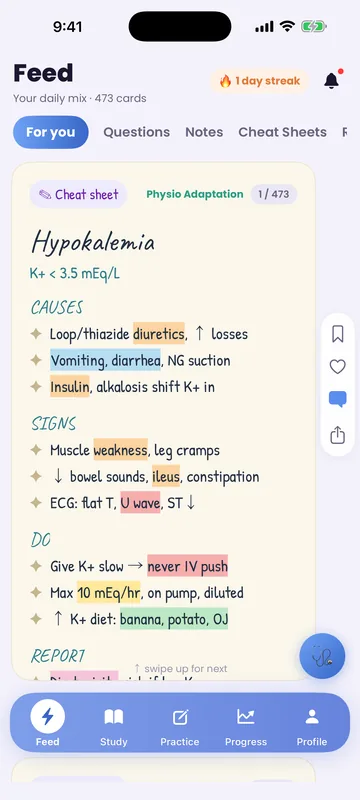
Signs of hypokalemia — muscle weakness, leg cramps, irregular or rapid heartbeat; report immediately.
What is fludrocortisone?
It causes the kidneys to retain sodium and water and excrete potassium, helping maintain blood pressure and electrolyte balance. It is often given together with hydrocortisone, which supplies the glucocorticoid component. The main monitoring concerns are fluid overload, hypertension, and hypokalemia.
Key points to remember
- Acts like aldosterone, promoting sodium and water retention and potassium excretion to support blood pressure.
- Used in Addison disease and salt-wasting conditions, usually alongside a glucocorticoid like hydrocortisone.
- Causes sodium and fluid retention, so weight gain, edema, and hypertension are expected effects to monitor.
- Promotes potassium loss, raising the risk of hypokalemia (muscle weakness, cramps, arrhythmias).
- Therapy is lifelong in chronic adrenal insufficiency and should not be stopped abruptly.
Nursing priorities
- Monitor blood pressure, daily weight, and for edema due to sodium and water retention.
- Monitor serum potassium and sodium and assess for signs of hypokalemia.
- Assess for fluid overload such as swelling, weight gain, and shortness of breath.
- Teach the patient not to stop the drug abruptly and to keep regular lab follow-up.
Labs & values
Serum potassium3.5-5.0 mEq/L (watch for hypokalemia)
Serum sodium135-145 mEq/L (may rise with retention)
Monitor blood pressure for hypertension
Monitor daily weight for fluid retention
Patient teaching
- Weigh yourself daily and report rapid weight gain or new swelling.
- Report muscle weakness, cramps, or palpitations that may signal low potassium.
- Do not stop the medication suddenly and keep all lab appointments.
- Report severe headaches or signs of high blood pressure.
- Carry medical alert identification noting adrenal insufficiency.
Red flags: report now
- Signs of hypokalemia — muscle weakness, leg cramps, irregular or rapid heartbeat; report immediately.
- Significant edema, rapid weight gain, or worsening hypertension — fluid overload; report now.
- Never discontinue abruptly in chronic adrenal insufficiency due to crisis risk.
References
Clinical references for this topic

Study Fludrocortisone in the app4,000+ NCLEX questions with a rationale on every answer, NGN case studies and timed mock exams.See how CinnaRN works
Start free Want more Pharmacological Therapies questions?We'll email you a free set on Fludrocortisone. No account needed.
Was this helpful?