Blood glucose usually > 250 mg/dL with ketones in blood/urine
Before you read
Test yourself first: 4 questions
Question 1 of 4
A client with type 1 diabetes is found drowsy, with deep rapid (Kussmaul) respirations and a fruity breath odor. The nurse suspects:
Answer: B. Kussmaul respirations and fruity (acetone) breath with hyperglycemia indicate diabetic ketoacidosis (DKA). Anticipate IV fluids, insulin, and electrolyte monitoring.
Question 2 of 4
During treatment of diabetic ketoacidosis, the client's blood glucose falls to 250 mg/dL while the IV insulin infusion continues. Which change in IV fluids should the nurse anticipate?
Answer: A. When blood glucose reaches about 200 to 250 mg/dL in DKA, dextrose (such as 5 percent dextrose) is added to the IV fluids. This allows the insulin infusion to continue clearing ketones and closing the anion gap while preventing hypoglycemia.
Question 3 of 4
A client in diabetic ketoacidosis exhibits deep, rapid, labored breathing. The nurse recognizes this respiratory pattern as which of the following?
Answer: A. Kussmaul respirations are deep, rapid, and labored breaths that occur as a compensatory response to metabolic acidosis, classically seen in diabetic ketoacidosis. The body attempts to blow off carbon dioxide to raise the blood pH.
Question 4 of 4
A client in diabetic ketoacidosis is started on IV insulin. The nurse monitors closely for which electrolyte shift?
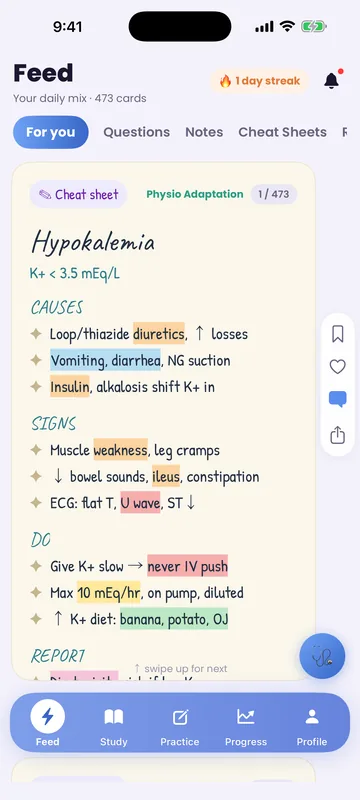
Answer: B. As insulin drives glucose and POTASSIUM into cells, serum potassium falls — hypokalemia can be life-threatening. Monitor K⁺ and cardiac rhythm closely.
Keep the streak going with more questions like these, each with a full rationale.
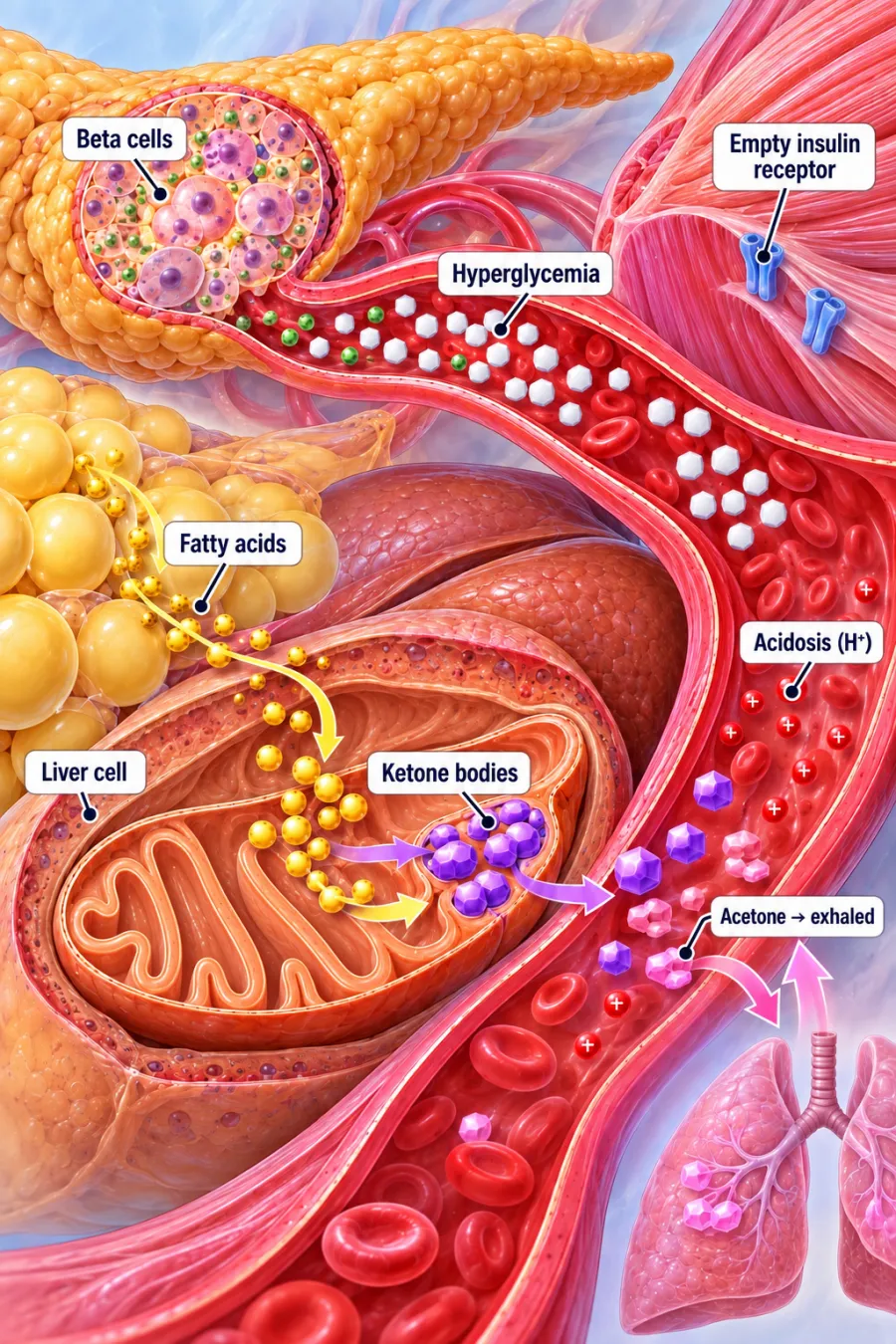
Diabetic Ketoacidosis (DKA) illustrated
Key points to remember
- Blood glucose usually > 250 mg/dL with ketones in blood/urine
- Kussmaul respirations (deep, rapid) and fruity (acetone) breath
- Polyuria, polydipsia, dehydration, and altered mental status
- Metabolic acidosis: arterial pH < 7.35, low bicarbonate
Signs & symptoms
- Kussmaul breaths, fruity breath
- Polyuria, polydipsia, dehydrated
- ↑ ketones, ↓ HCO3, ↓ pH
Nursing priorities
- IV fluids first — 0.9% normal saline to correct dehydration
- Regular insulin IV infusion to lower glucose gradually
- Replace potassium — insulin drives K⁺ into cells and can cause hypokalemia
- Add dextrose to fluids when glucose nears 200–250 to avoid hypoglycemia
Labs & values
Patient teaching
- Never skip insulin, even when sick; check glucose and ketones during illness
Red flags: report now
- Falling potassium during insulin therapy — monitor and replace before it drops
- Declining LOC or pH < 7.0 — escalate immediately
References
Clinical references for this topic