A rigid, painful uterus with bleeding is an emergency; notify the provider and prepare for delivery.
Before you read
Test yourself first: 3 questions
Question 1 of 3
A multiparous client in active labor suddenly reports severe, constant abdominal pain. The nurse notes a rigid, board-like uterus and dark vaginal bleeding. Which complication does the nurse suspect?
Answer: B. Sudden constant pain, a rigid board-like uterus, and dark vaginal bleeding are classic signs of placental abruption (abruptio placentae). Placenta previa typically presents with painless bright-red bleeding. Uterine rupture often features a tearing sensation and loss of fetal station, and prolapsed cord presents with fetal bradycardia after membrane rupture.
Question 2 of 3
A client at 34 weeks gestation presents with sudden onset of dark red vaginal bleeding and a rigid, board-like, painful abdomen. The nurse recognizes these findings as most consistent with which condition?
Answer: A. Placental abruption (abruptio placentae) classically presents with painful dark red bleeding and a rigid, tender, board-like uterus due to bleeding into the myometrium. Placenta previa typically causes painless bright red bleeding. This presentation requires emergency evaluation.
Question 3 of 3
A client at 34 weeks gestation arrives with dark red vaginal bleeding, sharp constant abdominal pain, and a board-like rigid uterus. Which complication is the nurse's priority concern?
Answer: B. Abruptio placentae (premature separation of the placenta) presents with painful dark red bleeding, a rigid tender uterus, and possible signs of hypovolemic shock and fetal distress. It is an emergency because of maternal hemorrhage and DIC risk. Placenta previa is painless; the other options do not match.
Keep the streak going with more questions like these, each with a full rationale.
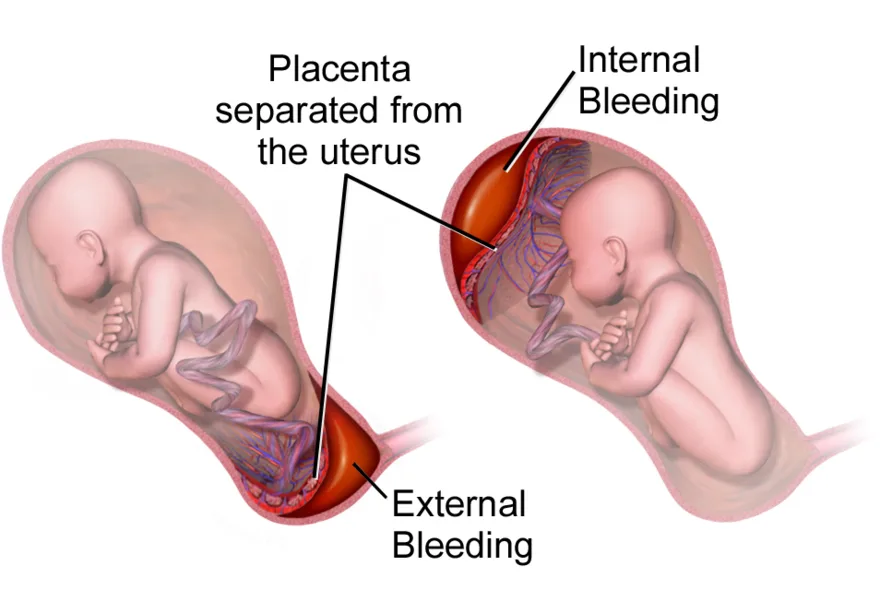
What is abruptio placentae?
The separation causes bleeding behind the placenta, cutting off fetal oxygen and threatening both mother and fetus. The hallmark is painful, dark-red vaginal bleeding with a rigid, board-like, tender uterus. Common causes include hypertension, cocaine use, abdominal trauma, and prior abruption. Memory aid: Abruption = Painful, rigid abdomen.
Abruptio Placentae illustrated
Key points to remember
- Bleeding is dark red and painful, though it may be concealed behind the placenta with little visible blood.
- The uterus is firm, rigid, board-like, and tender, often with increased tone and frequent contractions.
- Concealed hemorrhage can cause maternal shock that is out of proportion to visible blood loss.
- Disseminated intravascular coagulation (DIC) may develop as clotting factors are consumed.
- Fetal heart rate often shows late decelerations, bradycardia, or loss of variability from impaired oxygenation.
Signs & symptoms
- Rigid board-like uterus, tender
- Concealed bleeding possible
- Fetal distress, ↓ BP, shock
Nursing priorities
- Assess and continuously monitor fetal heart rate and uterine activity for signs of distress.
- Establish large-bore IV access, give fluids, and prepare for blood product replacement.
- Monitor maternal vital signs and measure blood loss, watching for shock and DIC.
- Position the mother on her left side with oxygen by face mask to improve fetal oxygenation.
- Prepare for emergency cesarean birth if the mother or fetus is unstable.
Labs & values
Patient teaching
- Seek care immediately for abdominal pain with bleeding or a hard, painful abdomen.
- Avoid cocaine and tobacco, which strongly increase abruption risk.
- Manage chronic hypertension and keep all prenatal appointments.
Red flags: report now
- A rigid, painful uterus with bleeding is an emergency; notify the provider and prepare for delivery.
- Report signs of shock or bleeding from IV sites, gums, or incisions, which suggest DIC.
- Report sudden cessation of fetal movement or a non-reassuring fetal heart rate pattern immediately.
- Never perform a vaginal exam until placenta previa has been ruled out by ultrasound.
References
Clinical references for this topic