Common triggers: infection, trauma, surgery, dehydration, and sudden stopping of long-term steroids.
Before you read
Test yourself first: 3 questions
Question 1 of 3
A client is admitted in addisonian crisis. Which laboratory result does the nurse expect and act on?
Answer: A. Adrenal crisis features cortisol and aldosterone deficiency. The expected and dangerous lab finding is hyperkalemia (along with hyponatremia and hypoglycemia), which can cause life-threatening dysrhythmias. The nurse monitors the cardiac rhythm and gives fluids, steroids, and potassium-lowering measures as ordered.
Question 2 of 3
A nurse is monitoring a client with myasthenia gravis who suddenly develops increased muscle weakness, excessive salivation, abdominal cramping, and diarrhea about one hour after a dose of pyridostigmine. The nurse recognizes these findings as which complication?
Answer: B. Cholinergic crisis results from excessive anticholinesterase medication and produces increased weakness along with muscarinic effects: excessive salivation, sweating, abdominal cramping, diarrhea, and small pupils. It typically occurs shortly after a dose. Myasthenic crisis from undermedication causes weakness without these cholinergic GI and secretory signs.
Question 3 of 3
A client with Addison's disease is admitted in adrenal (Addisonian) crisis. Which combination of laboratory findings does the nurse expect?
Answer: A. Adrenal crisis results from cortisol and aldosterone deficiency. Aldosterone loss causes sodium and water loss with potassium retention, producing hyponatremia and hyperkalemia. Cortisol deficiency contributes to hypoglycemia. The classic triad is hyponatremia, hyperkalemia, and hypoglycemia.
Keep the streak going with more questions like these, each with a full rationale.
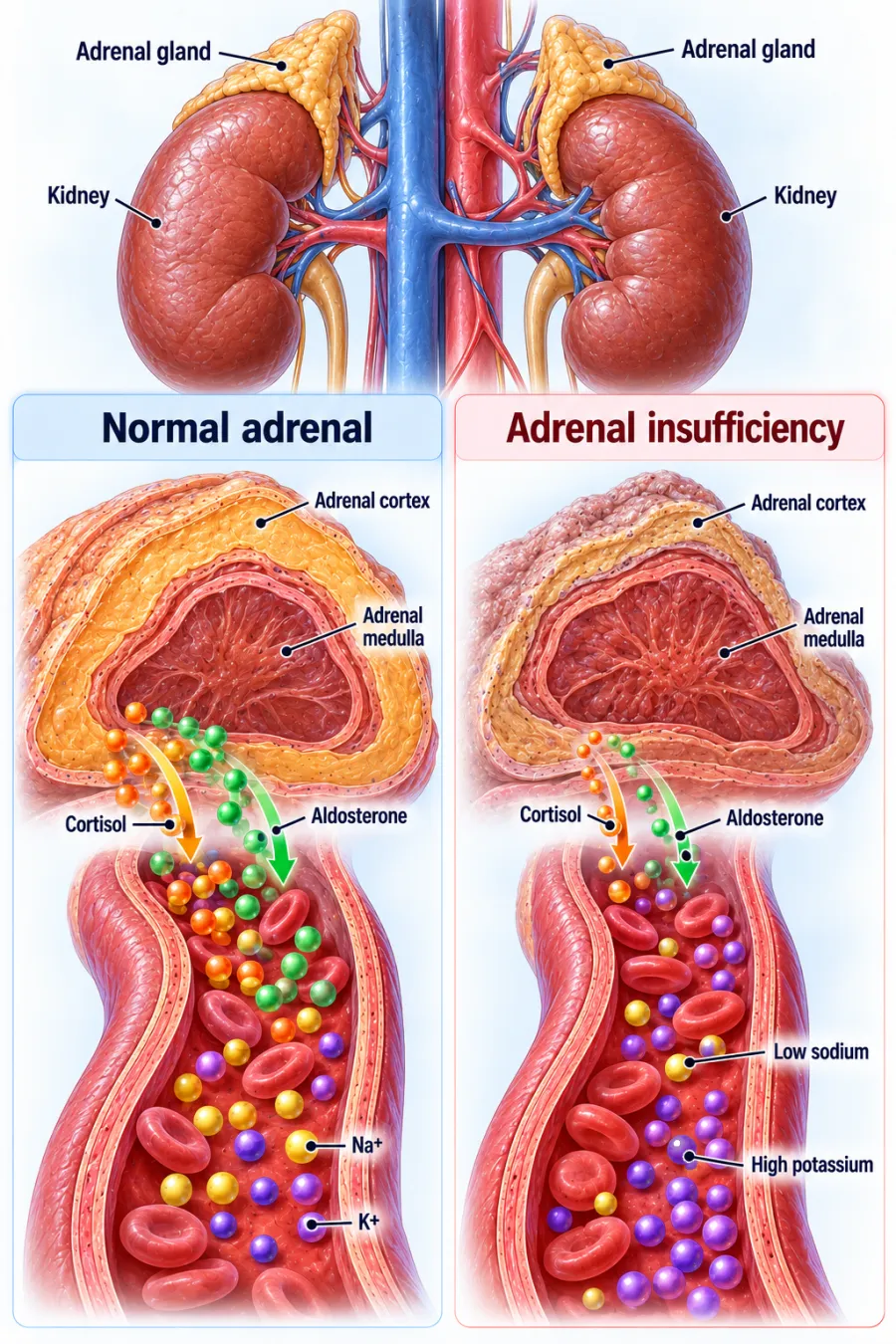
Adrenal Crisis illustrated
Key points to remember
- Common triggers: infection, trauma, surgery, dehydration, and sudden stopping of long-term steroids.
- Hallmarks are severe hypotension and vascular collapse (shock), along with hyponatremia, hyperkalemia, hypoglycemia, and dehydration.
- Other signs include profound weakness, nausea/vomiting, abdominal and flank pain, fever, and altered mental status.
- Immediate treatment is IV hydrocortisone (e.g., 100 mg) and rapid IV fluids with 0.9% normal saline (often with dextrose for hypoglycemia).
- Hyperkalemia and hyponatremia result from aldosterone deficiency; cortisol deficiency causes hypoglycemia and inability to tolerate stress.
- Patients on chronic steroids need stress-dose increases during illness, surgery, or trauma to prevent crisis.
Common causes
- Stopped steroids abruptly
- Stress, infection, surgery
Signs & symptoms
- Severe hypotension → shock
- ↓Na, ↑K, ↓glucose
- N/V, weakness, fever, confusion
Nursing priorities
- Administer IV hydrocortisone immediately as the priority intervention.
- Give rapid IV fluid resuscitation with normal saline to correct hypotension and dehydration.
- Monitor blood pressure, heart rate, blood glucose, and continuous cardiac rhythm for hyperkalemia-induced dysrhythmias.
- Monitor serum sodium, potassium, and glucose, and treat hypoglycemia with IV dextrose.
- Minimize physical and emotional stress and provide a quiet environment until stabilized.
Labs & values
Patient teaching
- Never stop steroids abruptly; doses must be tapered and increased ('stress dosing') during illness, infection, or surgery.
- Wear a medical alert bracelet and carry an emergency injectable hydrocortisone kit.
- Report fever, vomiting, diarrhea, or injury promptly, as these can trigger crisis and require extra steroids.
- Recognize early warning signs: weakness, dizziness, nausea, and salt craving.
Red flags: report now
- Profound hypotension/shock unresponsive to fluids — give hydrocortisone without delay; do not wait.
- Peaked T waves or dysrhythmias from hyperkalemia — treat and notify provider immediately.
- Never abruptly discontinue corticosteroids in steroid-dependent patients — can precipitate crisis.
References
Clinical references for this topic