Worsening confusion, lethargy, or a decreasing level of consciousness with high ammonia needs immediate reporting.
Before you read
Test yourself first: 3 questions
Question 1 of 3
The nurse reviews a lithium level of 2.1 mEq/L. What does this result indicate?
Answer: A. The therapeutic lithium range is 0.6-1.2 mEq/L, with levels above 1.5 considered toxic. A level of 2.1 indicates lithium toxicity, which can cause coarse tremor, confusion, and seizures, requiring the dose to be held and the provider notified.
Question 2 of 3
A nurse is assessing fetal station during a vaginal exam and documents the presenting part at 0 station. What does this indicate?
Answer: B. Station describes the level of the presenting part relative to the ischial spines. Zero station means the presenting part is at the level of the ischial spines and is engaged. Negative stations are above the spines; positive stations are below, approaching the perineum.
Question 3 of 3
A client with liver failure has a serum ammonia that is markedly elevated. Which clinical change does the nurse monitor for?
Answer: A. Elevated serum ammonia is associated with hepatic encephalopathy. The nurse monitors for altered mental status, confusion, and asterixis, since the failing liver cannot convert ammonia to urea.
Keep the streak going with more questions like these, each with a full rationale.
What is ammonia level?
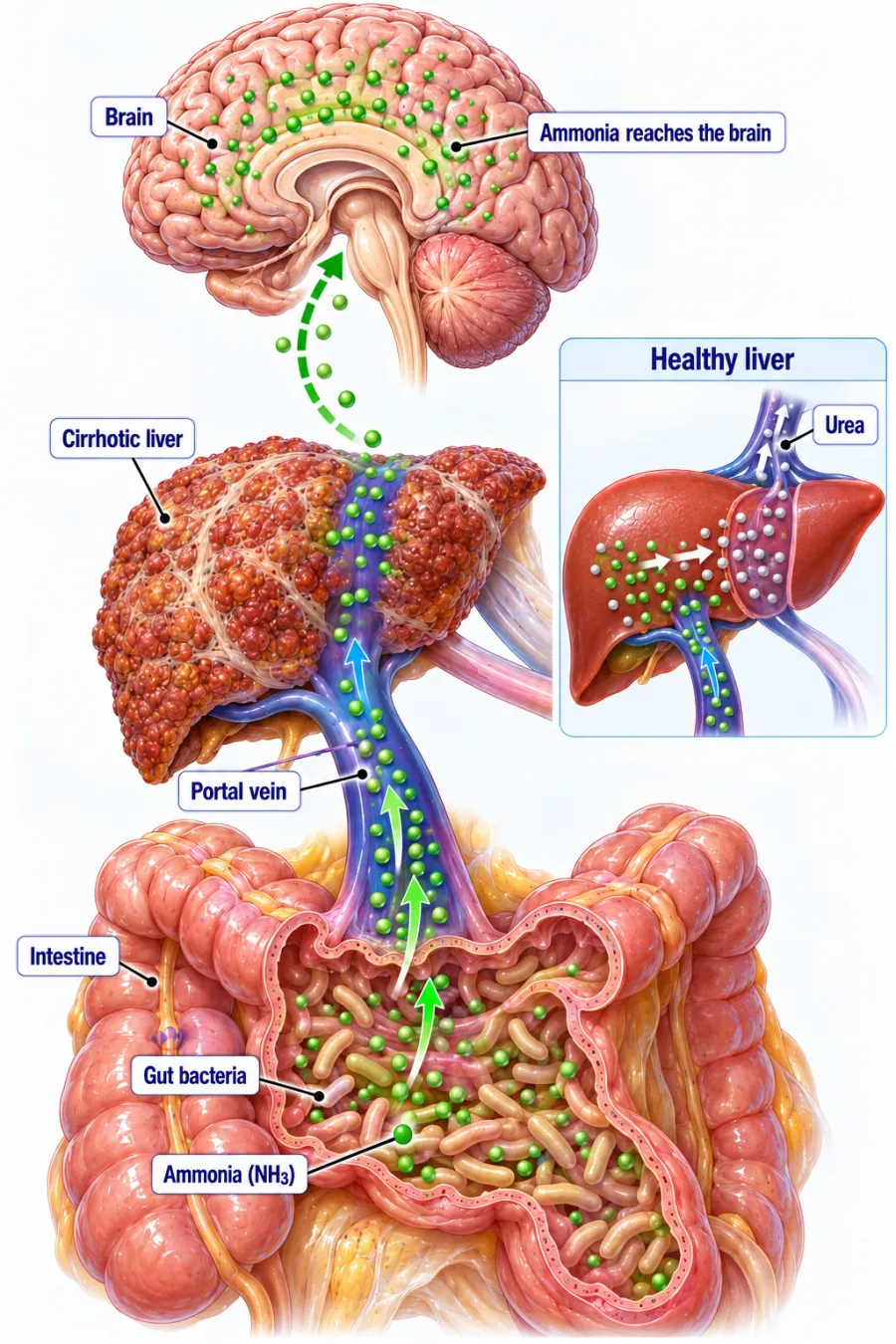
When the liver fails, ammonia accumulates in the blood and crosses into the brain, causing hepatic encephalopathy with confusion, asterixis, and decreased level of consciousness. A rising ammonia tracks worsening neurologic status in liver disease.
Ammonia Level illustrated
Key points to remember
- Ammonia rises when the failing liver cannot convert it to urea for excretion.
- Elevated ammonia is the driver of hepatic encephalopathy and altered mental status.
- Lactulose is the primary treatment and works by trapping ammonia in the gut for elimination in stool.
- Lactulose dosing is titrated to produce 2 to 3 soft stools per day to lower ammonia.
- Asterixis, a flapping tremor of the hands, is a classic sign of elevated ammonia.
- GI bleeding, constipation, and high protein intake can raise ammonia in liver disease.
Signs & symptoms
- ↑NH3 → confusion, ↓LOC
- Asterixis (flapping tremor)
- Lethargy → coma
Nursing priorities
- Assess and trend neurologic status, orientation, and the presence of asterixis.
- Administer lactulose as prescribed and monitor that the patient has adequate soft stools.
- Implement safety and fall precautions for a confused or encephalopathic patient.
- Monitor for and prevent constipation and GI bleeding, which worsen ammonia levels.
- Reassess mental status after lactulose to evaluate response to treatment.
Labs & values
Patient teaching
- Take lactulose as prescribed even though it causes loose stools, since this clears ammonia.
- Report increasing confusion, drowsiness, or hand tremors and follow any prescribed protein guidance.
Red flags: report now
- Worsening confusion, lethargy, or a decreasing level of consciousness with high ammonia needs immediate reporting.
- Withholding or stopping ordered lactulose in encephalopathy can precipitate coma.
- Signs of GI bleeding in a liver patient are an emergency, as blood in the gut raises ammonia.
References
Clinical references for this topic