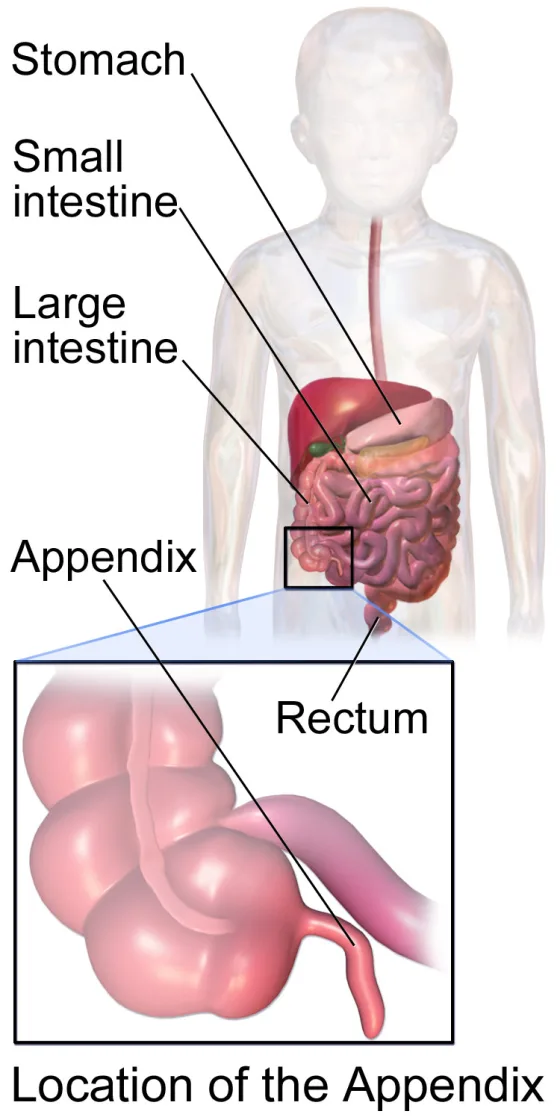
Pain typically starts periumbilical and migrates to the right lower quadrant (McBurney point).
Before you read
Test yourself first: 2 questions
Question 1 of 2
A client with suspected appendicitis suddenly reports the severe pain has stopped. The nurse is MOST concerned that:
Answer: B. Sudden relief of appendicitis pain may signal rupture/perforation, which then progresses to peritonitis — a worsening emergency. Notify the provider; do not assume the client improved.
Question 2 of 2
A client reports that abdominal pain consistently worsens after eating fried or fatty foods. The nurse recognizes this pattern is most characteristic of:
Answer: A. Fatty foods stimulate cholecystokinin release, causing gallbladder contraction. In cholelithiasis or cholecystitis, this contraction against an obstructed or inflamed gallbladder produces biliary colic, so pain typically intensifies after fatty meals. This dietary trigger pattern is a hallmark of gallbladder disease rather than peptic ulcer, appendicitis, or diverticulitis.
Keep the streak going with more questions like these, each with a full rationale.
What is appendicitis?
It is the most common reason for emergency abdominal surgery. Classic pain begins around the umbilicus and localizes to the right lower quadrant at McBurney point. If untreated, the appendix can rupture and cause peritonitis.
Appendicitis illustrated
Key points to remember
- Pain typically starts periumbilical and migrates to the right lower quadrant (McBurney point).
- Rebound tenderness, low-grade fever, nausea, vomiting, and anorexia are common.
- Rovsing sign (RLQ pain when the LLQ is palpated) and psoas sign support the diagnosis.
- A sudden relief of pain followed by diffuse pain suggests rupture and peritonitis.
- A mildly elevated white blood cell count reflects inflammation.
- Patients often lie still with the right hip flexed to reduce pain.
Signs & symptoms
- RLQ pain @ McBurney's point
- rebound tenderness, ↑WBC, fever
- Rovsing, psoas, anorexia, N/V
Nursing priorities
- Keep the patient NPO in preparation for appendectomy.
- Avoid applying heat to the abdomen and never give laxatives or enemas, which can cause rupture.
- Administer IV fluids and prescribed antibiotics; manage pain as ordered.
- Position the patient for comfort, typically semi-Fowler with right hip flexed.
- Monitor for signs of rupture: sudden pain change, rising fever, and increasing distention.
Labs & values
Patient teaching
- Seek care immediately for worsening or migrating right lower abdominal pain.
- After appendectomy, report fever, increasing pain, or wound redness/drainage.
- Resume activity gradually as directed and keep follow-up appointments.
Red flags: report now
- Sudden cessation then return of diffuse severe pain indicates rupture and peritonitis, an emergency.
- Never apply heat or give enemas/laxatives, as these increase the risk of rupture.
- High fever, rigid abdomen, and tachycardia signal peritonitis and require immediate surgery.
References
Clinical references for this topic