Classic signs include sudden high fever, severe headache, nuchal rigidity (stiff neck), and photophobia.
Before you read
Test yourself first: 3 questions
Question 1 of 3
A nurse is assessing a 7-year-old with suspected bacterial meningitis. Which finding requires immediate provider notification?
Answer: B. A petechial or purpuric rash in a child with suspected meningitis can indicate meningococcemia, a life-threatening emergency requiring immediate intervention. A mild headache, low-grade fever, and photophobia are concerning but less acutely emergent than signs of meningococcal sepsis.
Question 2 of 3
A client with bacterial meningitis is admitted. Besides droplet precautions, a priority assessment is for:
Answer: B. Monitor neurologic status and for signs of increased intracranial pressure and seizures; assess nuchal rigidity, photophobia, and changes in level of consciousness. Early recognition of deterioration is critical.
Question 3 of 3
A nurse is reviewing the white blood cell differential of a client with a severe bacterial infection. The report notes a shift to the left. What does this finding indicate?
Answer: A. A shift to the left means an increased number of immature neutrophils (bands) in the circulation, reflecting the bone marrow releasing immature cells to fight an acute, often severe, bacterial infection. It does not indicate increased lymphocytes, decreased total WBCs, or eosinophilia.
Keep the streak going with more questions like these, each with a full rationale.
What is bacterial meningitis?
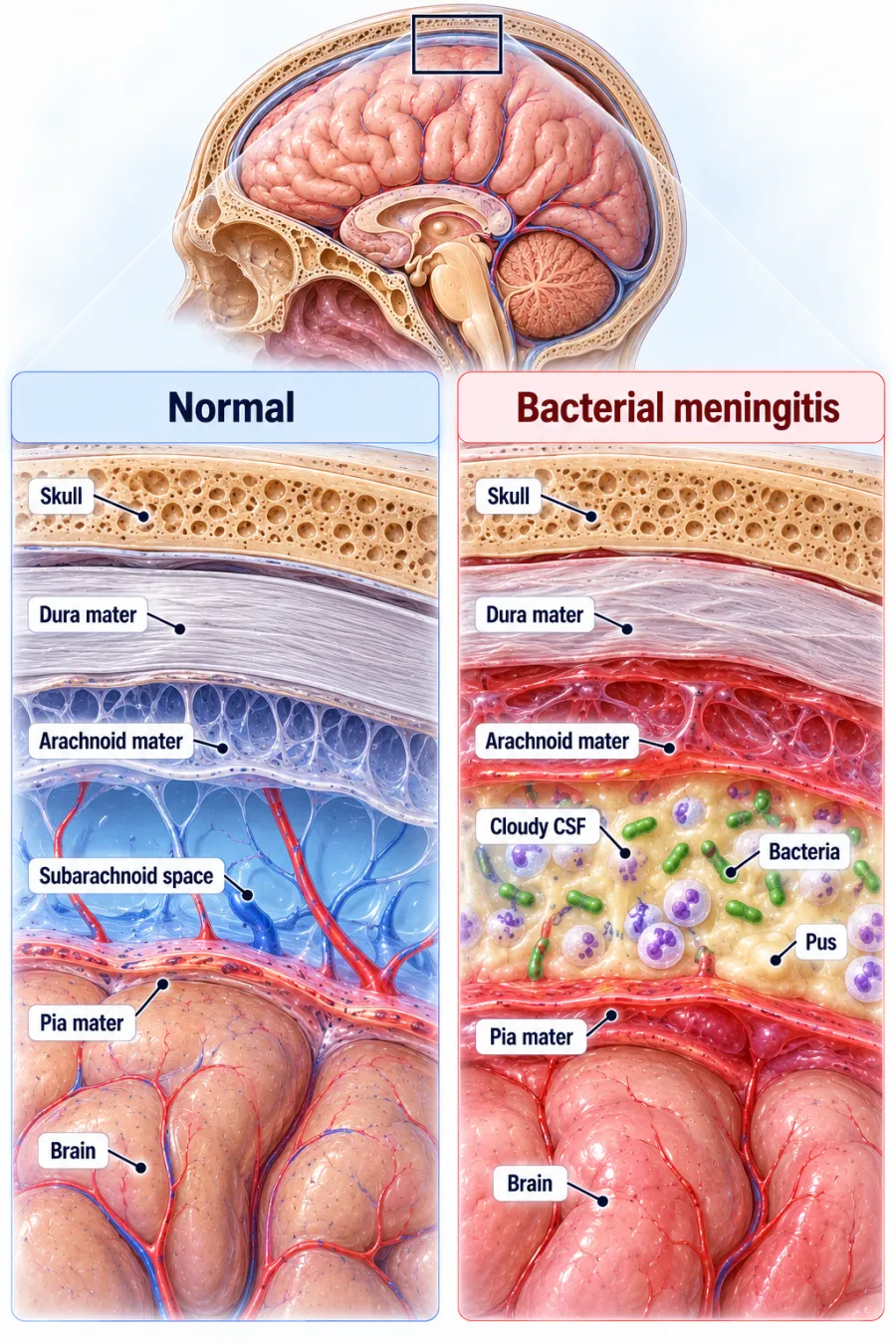
It is a medical emergency that can rapidly cause increased intracranial pressure, seizures, and death. It spreads through respiratory droplets, so prompt isolation and antibiotics are critical. Classic signs are fever, severe headache, nuchal rigidity, and photophobia.
Bacterial Meningitis illustrated
Key points to remember
- Classic signs include sudden high fever, severe headache, nuchal rigidity (stiff neck), and photophobia.
- A positive Kernig sign (pain on knee extension with hip flexed) and Brudzinski sign (involuntary knee flexion when neck is flexed) indicate meningeal irritation.
- Altered level of consciousness, irritability, and seizures may occur as intracranial pressure rises.
- Meningococcal meningitis can produce a petechial or purpuric rash.
- Cerebrospinal fluid in bacterial meningitis is cloudy with high protein, low glucose, and high white cells.
Signs & symptoms
- Nuchal rigidity, fever, ↓ LOC
- Kernig + Brudzinski signs +
- Photophobia, severe headache
Nursing priorities
- Place the patient on droplet precautions immediately on suspicion, before confirmation.
- Administer the first dose of prescribed antibiotics as quickly as possible, after blood cultures and lumbar puncture if feasible.
- Monitor neurologic status and watch for signs of increased intracranial pressure.
- Implement seizure precautions and provide a quiet, dimly lit environment for photophobia.
- Monitor temperature and provide measures to reduce fever; maintain fluid and electrolyte balance.
Labs & values
Patient teaching
- Complete the entire course of prescribed antibiotics.
- Close contacts may need prophylactic antibiotics, and vaccines (meningococcal, pneumococcal, Hib) help prevent meningitis.
- Practice good hand hygiene and respiratory etiquette to reduce droplet spread.
Red flags: report now
- Decreasing level of consciousness, widening pulse pressure, bradycardia, or abnormal posturing signals rising ICP, an emergency.
- A spreading petechial/purpuric rash may indicate meningococcemia and septic shock, report immediately.
- Seizures or sudden neurologic deterioration require urgent intervention.
- Failure to maintain droplet isolation risks transmission to staff and others.
References
Clinical references for this topic