
Report signs of infection promptly, as immunosuppression can mask and worsen infections quickly.
Before you read
Test yourself first: 5 questions
Question 1 of 5
A client has Cushing syndrome from chronic high cortisol. Which findings does the nurse expect on assessment?
Answer: A. Cushing syndrome from excess cortisol causes central (truncal) obesity, a rounded moon face, a fatty cervicodorsal pad (buffalo hump), thin fragile skin with purple striae and easy bruising, hyperglycemia, hypertension, and muscle wasting in the extremities.
Question 2 of 5
A nurse assesses a client with a head injury. Which group of findings is the classic Cushing triad signaling dangerously increased ICP?
Answer: A. Cushing triad is a late, ominous sign of increased ICP: rising systolic pressure with a WIDENING pulse pressure, BRADYcardia, and irregular (often slow) respirations. It reflects brainstem compression and impending herniation. The other options describe shock or normal compensation, not Cushing triad.
Question 3 of 5
The nurse is monitoring a client for increased intracranial pressure after a stroke. Which set of findings is characteristic of Cushing triad, a late and ominous sign?
Answer: A. Cushing triad indicates dangerously elevated intracranial pressure and consists of increasing (widening pulse pressure) systolic blood pressure, bradycardia, and irregular respirations. It is a late sign requiring emergency intervention. Tachycardia with hypotension suggests shock, not raised intracranial pressure.
Question 4 of 5
A nurse assesses a client with increased intracranial pressure. Which set of findings is consistent with Cushing's triad, a late sign of rising ICP?
Answer: A. Cushing's triad is the late, ominous combination of widening pulse pressure (rising systolic with bradycardia) and irregular respirations. It signals brainstem compression and impending herniation.
Question 5 of 5
Which finding is an EARLY sign of increased intracranial pressure?
Answer: A. A change in level of consciousness (e.g., restlessness, confusion) is the earliest and most sensitive sign. Cushing’s triad and fixed pupils are late, ominous findings.
Keep the streak going with more questions like these, each with a full rationale.
What is cushing syndrome?
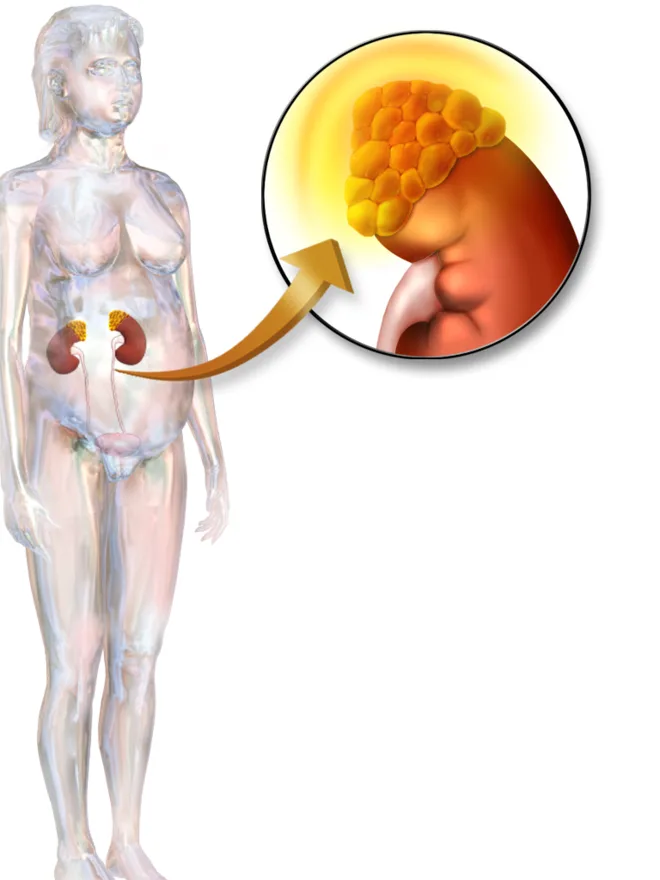
Excess cortisol causes fat redistribution, muscle wasting, glucose intolerance, and immune suppression. Memory aid: 'too much steroid' produces a moon face, buffalo hump, and truncal obesity. It is essentially the opposite picture of Addison disease.
Cushing Syndrome illustrated
Key points to remember
- Classic features are moon face, buffalo hump, truncal/central obesity with thin extremities, and purple striae on the abdomen.
- Excess cortisol causes hyperglycemia, hypertension, and sodium and water retention with edema.
- Potassium and calcium are lost, leading to hypokalemia and bone loss/osteoporosis with fracture risk.
- Skin is thin and fragile, bruises easily, and wounds heal slowly; immunosuppression raises infection risk.
- Mood changes, muscle weakness from protein catabolism, and hirsutism in women are common.
Common causes
- Chronic steroids #1 cause
- Pituitary/adrenal tumor (ACTH)
Signs & symptoms
- Moon face, buffalo hump, truncal
- Purple striae, thin skin, bruising
- HTN, weakness, hirsutism
Nursing priorities
- Monitor blood glucose, blood pressure, weight, and intake/output, and watch for fluid overload.
- Protect from infection with meticulous hygiene and protect fragile skin from injury and breakdown.
- Provide a diet low in sodium and high in protein, potassium, and calcium.
- Prevent falls and fractures because of osteoporosis and muscle weakness.
- For patients on steroids, never stop the medication abruptly; taper as ordered.
Labs & values
Patient teaching
- Take corticosteroids exactly as prescribed and never stop them suddenly.
- Wear medical alert identification and carry information about steroid use.
- Report signs of infection, easy bruising, and significant weight gain or swelling.
Red flags: report now
- Report signs of infection promptly, as immunosuppression can mask and worsen infections quickly.
- Never abruptly discontinue chronic corticosteroids; abrupt withdrawal can cause acute adrenal crisis.
- Report severe hypertension, crushing chest pain, or signs of heart failure from fluid overload.
References
Clinical references for this topic

