Thick mucus obstructs airways, causing chronic cough, wheezing, recurrent respiratory infections, and eventually bronchiectasis.
Before you read
Test yourself first: 2 questions
Question 1 of 2
A child is being evaluated for cystic fibrosis. Which sweat chloride test result supports the diagnosis?
Answer: D. A sweat chloride concentration of 60 mmol/L or greater is diagnostic of cystic fibrosis. Values of 40 to 59 mmol/L are intermediate, and below 30 mmol/L (such as 20 or 35) is normal.
Question 2 of 2
The nurse performs chest physiotherapy (CPT) for a child with cystic fibrosis. When is the best time to schedule CPT?
Answer: B. Chest physiotherapy is best performed before meals or at least one to two hours after meals to mobilize secretions while reducing the risk of vomiting and aspiration that can occur if done on a full stomach.
Keep the streak going with more questions like these, each with a full rationale.
What is cystic fibrosis?
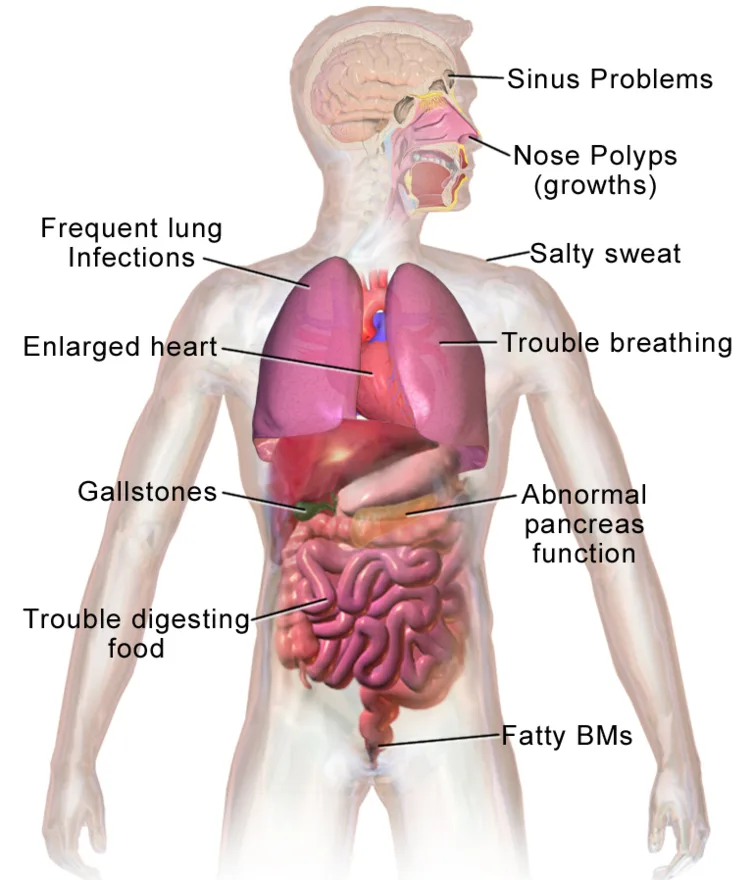
The defective CFTR chloride channel impairs salt and water transport, leading to chronic respiratory infections and pancreatic enzyme deficiency. A classic early sign is a meconium ileus at birth and very salty-tasting skin.
Cystic Fibrosis illustrated
Key points to remember
- Thick mucus obstructs airways, causing chronic cough, wheezing, recurrent respiratory infections, and eventually bronchiectasis.
- Pancreatic duct blockage prevents enzymes from reaching the intestine, causing malabsorption of fats and fat-soluble vitamins.
- Stools are frequent, bulky, greasy, and foul-smelling (steatorrhea) with failure to thrive despite a good appetite.
- Sweat contains excess sodium and chloride, producing salty skin and risk of electrolyte loss in heat.
- Newborns may present with meconium ileus; older children may develop clubbing and barrel chest.
- The sweat chloride test is the gold standard for diagnosis.
Common causes
- Autosomal recessive, CFTR gene
- Thick mucus → lungs + pancreas
Signs & symptoms
- Salty skin, chronic cough
- Steatorrhea, FTT, clubbing
- Meconium ileus in newborn
Nursing priorities
- Perform chest physiotherapy, postural drainage, and airway clearance techniques to mobilize thick secretions.
- Give pancreatic enzyme replacement with every meal and snack to aid digestion and absorption.
- Provide a high-calorie, high-protein diet with fat-soluble vitamin (A, D, E, K) supplements.
- Administer bronchodilators, mucolytics (dornase alfa), and antibiotics as ordered, and encourage fluids.
- Encourage extra salt and fluids during hot weather, exercise, or fever to replace sweat losses.
Labs & values
Patient teaching
- Take pancreatic enzymes with every meal and snack, never on an empty stomach.
- Perform daily airway clearance and chest physiotherapy as prescribed to keep lungs clear.
- Eat a high-calorie, high-protein, high-fat diet with vitamin supplements to maintain weight.
- Add extra salt and fluids in hot weather and report any increase in cough, fever, or breathing trouble.
Red flags: report now
- Increased respiratory distress, fever, change in sputum color, or hemoptysis signals pulmonary infection or exacerbation.
- Signs of bowel obstruction (abdominal distension, vomiting, no stool) require immediate attention.
- Heat exhaustion or electrolyte depletion can develop rapidly from excessive sweating.
- Never give pancreatic enzymes without food, and report failure to gain weight or worsening respiratory symptoms.
References
Clinical references for this topic