Report prolonged apnea, respiratory depression, or unstable vital signs after anesthesia.
Before you read
Test yourself first: 3 questions
Question 1 of 3
A client receiving chemotherapy reports painful mouth sores. On inspection, the nurse notes erythema and ulcerations of the oral mucosa. Which intervention is most appropriate for this client's stomatitis?
Answer: A. Chemotherapy-induced mucositis is managed with frequent gentle oral care using a soft toothbrush and a bland, alcohol-free rinse such as saline or sodium bicarbonate solution. Commercial alcohol-based mouthwashes, lemon-glycerin swabs, and hot, spicy foods irritate and dry the mucosa and worsen the condition.
Question 2 of 3
The nurse performs chest physiotherapy (CPT) for a child with cystic fibrosis. When is the best time to schedule CPT?
Answer: B. Chest physiotherapy is best performed before meals or at least one to two hours after meals to mobilize secretions while reducing the risk of vomiting and aspiration that can occur if done on a full stomach.
Question 3 of 3
A client receiving the targeted therapy rituximab begins to have chills, fever, and itching shortly after the infusion starts. What is the nurse's priority action?
Answer: A. These are signs of an infusion (hypersensitivity) reaction, which is common with monoclonal antibody therapy. The priority is to stop the infusion immediately and keep the IV line open with normal saline while assessing the client and notifying the provider. Slowing the rate or premedicating without first stopping does not protect the client during an active reaction.
Keep the streak going with more questions like these, each with a full rationale.
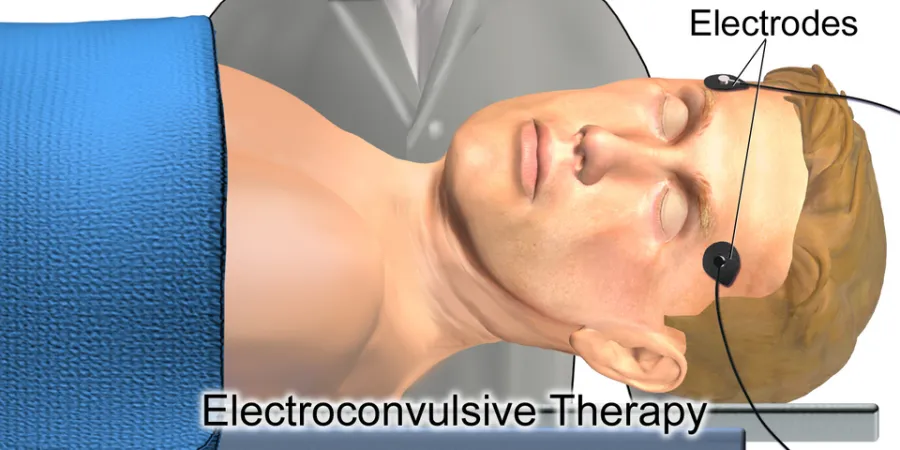
What is electroconvulsive therapy?
It works faster than antidepressants and is given under general anesthesia with a muscle relaxant. The most common adverse effects are transient confusion and short-term memory loss.
Electroconvulsive Therapy illustrated
Key points to remember
- ECT is first-line for severe depression unresponsive to medication or when a rapid response is needed (acute suicidality, refusal to eat, catatonia).
- Treatments are usually given 2-3 times per week for a total of about 6-12 sessions.
- General anesthesia plus a muscle relaxant (succinylcholine) prevents injury during the induced seizure; atropine may reduce secretions.
- Temporary confusion and short-term/retrograde memory loss are expected and typically resolve over weeks.
- Pre-procedure care mirrors surgery: NPO after midnight, informed consent, baseline vitals, void before, and remove dentures, jewelry, and hairpins.
- After ECT the client is monitored like a post-anesthesia patient and reoriented frequently as they wake confused.
Nursing priorities
- Verify informed consent and that the client is NPO before the procedure.
- Take baseline vital signs, have the client void, and remove dentures, glasses, jewelry, and hairpins.
- Maintain a patent airway and monitor vitals and oxygenation during recovery.
- Reorient the client frequently and stay with them until oriented and stable.
- Institute safety/fall precautions due to post-treatment confusion.
Patient teaching
- Short-term memory loss and confusion around the treatment period are common and usually temporary.
- Do not drive or make important decisions on treatment days; arrange a ride and a support person.
- Report worsening mood or thoughts of self-harm between treatments.
Red flags: report now
- Report prolonged apnea, respiratory depression, or unstable vital signs after anesthesia.
- Report persistent or worsening confusion, prolonged seizure activity, or new neurologic deficits.
- Do not leave a confused, recovering client unattended (fall and injury risk).
References
Clinical references for this topic