New or worsening respiratory distress, coughing, or decreased SpO2 during feeding suggests aspiration; stop the feeding, elevate, suction, and report.
Before you read
Test yourself first: 5 questions
Question 1 of 5
A nurse caring for a preterm infant being fed enterally notes a distended abdomen, bloody stools, feeding intolerance, and lethargy. Which condition is the nurse most concerned about?
Answer: B. Necrotizing enterocolitis (NEC) is a serious bowel inflammation and necrosis, most common in preterm and formula-fed infants. Warning signs include abdominal distension, increased gastric residuals, bloody stools, feeding intolerance, and systemic signs such as lethargy and temperature instability. The nurse stops enteral feeds and notifies the provider immediately.
Question 2 of 5
A client recovering from extensive burns reports epigastric pain and has coffee-ground nasogastric drainage. The nurse recognizes this as a sign of which burn complication?
Answer: A. A Curling ulcer is an acute gastric or duodenal stress ulcer that occurs after severe burns, caused by reduced gastrointestinal blood flow and increased acid production. Epigastric pain, occult or frank blood in gastric secretions (coffee-ground drainage), and melena are signs. Prophylactic proton pump inhibitors or H2 blockers and early enteral feeding help prevent it.
Question 3 of 5
A multiparous client reports painful uterine cramping (afterpains) while breastfeeding. The nurse explains the most likely cause of the increased afterpains during nursing is which mechanism?
Answer: A. Afterpains result from intermittent uterine contractions and are more pronounced in multiparous clients (whose uterine tone is decreased) and during breastfeeding because suckling stimulates release of oxytocin, which causes the uterus to contract. They are not caused by infection, retained placenta, or bladder distension and typically resolve within a few days; analgesia before feeding helps.
Question 4 of 5
A newborn's heel-stick glucose is 38 mg/dL at 1 hour of age and the infant is jittery. What is the nurse's FIRST action?
Answer: B. A jittery infant with glucose below 40-45 mg/dL is symptomatic hypoglycemic. The first intervention for a symptomatic but feeding-capable newborn is to feed (breast or formula) to raise glucose, then recheck. Severe or unresponsive cases require IV dextrose. Jitteriness that resolves with feeding distinguishes hypoglycemia from seizures.
Question 5 of 5
A nurse is reviewing the results of a Mantoux tuberculin skin test (TST) on an HIV-positive client. The site shows 6 mm of induration. How should the nurse interpret this result?
Answer: B. For clients who are HIV-positive or otherwise severely immunocompromised, an induration of 5 mm or greater is considered a positive TST result. Therefore 6 mm of induration is positive for this client and requires follow-up. The general healthy-population cutoff of 15 mm does not apply to immunosuppressed clients, and redness without induration is not measured.
Keep the streak going with more questions like these, each with a full rationale.
What is enteral tube feeding?
The major risks are aspiration, tube clogging, and refeeding issues. Key principle: confirm placement, keep the head of bed up, and flush to keep the tube patent.
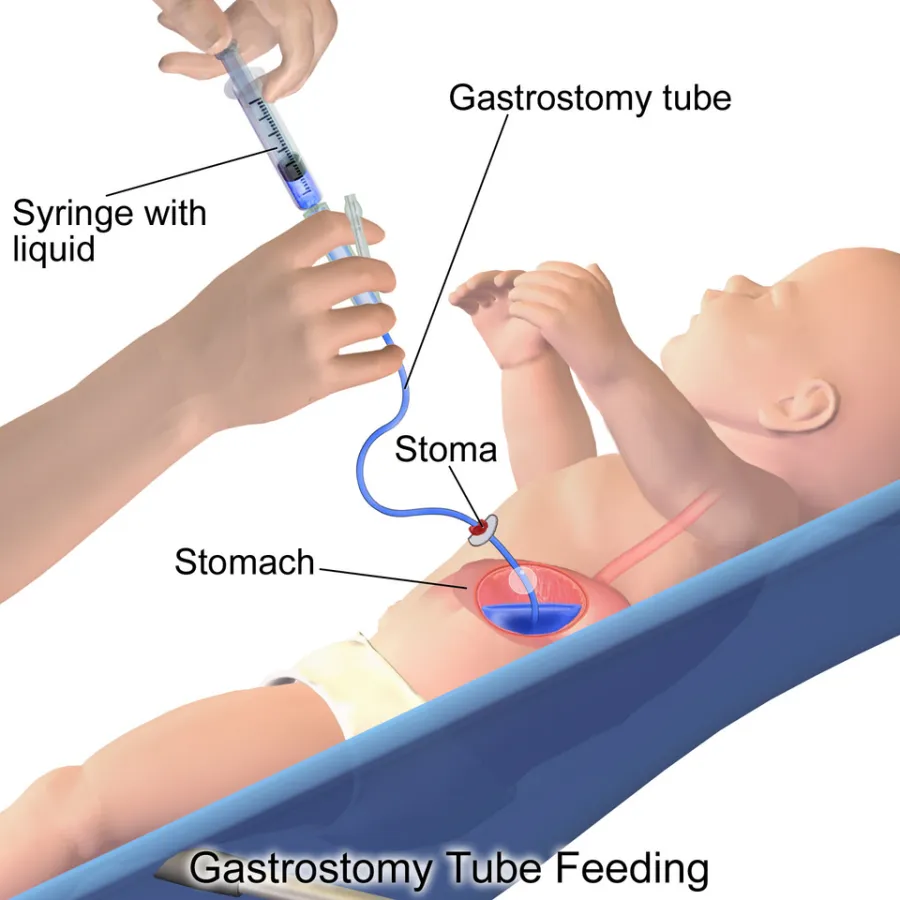
Enteral Tube Feeding illustrated
Key points to remember
- Verify tube placement before feeding (X-ray for new tubes; pH and external length checks ongoing).
- Keep the head of bed elevated at least 30 to 45 degrees during and 30 to 60 minutes after feeding to prevent aspiration.
- Flush the tube with 30 mL water before and after each feeding/medication and every 4 to 6 hours during continuous feeds.
- Give medications separately, each flushed before and after; do not mix meds into the formula.
- Check gastric residual per facility policy; high residuals may prompt holding the feed (aspiration risk).
- Administer room-temperature formula and use clean technique; hang time is limited (usually 4 to 8 hours) to prevent bacterial growth.
Nursing priorities
- Confirm placement and patency before initiating or resuming a feeding.
- Elevate the head of bed and keep it up during and after feeding.
- Flush the tube before/after feeds and meds to prevent clogging.
- Monitor for aspiration, abdominal distension, residual volume, and tolerance (nausea, cramping, diarrhea).
- Monitor weight, intake/output, glucose, and electrolytes, watching for refeeding syndrome in malnourished clients.
Labs & values
Patient teaching
- Stay sitting up during and for at least 30 to 60 minutes after each feeding.
- Flush the tube with water as instructed and keep the site clean and dry (for PEG/G-tubes).
- Report nausea, vomiting, diarrhea, leaking, or redness around the tube site.
Red flags: report now
- New or worsening respiratory distress, coughing, or decreased SpO2 during feeding suggests aspiration; stop the feeding, elevate, suction, and report.
- Refeeding syndrome (falling phosphorus, potassium, magnesium) in malnourished clients can be fatal; report abnormal electrolytes.
- Never give a feeding when placement is unconfirmed or the head cannot be elevated.
References
Clinical references for this topic