
Never use a tongue depressor or throat swab or take an oral temperature; airway spasm and total obstruction can result.
Before you read
Test yourself first: 2 questions
Question 1 of 2
A 2-year-old is brought to the emergency department with a barking, seal-like cough and inspiratory stridor that worsened at night. The nurse recognizes these findings as characteristic of which condition?
Answer: B. Laryngotracheobronchitis (croup) classically presents with a barking, seal-like cough and inspiratory stridor, often worse at night. Epiglottitis causes drooling and tripod posture; pertussis causes a whooping cough; asthma causes expiratory wheezing.
Question 2 of 2
A child with epiglottitis is being assessed in the emergency department. Which finding requires the nurse to avoid further oral examination and prepare for emergency airway management?
Answer: B. In suspected epiglottitis, drooling, tripod positioning, and stridor signal impending airway obstruction. The nurse must not inspect the throat or use a tongue blade, because doing so can trigger complete laryngospasm and obstruction.
Keep the streak going with more questions like these, each with a full rationale.
What is epiglottitis?
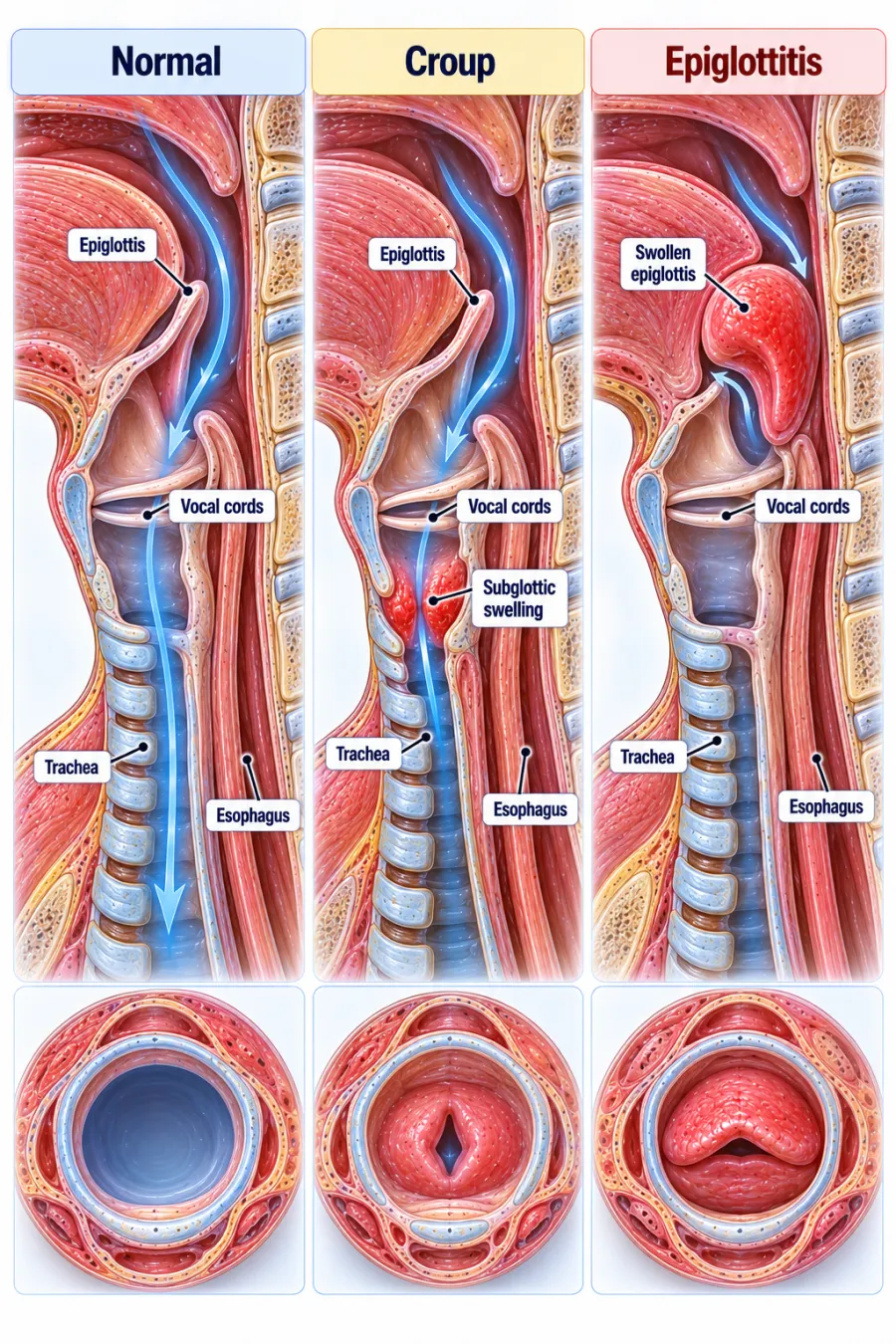
It was classically caused by Haemophilus influenzae type B (Hib) and is now rarer due to the Hib vaccine. It is a true airway emergency presenting with the classic tripod position and the 4 D's: drooling, dysphagia, dysphonia, and distressed inspiratory effort.
Epiglottitis illustrated
Key points to remember
- Onset is abrupt with high fever, sore throat, and a toxic, ill appearance.
- The child sits upright in a tripod position, leaning forward with chin out and tongue protruding to keep the airway open.
- Drooling occurs because the child cannot swallow secretions due to painful dysphagia.
- The voice is muffled or absent and there is no spontaneous cough (unlike croup).
- Inspiratory stridor and severe respiratory distress develop quickly.
- The epiglottis appears cherry-red and swollen.
Common causes
- H. influenzae type B (Hib)
- Sudden onset, looks toxic
Signs & symptoms
- 4 D's: Drooling, Dysphagia, Dysphonia, Distress
- Tripod position, high fever
- Muffled voice, NO cough
Nursing priorities
- Keep the child calm, upright, and with the parent; do not force them to lie down.
- Do NOT inspect the throat or insert anything into the mouth, as this can trigger complete obstruction.
- Prepare for emergency intubation or tracheostomy and keep airway equipment at the bedside.
- Administer humidified oxygen, IV antibiotics, and corticosteroids as ordered once the airway is secured.
- Notify the provider and stay with the child continuously; have the child accompanied to any imaging.
Labs & values
Patient teaching
- Ensure children complete the Hib vaccine series to prevent epiglottitis.
- Seek emergency care immediately for sudden high fever with drooling, muffled voice, and difficulty breathing.
- After recovery, complete the full course of prescribed antibiotics.
Red flags: report now
- Never use a tongue depressor or throat swab or take an oral temperature; airway spasm and total obstruction can result.
- Drooling, tripod positioning, muffled voice, and stridor together signal imminent airway loss.
- Any sudden agitation, cyanosis, or decreasing responsiveness requires immediate airway intervention.
- Do not leave the child alone or delay calling the rapid response or anesthesia team.
References
Clinical references for this topic

