
Key takeaway
Goiter can be associated with hypothyroidism (Hashimoto, iodine deficiency), hyperthyroidism (Graves, toxic nodular), or normal function (euthyroid).
What is goiter?
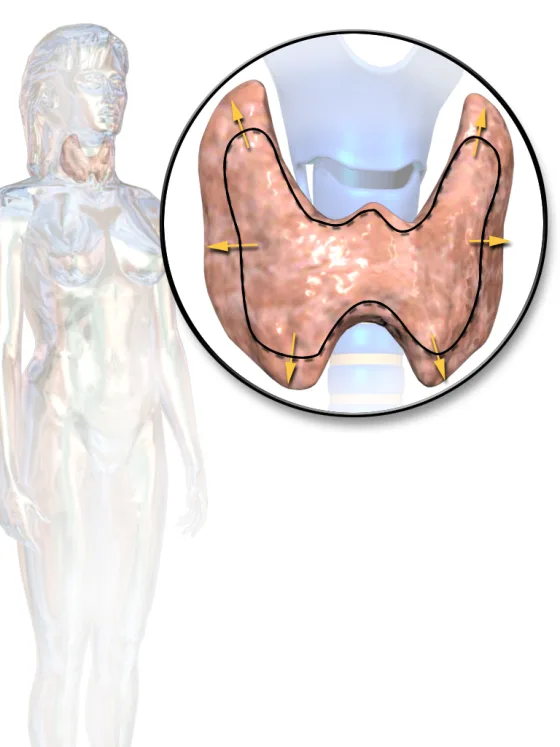
The most common cause worldwide is iodine deficiency, while autoimmune disease (Hashimoto and Graves) is common in iodine-sufficient regions. Large goiters can compress the trachea or esophagus.
Goiter illustrated
Key points to remember
- Goiter can be associated with hypothyroidism (Hashimoto, iodine deficiency), hyperthyroidism (Graves, toxic nodular), or normal function (euthyroid).
- Iodine deficiency is the most common worldwide cause; both too little and too much iodine can trigger enlargement.
- Large goiters may compress the trachea (dyspnea, stridor) or esophagus (dysphagia) and cause a visible neck mass.
- Workup includes TSH, free T4, thyroid antibodies, ultrasound, and radioactive iodine uptake scan to determine cause.
- Treatment depends on cause: levothyroxine for hypothyroid goiter, antithyroid drugs/radioactive iodine for hyperthyroid, and surgery for compression or malignancy.
- Pemberton sign (facial flushing/distended neck veins when arms raised) suggests significant compression from a large goiter.
Signs & symptoms
- Visible neck swelling
- Dysphagia, hoarseness, cough
Nursing priorities
- Assess the airway for stridor, dyspnea, and swallowing difficulty from compression.
- Monitor thyroid function tests to identify whether the patient is hypo-, hyper-, or euthyroid.
- Position the patient upright to ease breathing and swallowing with a large goiter.
- Prepare the patient for diagnostic studies (ultrasound, RAI uptake, fine-needle aspiration) and explain each.
- Provide preoperative and postoperative thyroidectomy care when surgery is indicated.
Labs & values
TSH (normal ~0.4-4.0 mIU/L) — low in hyper, high in hypo
Free T4 (normal ~0.8-1.8 ng/dL)
Thyroid antibodies (anti-TPO, TSI) to identify autoimmune cause
Patient teaching
- Use iodized salt and ensure adequate dietary iodine to prevent deficiency-related goiter.
- Report increasing neck size, difficulty breathing or swallowing, or a change in voice.
- Take prescribed thyroid medication consistently and keep follow-up appointments for monitoring.
Red flags: report now
- Acute respiratory distress, stridor, or inability to swallow from tracheal/esophageal compression — emergency.
- Rapidly growing, hard, or fixed nodule with hoarseness or lymphadenopathy — evaluate for thyroid cancer.
- After thyroidectomy: respiratory distress from bleeding/hematoma or laryngeal nerve damage — report immediately.
References
Clinical references for this topic

Study Goiter in the app4,000+ NCLEX questions with a rationale on every answer, NGN case studies and timed mock exams.See how CinnaRN works
Start free Want more Physiological Adaptation questions?We'll email you a free set on Goiter. No account needed.
Was this helpful?