Rash on or near the eye or on the tip of the nose — notify the provider now for urgent eye evaluation; vision loss can be permanent.
Before you read
Test yourself first: 3 questions
Question 1 of 3
A client with herpes zoster (shingles) that is disseminated is admitted. Which combination of precautions is required?
Answer: C. Disseminated herpes zoster (or zoster in an immunocompromised client) requires both airborne and contact precautions because the virus can spread through the air and through contact with vesicle fluid.
Question 2 of 3
A client with AIDS is admitted with Pneumocystis jirovecii pneumonia (PCP). Which medication should the nurse anticipate as first-line treatment?
Answer: B. Trimethoprim-sulfamethoxazole (TMP-SMX) is the first-line treatment and prophylaxis for Pneumocystis jirovecii pneumonia. Isoniazid treats tuberculosis, acyclovir treats herpesviruses, and amphotericin B treats systemic fungal infections such as cryptococcosis, not PCP first-line.
Question 3 of 3
A child receiving chemotherapy is exposed to a sibling with active chickenpox. What is the nurse's priority concern?
Answer: B. An immunocompromised child exposed to varicella is at risk for severe, disseminated disease. The priority is post-exposure prophylaxis with varicella-zoster immune globulin (VariZIG) as soon as possible. Live vaccines are contraindicated in this child.
Keep the streak going with more questions like these, each with a full rationale.
What is herpes zoster (shingles)?
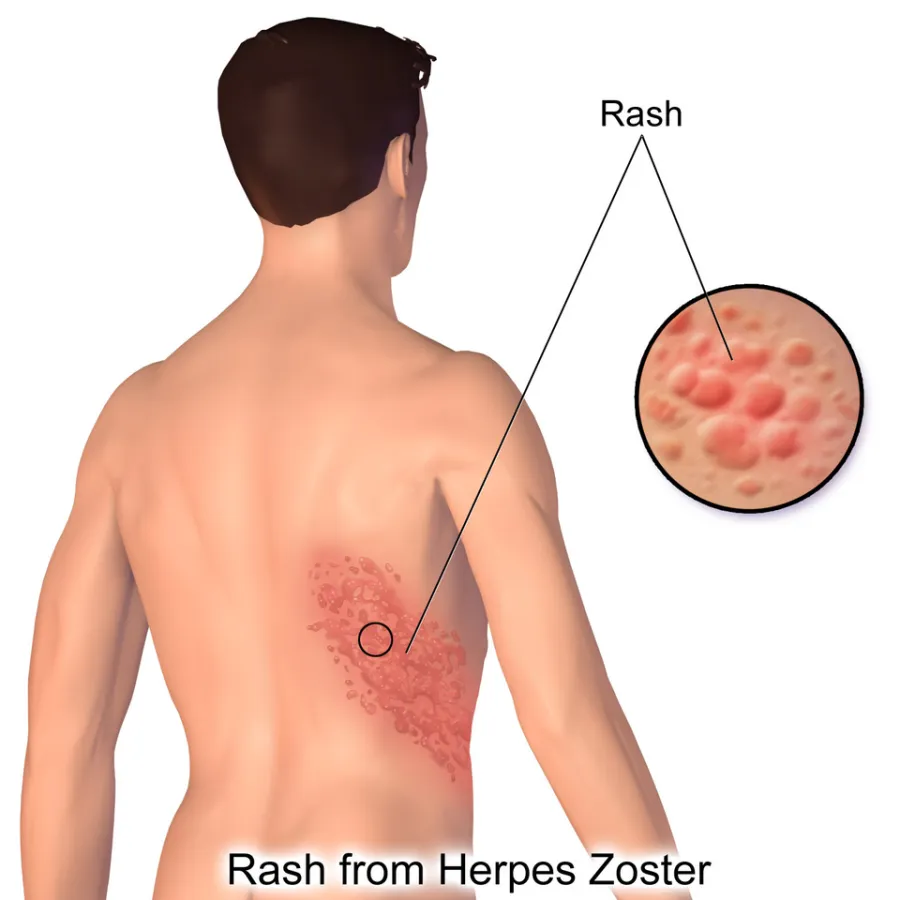
After chickenpox, the virus stays dormant in nerve ganglia. When immunity falls with age or immunosuppression, it reactivates along one nerve, so the rash is unilateral, follows a dermatome, and does not cross the midline. Shingles is not passed on as shingles, but blister fluid can give chickenpox to someone who never had chickenpox or the vaccine. Nursing care centers on the right precautions, early antivirals, pain control, and fast action on eye involvement.
Herpes Zoster (shingles) illustrated
Key points to remember
- Prodrome: burning pain, tingling, or itching on one side of the body or face; grouped vesicles on a red base follow up to several days later.
- The rash follows one dermatome, stays on one side, and does not cross the midline; blisters typically scab over in 7 to 10 days.
- Shingles is most common after age 50. Weakened immunity (HIV, some cancers, immune-suppressing drugs) raises risk and can make the rash widespread.
- The virus is not spread before blisters appear or after the rash crusts; in between, direct contact with blister fluid can give chickenpox to a non-immune person.
- Localized zoster in a patient with a healthy immune system: standard precautions with lesions covered. Disseminated zoster or an immunocompromised patient: airborne plus contact precautions until lesions crust.
- Antivirals (acyclovir, valacyclovir) work best started within 72 hours of rash onset and may help prevent postherpetic neuralgia.
- Postherpetic neuralgia, the most common complication, is pain where the rash was; it usually eases over weeks to months but can last years.
Signs & symptoms
- Unilateral vesicles along dermatome
- Burning pain, doesn't cross midline
- Reactivated varicella (chickenpox)
Nursing priorities
- Start the correct precautions on arrival, because blister fluid can cause chickenpox in non-immune people.
- Inspect the eye area and the whole skin surface, because eye involvement threatens vision and lesions beyond one dermatome mean dissemination.
- Give the ordered antiviral as early as possible, because benefit is greatest within 72 hours of rash onset.
- Treat and reassess pain with prescribed analgesics and agents such as gabapentin for nerve pain, because pain is the main symptom and can persist.
- Keep lesions clean, dry, and covered, and offer cool washcloths, calamine lotion, or oatmeal baths for itching, because scratching opens the skin to bacterial infection.
- Keep pregnant or non-immune staff and visitors away until all lesions crust, because they can catch chickenpox.
Worked example
- Cue: An older adult receiving chemotherapy has had burning pain on the right side of the chest for several days; this morning, clustered blisters appeared in a band that stops at the midline.
- Meaning: Dermatomal herpes zoster in an immunocompromised patient, who is at risk for dissemination.
- Priority action: Start airborne plus contact precautions, notify the provider, and give the ordered antiviral now, within 72 hours of rash onset.
- Evaluation: Pain is controlled, no new lesions appear outside the dermatome, the eye is spared, and lesions crust without signs of infection.
Patient teaching
- Fluid from the blisters can give chickenpox to someone who never had it or the vaccine. Keep the rash covered and stay away from pregnant women, newborns, and people with weak immune systems until every blister crusts.
- Start the antiviral medicine as soon as you can and take every dose. Call right away if the rash is near your eye or your vision changes.
- A cool washcloth, calamine lotion, or an oatmeal bath can ease itching.
- Ask about Shingrix: a two-dose vaccine recommended for healthy adults 50 and older and for some adults over 19 with a weakened immune system.
Common mistakes
- Putting every shingles patient on airborne precautions, or missing them for disseminated or immunocompromised cases. The rash's extent and the patient's immunity decide.
- Thinking a non-immune contact will catch shingles. Exposure causes chickenpox.
- Delaying antivirals until the rash is fully developed; start within 72 hours of onset.
- Treating a rash on the tip of the nose as minor; it can mean eye involvement.
Red flags: report now
- Rash on or near the eye or on the tip of the nose — notify the provider now for urgent eye evaluation; vision loss can be permanent.
- Lesions across several dermatomes or widespread — start airborne plus contact precautions and notify the provider; this signals immunosuppression.
- Rash in or near the ear with hearing or balance problems or one-sided facial weakness — report promptly.
- Increasing redness, warmth, purulent drainage, or fever — report possible bacterial superinfection.
References
Clinical references for this topic