Report signs of hypercalcemia: confusion, lethargy, muscle weakness, and cardiac dysrhythmias.
Before you read
Test yourself first: 3 questions
Question 1 of 3
A client is diagnosed with multiple myeloma. The nurse anticipates monitoring for which characteristic complication?
Answer: A. Multiple myeloma causes malignant plasma cells to destroy bone, releasing calcium and producing hypercalcemia, bone pain, pathologic fractures, and renal impairment. Maintaining hydration and mobility helps manage hypercalcemia and prevent renal damage.
Question 2 of 3
A client with multiple sclerosis (MS) has an exacerbation. A priority nursing focus is to:
Answer: B. Promote energy conservation and rest (fatigue is a hallmark), prevent injury/falls from weakness and impaired coordination, manage symptoms, and avoid heat (worsens symptoms). Pushing through fatigue worsens it.
Question 3 of 3
A nurse reviews findings for a client with suspected multiple sclerosis. Which diagnostic result best supports the diagnosis?
Answer: A. MS is supported by MRI showing demyelinating plaques (white matter lesions) in the brain and spinal cord, and by oligoclonal bands in cerebrospinal fluid. A resting tremor, elevated acetylcholine receptor antibodies, and albuminocytologic dissociation in CSF point to other neurologic conditions (Parkinson, myasthenia gravis, and Guillain-Barre respectively).
Keep the streak going with more questions like these, each with a full rationale.
What is multiple myeloma?
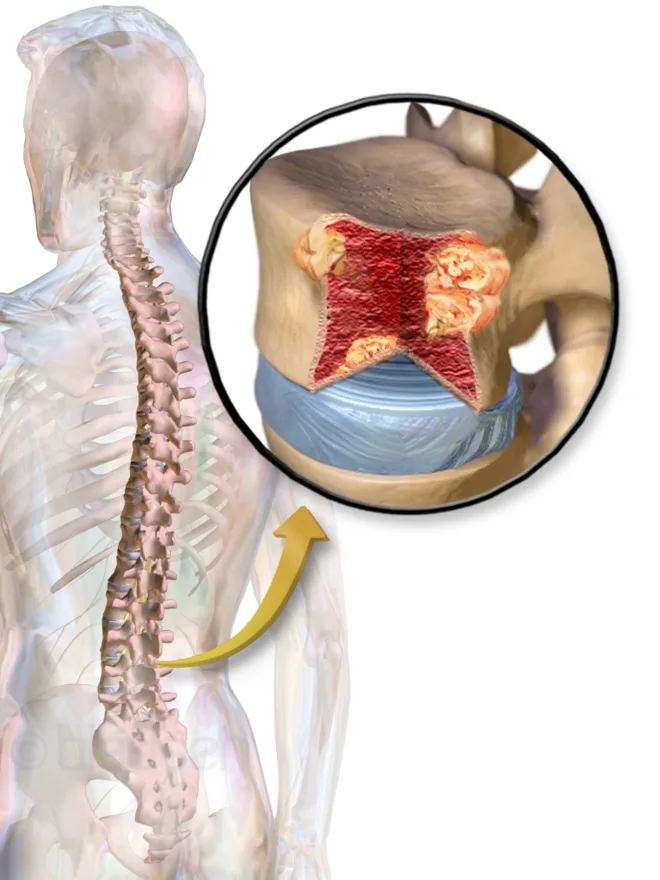
It causes bone breakdown, high calcium, anemia, kidney damage, and infection risk. It matters because pathologic fractures, hypercalcemia, and renal failure are common, serious complications. Memory aid 'CRAB': hyperCalcemia, Renal failure, Anemia, Bone lesions.
Multiple Myeloma illustrated
Key points to remember
- Bone destruction causes deep bone pain (especially back and ribs) and pathologic fractures.
- Hypercalcemia results from bone breakdown, causing confusion, constipation, and weakness.
- Anemia and bleeding occur as plasma cells crowd the marrow.
- Abnormal proteins (Bence Jones proteins) and high calcium damage the kidneys, risking renal failure.
- Recurrent infections occur because the abnormal antibodies are not protective.
- Bone marrow biopsy shows excess plasma cells; X-rays show 'punched-out' lytic lesions.
Signs & symptoms
- CRAB: ↑Ca, Renal, Anemia, Bone
- deep bone pain, pathologic fx
- fatigue, frequent infection
Nursing priorities
- Promote hydration (often 3 liters/day) to flush calcium and protein and protect the kidneys.
- Encourage gentle mobility as tolerated to reduce hypercalcemia, but AVOID strenuous or high-impact weight-bearing due to the risk of pathologic fractures and spinal cord compression.
- Manage pain and handle/move the patient gently to prevent pathologic fractures.
- Monitor for hypercalcemia and renal function and administer bisphosphonates as prescribed.
- Protect from infection and monitor blood counts.
Labs & values
Patient teaching
- Drink at least 3 liters of fluid daily unless contraindicated to protect the kidneys.
- Stay gently active as tolerated but avoid high-impact or strenuous weight-bearing; use safe movement to prevent fractures and report new bone pain.
- Avoid infection exposure and report fever, and report numbness, leg weakness, or loss of bladder/bowel control immediately.
Red flags: report now
- Report signs of hypercalcemia: confusion, lethargy, muscle weakness, and cardiac dysrhythmias.
- Report decreasing urine output or rising creatinine indicating renal failure.
- Report sudden severe bone pain or signs of a pathologic fracture or spinal cord compression (new weakness, numbness, loss of bowel/bladder control).
References
Clinical references for this topic