
Red flag to remember
Report signs of severe dehydration: oliguria, marked tachycardia, hypotension, and large urine ketones.
What is hyperemesis gravidarum?
Unlike normal morning sickness, it does not resolve and prevents adequate intake of food and fluids. It is linked to high levels of hCG and is more common in molar and multiple pregnancies. It matters because untreated it causes maternal malnutrition and dehydration.
Key points to remember
- Vomiting is excessive and unrelenting, causing weight loss of 5% or more of pre-pregnancy weight.
- Dehydration produces dry mucous membranes, poor skin turgor, tachycardia, and concentrated, ketone-positive urine.
- Prolonged vomiting causes electrolyte imbalances, classically hypokalemia and metabolic alkalosis from loss of gastric acid.
- Very high hCG levels are associated with the condition, including in molar and multiple pregnancies.
- Severe cases can lead to nutritional deficiencies, including thiamine deficiency.
Signs & symptoms
- Severe persistent N/V
- Wt loss > 5%, dehydration
Nursing priorities
- Maintain NPO status initially, then advance the diet slowly as tolerated once vomiting is controlled.
- Administer IV fluids with electrolyte replacement to correct dehydration and imbalances.
- Give prescribed antiemetics (such as pyridoxine/doxylamine, promethazine, or ondansetron) and thiamine as ordered.
- Monitor intake and output, daily weight, and urine for ketones to track hydration and nutrition status.
- Provide small, frequent, bland, low-fat meals and dry carbohydrates once oral intake resumes.
Labs & values
Potassium: normal3.5-5.0 mEq/L (often low from vomiting)
Urine ketones: normally negative (positive indicates starvation/ketosis)
Sodium and chloride decrease; arterial pH may show metabolic alkalosis
Patient teaching
- Eat small, frequent, bland, dry meals such as crackers and avoid greasy, spicy, or strong-smelling foods.
- Separate fluids from solid meals and sip fluids slowly throughout the day.
- Report inability to keep food or fluids down, decreased urination, or dizziness so dehydration can be treated.
Red flags: report now
- Report signs of severe dehydration: oliguria, marked tachycardia, hypotension, and large urine ketones.
- Report persistent vomiting with weight loss and inability to keep fluids down, requiring IV therapy.
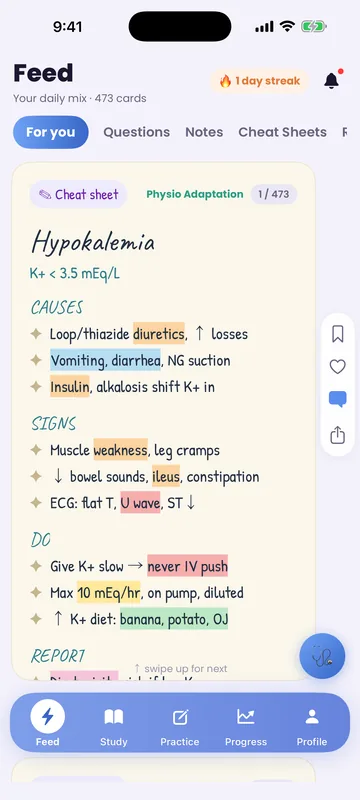
- Watch for severe hypokalemia, which can cause dysrhythmias.
- Report confusion or neurological changes, which may indicate thiamine deficiency (Wernicke encephalopathy).
References
Clinical references for this topic

Study Hyperemesis Gravidarum in the app4,000+ NCLEX questions with a rationale on every answer, NGN case studies and timed mock exams.See how CinnaRN works
Start free Want more Physiological Adaptation questions?We'll email you a free set on Hyperemesis Gravidarum. No account needed.
Was this helpful?