New or worsening seizures, sudden decline in level of consciousness, or coma - report immediately and protect airway.
Before you read
Test yourself first: 4 questions
Question 1 of 4
A client with hypernatremia (serum sodium 152 mEq/L) is being treated. Which intervention does the nurse anticipate?
Answer: B. Hypernatremia is corrected by replacing free water gradually, typically with a hypotonic solution such as 0.45% sodium chloride or by encouraging oral water intake. Sodium must be lowered slowly (no faster than about 8-10 mEq/L per day) to avoid cerebral edema from rapid fluid shifts into brain cells. Hypertonic saline would worsen the hypernatremia.
Question 2 of 4
A client with hypernatremia (sodium 158 mEq/L) is being assessed. Which finding does the nurse expect?
Answer: A. Hypernatremia draws water out of cells, causing thirst, dry mucous membranes, restlessness, and in severe cases seizures. Edema and weight gain reflect fluid overload, not the classic hypernatremia picture; the hallmark is thirst with cellular dehydration.
Question 3 of 4
A client with a serum sodium of 158 mEq/L is admitted. Which clinical manifestation should the nurse anticipate?
Answer: A. Hypernatremia draws water out of cells, causing cellular dehydration. Thirst, dry mucous membranes, restlessness, and neurologic changes are expected. Severe cases produce agitation and seizures.
Question 4 of 4
A client's serum sodium is 158 mEq/L. Which finding does the nurse expect?
Answer: A. Sodium of 158 mEq/L is critically high (normal 135-145). Hypernatremia causes cellular dehydration, producing thirst, dry mucous membranes, restlessness, and neurologic changes.
Keep the streak going with more questions like these, each with a full rationale.
What is hypernatremia?
It matters because water shifts out of brain cells, causing dangerous neurologic changes. Common causes include dehydration, decreased water intake (older adults, tube-fed clients), diabetes insipidus, watery diarrhea, and excess salt intake. Memory aid: think FRIED - Fever/Flushed skin, Restless/agitated, Increased fluid retention/Increased BP, Edema (peripheral/pitting), Decreased urine output/Dry mouth.
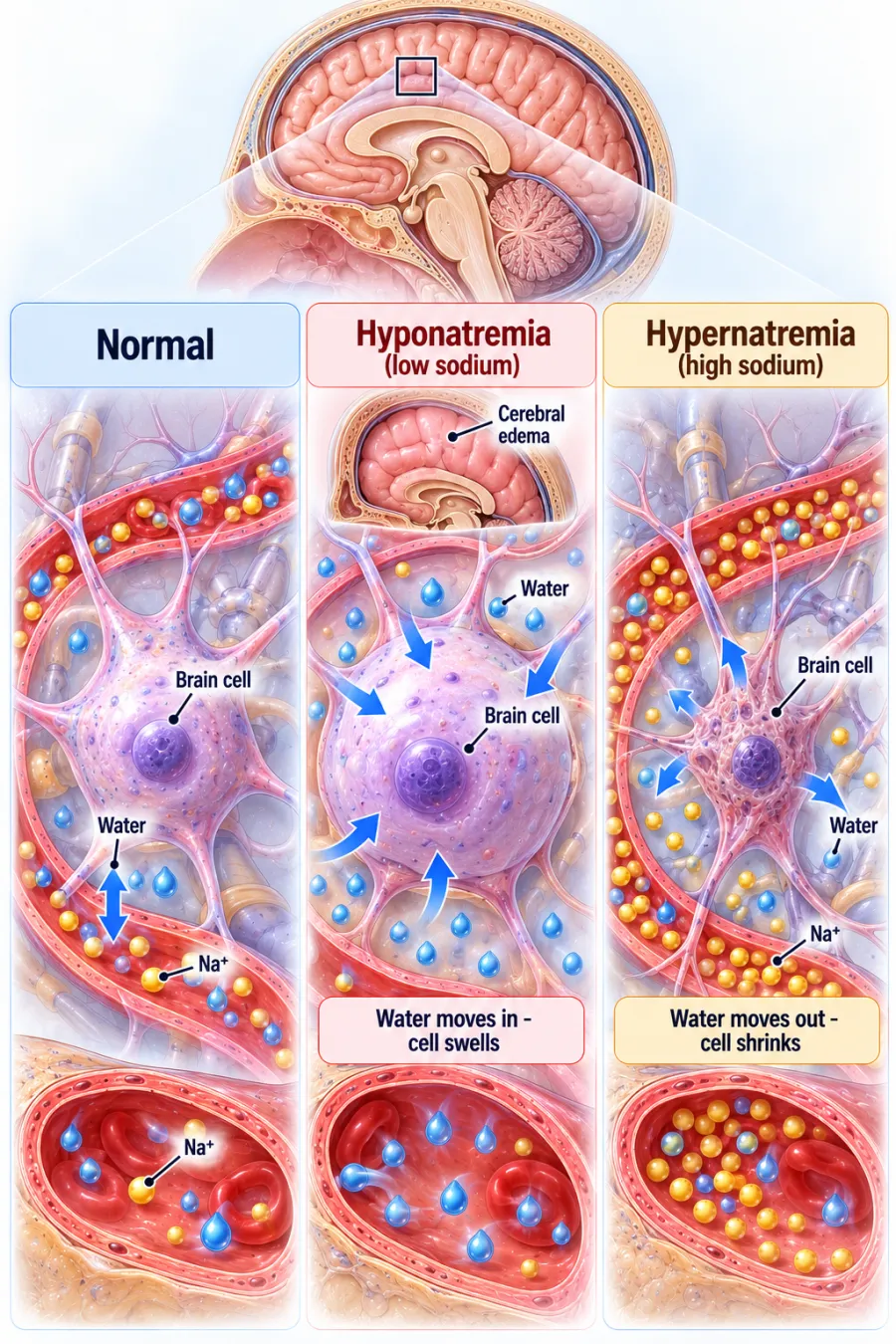
Hypernatremia illustrated
Key points to remember
- Sodium pulls water with it, so high sodium causes intracellular dehydration, especially of brain cells.
- Neurologic signs dominate: restlessness, agitation, irritability, lethargy, twitching, seizures, and coma in severe cases.
- Thirst is an early and strong symptom in clients who are alert and able to perceive it.
- Mucous membranes are dry and sticky, the tongue is rough and red, and skin may be flushed and warm.
- In hypervolemic hypernatremia (salt excess) signs include edema, weight gain, and elevated blood pressure.
- In hypovolemic hypernatremia (water loss) signs include low urine output, weak pulse, and postural hypotension.
Common causes
- Water loss: fever, diarrhea, DI
- ↑ Na intake, ↓ water access
Signs & symptoms
- Thirst, dry mucous membranes
- Restless → confusion → seizures
- FRIED: flushed, restless, edema, ↓UOP
Nursing priorities
- Monitor neurologic status frequently (level of consciousness, orientation, seizure precautions) as the priority safety concern.
- Restore fluid balance, typically with hypotonic IV fluids (0.45% NaCl) or isotonic fluids per order, and oral water if able.
- Lower serum sodium slowly, no faster than about 0.5 mEq/L per hour, to prevent cerebral edema.
- Monitor serum sodium, intake and output, daily weights, and offer/encourage water for clients who cannot get it themselves.
- Restrict dietary sodium and hold sodium-containing fluids when the cause is salt excess.
Labs & values
Patient teaching
- Drink adequate water daily, especially older adults, athletes, and anyone with fever or diarrhea.
- Read labels and limit high-sodium processed foods, canned soups, and salty snacks.
- Report excessive thirst, dry mouth, confusion, or decreased urination to the provider.
Red flags: report now
- New or worsening seizures, sudden decline in level of consciousness, or coma - report immediately and protect airway.
- Correcting sodium too quickly can cause cerebral edema, so an abrupt large drop in serum sodium is an emergency.
- Persistent high urine output with rising sodium suggests diabetes insipidus and needs urgent provider notification.
References
Clinical references for this topic