
Report fever, severe tachycardia, agitation, or altered mental status, which signal thyroid storm, a life-threatening emergency.
Before you read
Test yourself first: 5 questions
Question 1 of 5
The nurse reviews lab work for a client with primary hyperthyroidism (Graves disease). Which result is consistent with this diagnosis?
Answer: A. In primary hyperthyroidism the overactive gland produces excess thyroid hormone, so free T4 (and T3) are elevated. The pituitary senses the high hormone and suppresses TSH, so TSH is low. A low TSH with a high free T4 is the classic primary hyperthyroid pattern.
Question 2 of 5
A client with hyperthyroidism (Graves') is most likely to report:
Answer: B. Hyperthyroidism speeds metabolism: weight loss despite increased appetite, heat intolerance, tachycardia/palpitations, anxiety, tremor, and exophthalmos. Cold intolerance and weight gain occur in HYPOthyroidism.
Question 3 of 5
A client with Graves disease has an exophthalmos. Which nursing intervention best protects the eyes?
Answer: B. Exophthalmos prevents complete lid closure, exposing the cornea to drying and ulceration. Artificial tears, taping the lids closed at night, and elevating the head of bed reduce periorbital edema and protect the cornea. Restricting fluids and applying heat do not address corneal exposure.
Question 4 of 5
The nurse is assessing a newborn for Hirschsprung disease. Which finding in the first 48 hours of life is most suggestive of this disorder?
Answer: A. Failure to pass meconium within 24 to 48 hours of birth is a hallmark of Hirschsprung disease, caused by absence of ganglion cells in a segment of the distal colon. Frequent loose stools, projectile vomiting, and excessive meconium passage are not characteristic.
Question 5 of 5
A child is diagnosed with hand-foot-and-mouth disease. The nurse expects to find which characteristic lesions?
Answer: A. Hand-foot-and-mouth disease, caused by coxsackievirus, produces painful vesicular lesions in the mouth and on the palms and soles. It is usually self-limiting, and care focuses on hydration and comfort.
Keep the streak going with more questions like these, each with a full rationale.
What is hyperthyroidism (graves disease)?
Everything 'speeds up': heart rate, metabolism, GI motility, and energy expenditure. Memory aid: think 'everything HIGH and FAST' (think of someone over-caffeinated). Graves is classically associated with bulging eyes (exophthalmos) and goiter.
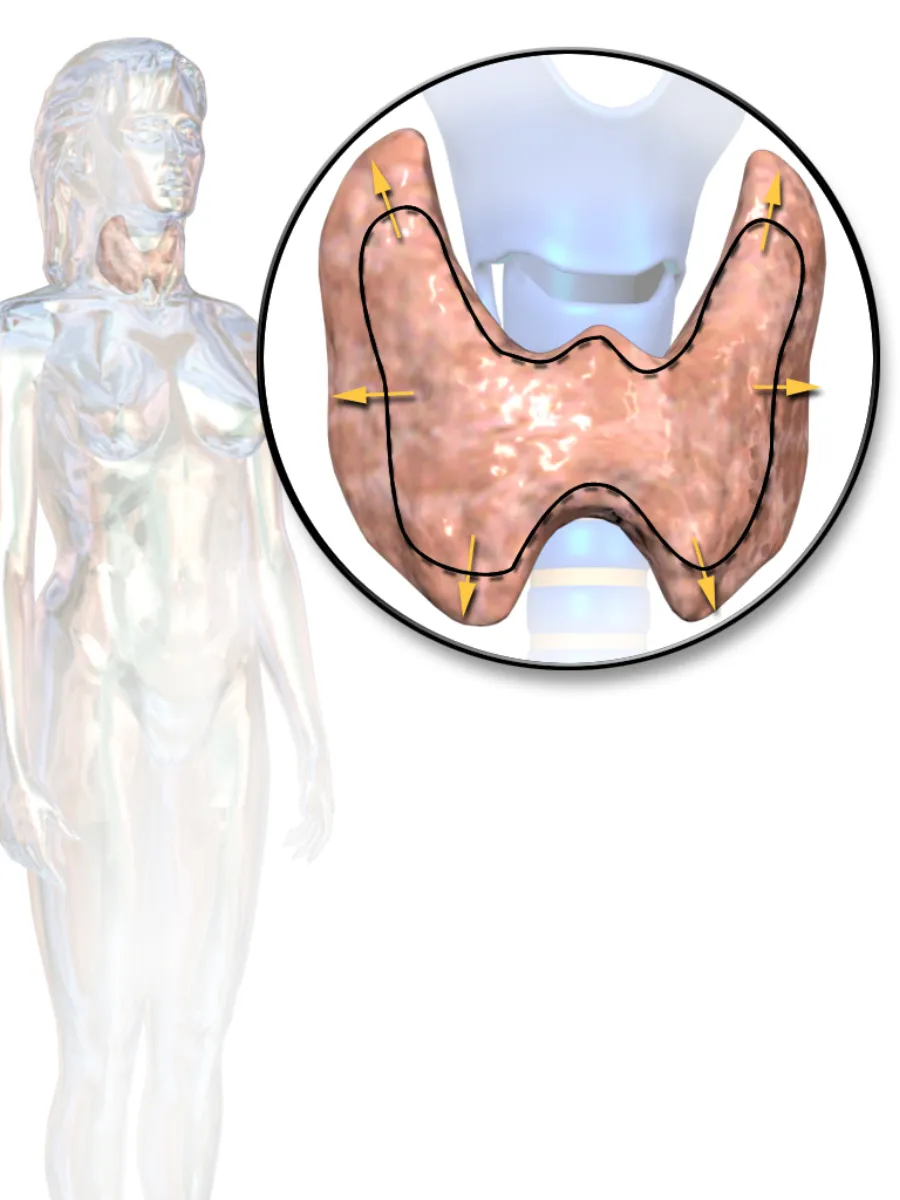
Hyperthyroidism (Graves Disease) illustrated
Key points to remember
- Signs include tachycardia, palpitations, hypertension, heat intolerance, diaphoresis, and warm moist skin.
- Weight loss despite increased appetite, frequent loose stools, and fine hand tremor are characteristic.
- Patients are restless, anxious, irritable, and may have insomnia and difficulty concentrating.
- Exophthalmos (protruding eyeballs) and goiter (enlarged thyroid) are hallmark findings in Graves disease.
- TSH is low while free T3 and T4 are elevated due to feedback suppression of the pituitary.
- Untreated disease increases risk for atrial fibrillation, osteoporosis, and thyroid storm.
Signs & symptoms
- Wt loss, ↑ HR, heat intolerance
- Exophthalmos, goiter, tremor
- Diarrhea, anxious, insomnia
Nursing priorities
- Promote a cool, calm, quiet, low-stimulation environment to reduce metabolic demand.
- Provide a high-calorie, high-protein diet with frequent meals to offset hypermetabolism; avoid caffeine and stimulants.
- Administer antithyroid drugs (methimazole, PTU), beta blockers for symptom control, and iodine preparations as ordered.
- Monitor cardiac status, vital signs, weight, and protect bulging eyes with artificial tears, eye shields, and elevated head of bed.
- After radioactive iodine therapy, teach radiation safety precautions and monitor for resulting hypothyroidism.
Labs & values
Patient teaching
- Take antithyroid medication consistently and report sore throat, fever, or signs of infection (risk of agranulocytosis).
- Report any rapid weight changes, palpitations, or worsening eye symptoms to the provider.
- After radioactive iodine, lifelong thyroid replacement is often needed because of resulting hypothyroidism.
Red flags: report now
- Report fever, severe tachycardia, agitation, or altered mental status, which signal thyroid storm, a life-threatening emergency.
- Report new or worsening chest pain, irregular pulse, or signs of atrial fibrillation.
- Never abruptly stop antithyroid medication, as this can precipitate thyroid storm.
References
Clinical references for this topic

