Laryngospasm, stridor, or respiratory distress - airway emergency, call for help immediately.
Before you read
Test yourself first: 4 questions
Question 1 of 4
A client with hypocalcemia is likely to exhibit:
Answer: B. Hypocalcemia increases neuromuscular excitability: positive Chvostek's and Trousseau's signs, muscle twitching/tetany, numbness/tingling. Severe cases risk laryngospasm and seizures.
Question 2 of 4
A client with renal failure has a serum calcium of 7.2 mg/dL. Which assessment technique helps the nurse confirm hypocalcemia at the bedside?
Answer: B. Tapping over the facial nerve to elicit facial twitching (positive Chvostek sign) and inflating a blood pressure cuff to produce carpal spasm (positive Trousseau sign) confirm increased neuromuscular irritability from hypocalcemia. These bedside maneuvers support the low calcium value.
Question 3 of 4
The nurse notes a serum calcium of 6.5 mg/dL. Which sign should the nurse assess for?
Answer: A. Calcium of 6.5 mg/dL is critically low (normal 9-10.5). Hypocalcemia increases neuromuscular excitability, producing a positive Trousseau sign (carpal spasm) and Chvostek sign, along with tetany.
Question 4 of 4
A client has a serum calcium of 7.2 mg/dL. Which assessment finding supports this value?
Answer: A. Hypocalcemia increases neuromuscular excitability. A positive Trousseau sign (carpal spasm with blood pressure cuff inflation) is a hallmark finding, along with a positive Chvostek sign.
Keep the streak going with more questions like these, each with a full rationale.
What is hypocalcemia?
Low calcium increases neuromuscular excitability, making nerves and muscles fire too easily. Memory aid: think CATS - Convulsions, Arrhythmias, Tetany, Spasms (positive Trousseau and Chvostek signs).
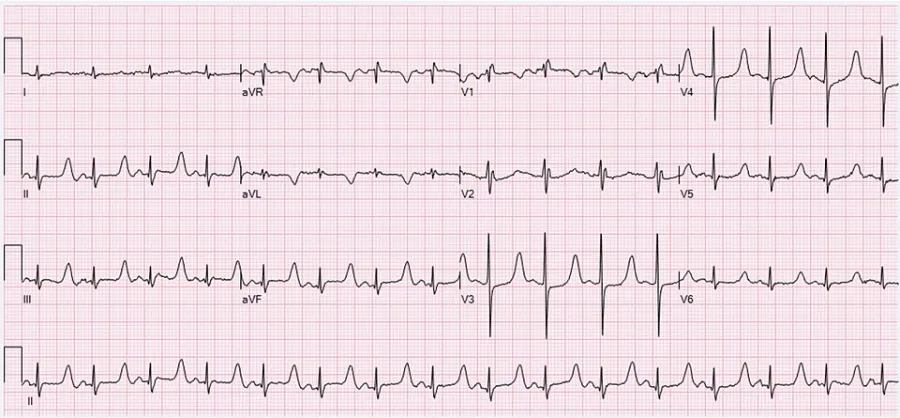
Hypocalcemia illustrated
Key points to remember
- Low calcium increases neuromuscular irritability, causing tingling/numbness around the mouth and in the fingers and toes.
- A positive Trousseau sign (carpal spasm with BP cuff inflation) and positive Chvostek sign (facial twitch when cheek tapped) indicate tetany.
- Muscle cramps, spasms, hyperactive deep tendon reflexes, and tetany are hallmark findings.
- Cardiac effects include a prolonged QT interval and risk of dysrhythmias and decreased cardiac contractility.
- Laryngospasm and bronchospasm can occur and threaten the airway in severe hypocalcemia.
- Seizures may occur because of increased neuronal excitability.
Common causes
- Post-thyroid/parathyroid surgery
- Low PTH, low albumin, ↓ Mg
Signs & symptoms
- Trousseau + Chvostek signs
- ↑ muscle twitch, tetany, spasms
- ↑ DTRs, tingling lips/fingers
Nursing priorities
- Maintain airway and have emergency equipment ready, since laryngospasm can cause sudden airway obstruction.
- Administer IV calcium gluconate slowly for severe/symptomatic hypocalcemia, with cardiac monitoring.
- Institute seizure precautions and monitor neuro and cardiac status.
- Administer oral calcium and vitamin D supplements as ordered for chronic hypocalcemia.
- Encourage calcium-rich foods (dairy, leafy greens) and monitor magnesium, since low magnesium worsens hypocalcemia.
Labs & values
Patient teaching
- Take calcium and vitamin D supplements as prescribed and eat calcium-rich foods.
- Report numbness, tingling around the mouth or in the hands, or muscle cramps.
- Clients after thyroid/parathyroid surgery should watch for these signs in the first 24-48 hours.
Red flags: report now
- Laryngospasm, stridor, or respiratory distress - airway emergency, call for help immediately.
- New seizures or sustained tetany - report at once and protect the client.
- Prolonged QT with dysrhythmias on the monitor - notify provider urgently.
- Give IV calcium slowly and never with bicarbonate or phosphate in the same line (precipitation).
References
Clinical references for this topic