Report decreased level of consciousness, hypothermia, hypotension, hypoventilation, and bradycardia, which signal myxedema coma.
Before you read
Test yourself first: 4 questions
Question 1 of 4
A client is being treated for myxedema (severe hypothyroidism). Which assessment finding requires the nurse's immediate attention?
Answer: C. Myxedema coma is the life-threatening end stage of hypothyroidism, marked by a declining level of consciousness, hypothermia, hypoventilation with hypercapnia, hypotension, and bradycardia. A decreasing level of consciousness signals impending myxedema coma and is the priority. Dry skin and constipation are expected but not emergent.
Question 2 of 4
A client with hypothyroidism is at risk for myxedema coma, which presents with:
Answer: B. Myxedema coma (severe hypothyroidism): hypothermia, bradycardia, hypotension, hypoventilation, and decreased mental status — a life-threatening emergency needing thyroid hormone replacement and support.
Question 3 of 4
The nurse reviews labs for a client with primary hypothyroidism. Which pattern is expected?
Answer: B. In primary hypothyroidism the thyroid gland fails, so circulating T3 and T4 are low. The pituitary responds by increasing TSH secretion, so TSH is elevated. A high TSH with low free T4 is the classic primary hypothyroid pattern.
Question 4 of 4
A client with longstanding hypothyroidism is admitted with hypothermia, bradycardia, hypotension, and decreased level of consciousness. The nurse recognizes which life-threatening complication?
Answer: B. Myxedema coma is a severe, life-threatening hypothyroid emergency marked by hypothermia, bradycardia, hypotension, hypoventilation, and decreased mental status progressing to coma. It often occurs in older adults precipitated by infection, cold exposure, or stopping thyroid medication.
Keep the streak going with more questions like these, each with a full rationale.
What is hypothyroidism (myxedema)?
Everything 'slows down': heart rate, metabolism, GI motility, and mental processing. Memory aid: think 'everything LOW and SLOW' (the opposite of hyperthyroidism). Severe untreated disease can progress to myxedema coma.
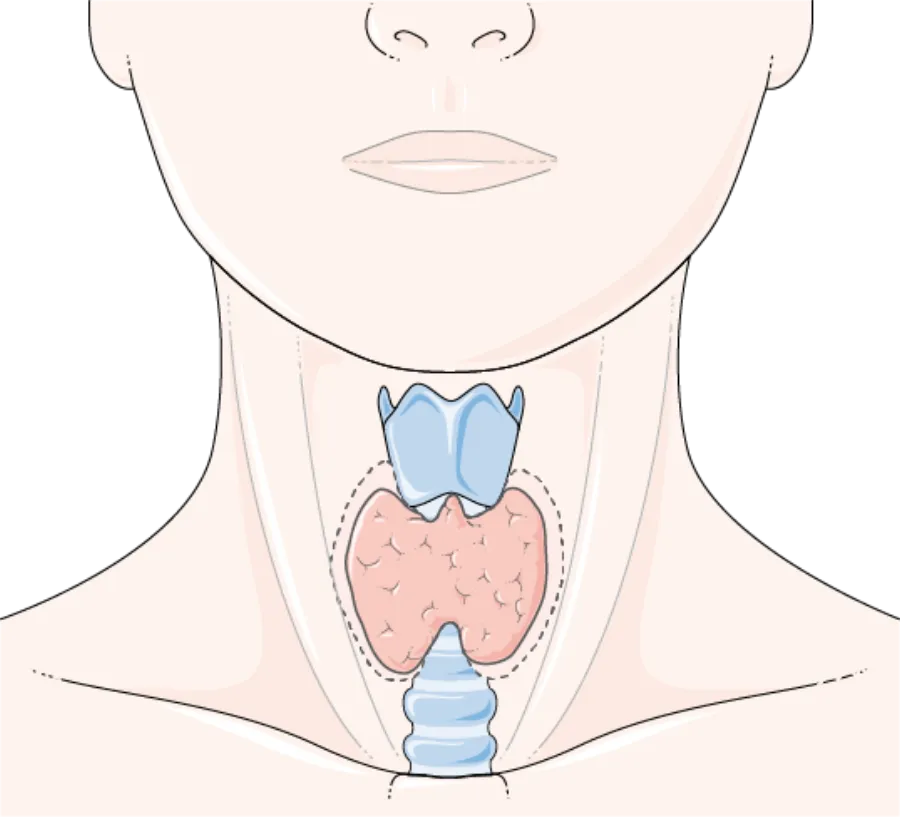
Hypothyroidism (Myxedema) illustrated
Key points to remember
- Signs include bradycardia, hypotension, cold intolerance, fatigue, lethargy, and weight gain despite poor appetite.
- Skin is dry and coarse, hair is thin and brittle, and there is generalized nonpitting edema (myxedema), especially facial puffiness.
- Constipation, slowed speech and movement, depression, and impaired memory are common.
- TSH is elevated while free T4 is low in primary hypothyroidism.
- Hypercholesterolemia develops from slowed metabolism, increasing cardiovascular risk.
- Menstrual irregularities and decreased libido may occur.
Signs & symptoms
- Wt gain, fatigue, cold intolerance
- Bradycardia, constipation, dry skin
- Periorbital edema, hair loss
Nursing priorities
- Administer levothyroxine in the morning on an empty stomach, starting low and titrating slowly, especially in older adults.
- Provide warmth, monitor for cardiac changes, and prevent constipation with fluids and fiber.
- Monitor for signs of overmedication (tachycardia, weight loss, nervousness) and undermedication (continued fatigue, weight gain).
- Institute fall and skin precautions and pace activities to accommodate fatigue.
- Monitor closely for myxedema coma in severely affected or stressed patients.
Labs & values
Patient teaching
- Take levothyroxine for life, at the same time each day on an empty stomach, and do not stop it even when feeling well.
- Separate levothyroxine from antacids, calcium, and iron by several hours, as they reduce absorption.
- Report palpitations, chest pain, insomnia, or weight changes, which may indicate a dose adjustment is needed.
Red flags: report now
- Report decreased level of consciousness, hypothermia, hypotension, hypoventilation, and bradycardia, which signal myxedema coma.
- Report chest pain or new dysrhythmias after starting or increasing levothyroxine, especially in patients with cardiac disease.
- Avoid sedatives and opioids, which can precipitate myxedema coma in these patients.
References
Clinical references for this topic