New neurologic deficits, chest pain, or limb pain and pallor signal embolization and must be reported immediately.
Before you read
Test yourself first: 2 questions
Question 1 of 2
A client with infective endocarditis is being monitored for embolic complications. Which finding should the nurse report to the provider immediately?
Answer: B. Vegetations on heart valves in endocarditis can break off and embolize. New onset of slurred speech and unilateral arm weakness suggests an embolic stroke and is an emergency requiring immediate provider notification. A low-grade fever and fatigue are expected with endocarditis; a healing IV site and stable vital signs are not urgent.
Question 2 of 2
A client has infective endocarditis from a mitral-valve vegetation. Which assessment finding is MOST concerning?
Answer: B. Vegetations can embolize. New facial droop and arm weakness point to an embolic stroke — the most concerning, time-critical finding. Low-grade fever, splinter hemorrhages, and a murmur are expected with endocarditis.
Keep the streak going with more questions like these, each with a full rationale.
What is infective endocarditis?
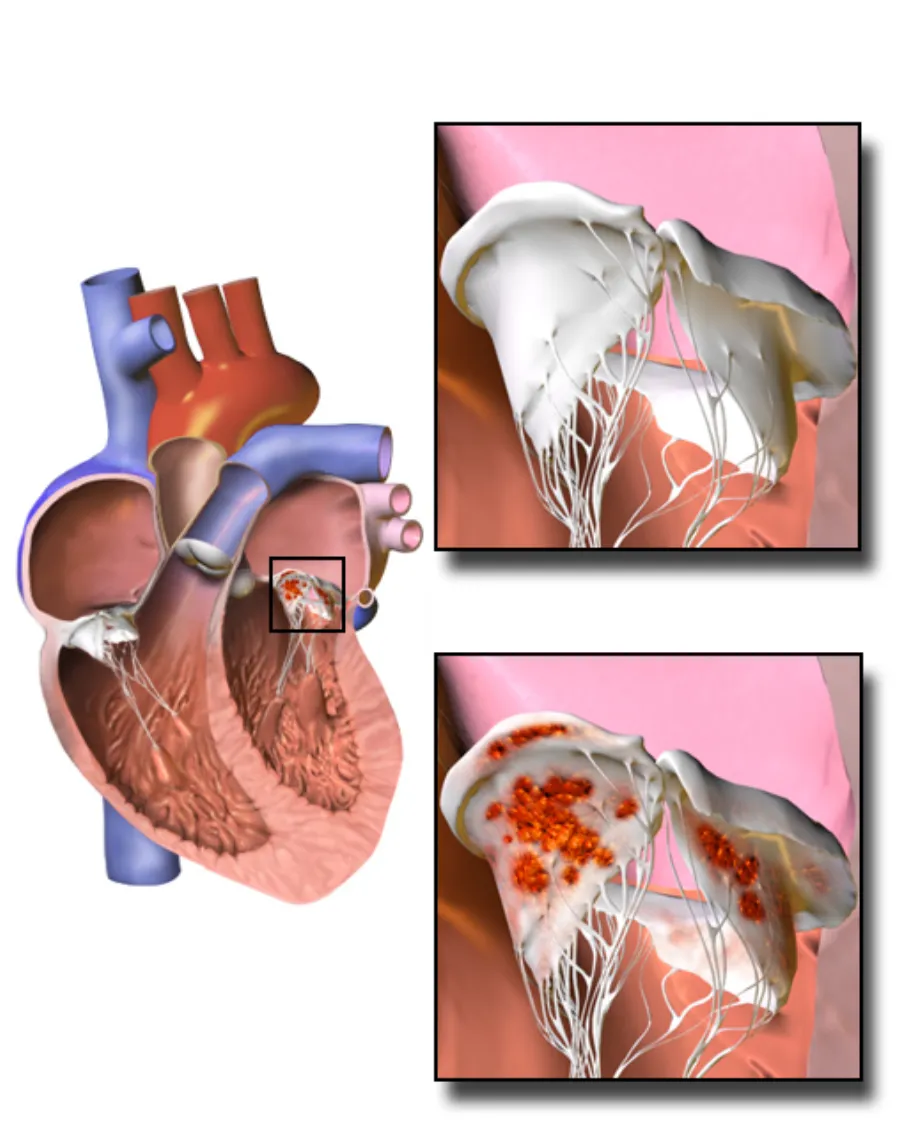
These vegetations can destroy valves and break off as septic emboli that travel to the brain, lungs, kidneys, and extremities. Risk factors include IV drug use, prosthetic valves, recent invasive or dental procedures, and pre-existing valve disease.
Infective Endocarditis illustrated
Key points to remember
- Classic findings include fever, a new or changing heart murmur, and fatigue.
- Peripheral signs from emboli include Janeway lesions, Osler nodes, splinter hemorrhages, and Roth spots in the eyes.
- Septic emboli can cause stroke, pulmonary embolism, splenic infarct, and limb ischemia.
- Blood cultures identify the causative organism and guide antibiotic therapy.
- IV drug use, prosthetic valves, and recent dental or invasive procedures are major risk factors.
Signs & symptoms
- Fever, new murmur, chills
- Janeway lesions, Osler nodes
- Splinter hemorrhages, Roth spots
- Petechiae, fatigue, weight loss
Nursing priorities
- Obtain blood cultures from multiple sites before starting antibiotics.
- Administer long-term IV antibiotic therapy exactly as scheduled, often for 4 to 6 weeks.
- Monitor for signs of embolization to the brain, lungs, kidneys, and extremities.
- Assess for and monitor signs of heart failure from valve damage.
- Monitor temperature and response to therapy and maintain IV line integrity for prolonged access.
Labs & values
Patient teaching
- Complete the entire course of IV antibiotics even after symptoms improve to fully clear the infection.
- Take prophylactic antibiotics before dental and invasive procedures if you have a prosthetic valve or prior endocarditis.
- Maintain good oral hygiene and report any recurrence of fever, fatigue, or night sweats.
Red flags: report now
- New neurologic deficits, chest pain, or limb pain and pallor signal embolization and must be reported immediately.
- Signs of acute heart failure such as new crackles, dyspnea, or worsening murmur require urgent escalation.
- Persistent fever despite antibiotics may indicate treatment failure or abscess and must be reported.
References
Clinical references for this topic