Report tachycardia, chest pain, or marked dyspnea that signals cardiac compensation from severe anemia.
Before you read
Test yourself first: 5 questions
Question 1 of 5
A nurse evaluates a client with vitamin B12 deficiency anemia. Which manifestation distinguishes this from iron deficiency anemia?
Answer: A. Vitamin B12 is needed for myelin and nerve function, so B12 deficiency produces neurologic signs such as paresthesias of the hands and feet, ataxia, and impaired proprioception, in addition to a macrocytic anemia and glossitis. Iron deficiency anemia does not cause these neurologic deficits. Microcytic cells and pica are features of iron deficiency, not B12 deficiency.
Question 2 of 5
A nurse is caring for a client with iron deficiency anemia. Which laboratory finding does the nurse expect?
Answer: B. Iron deficiency anemia produces a microcytic, hypochromic picture with a low mean corpuscular volume (MCV). Ferritin is decreased because iron stores are depleted, total iron-binding capacity (TIBC) rises, and transferrin saturation falls. An elevated MCV reflects macrocytic anemias such as B12 or folate deficiency, not iron deficiency.
Question 3 of 5
A client with vitamin B12 deficiency anemia reports numbness and tingling in the feet and an unsteady gait. The nurse recognizes these findings indicate what?
Answer: A. Vitamin B12 is essential for myelin synthesis, so deficiency causes neurologic changes such as paresthesias, ataxia, and impaired proprioception. These neurologic findings distinguish B12 deficiency from folate deficiency, which does not cause them.
Question 4 of 5
A nurse is reviewing a hemoglobin result for a 12-month-old infant during a routine screening. Which value would the nurse identify as below the expected normal range, suggesting possible iron deficiency anemia?
Answer: A. Hemoglobin below about 11 g/dL in a 12-month-old is considered low and suggests iron deficiency anemia, the most common nutritional deficiency in this age group. Values of 11 to 13 g/dL fall within the expected normal range for infants and toddlers.
Question 5 of 5
A nurse is assessing a client who reports chronic fatigue and is found to have pale skin, spoon-shaped nails (koilonychia), and cravings to chew ice. These findings are most characteristic of which condition?
Answer: A. Spoon-shaped nails (koilonychia) and pica (such as a craving to chew ice, called pagophagia) are classic signs of chronic iron deficiency anemia, along with pallor and fatigue. These specific findings point to iron deficiency rather than B12 deficiency, sickle cell disease, or polycythemia, which present with different hallmark manifestations.
Keep the streak going with more questions like these, each with a full rationale.
What is iron-deficiency anemia?
Common causes are chronic blood loss (GI bleed, heavy menses), poor dietary intake, malabsorption, and pregnancy. It matters because low oxygen-carrying capacity causes fatigue and, if severe, cardiac strain.
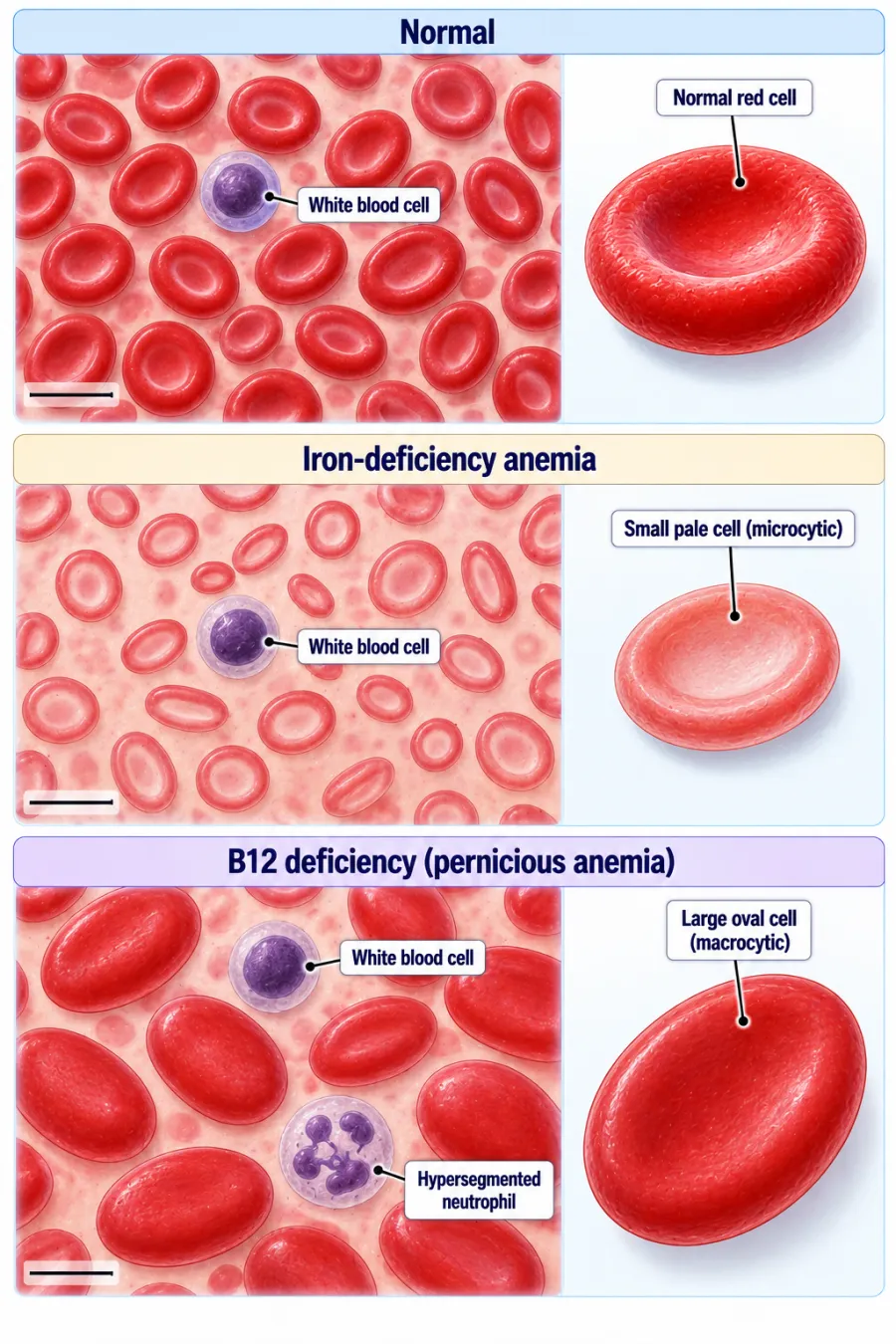
Iron-Deficiency Anemia illustrated
Key points to remember
- Red cells are microcytic and hypochromic (small and pale).
- Classic signs include fatigue, pallor, weakness, dyspnea on exertion, and tachycardia.
- Pica (craving ice, dirt, or clay) and spoon-shaped, brittle nails (koilonychia) are characteristic.
- Glossitis (smooth, sore, beefy-red tongue) and cheilosis (cracked mouth corners) may occur.
- In adults, a new iron-deficiency anemia is GI blood loss until proven otherwise.
- Ferritin (iron stores) is low and is the earliest lab to drop.
Common causes
- blood loss, ↓intake, menstruation
- GI bleed, pregnancy, malabsorb
Signs & symptoms
- pallor, fatigue, tachycardia
- spoon nails, pica, glossitis
Nursing priorities
- Assess for and identify the source of blood loss, including checking stool for occult blood.
- Administer prescribed oral iron with vitamin C or orange juice on an empty stomach to enhance absorption.
- Give IM iron by Z-track technique to prevent staining and tissue irritation; never massage the site.
- Balance activity with rest and space care to reduce oxygen demand and fatigue.
- Monitor reticulocyte count, which should rise within a week of effective therapy.
Labs & values
Patient teaching
- Take oral iron with vitamin C or juice and avoid taking it with milk, antacids, tea, or coffee.
- Iron turns stools dark/tarry-black and may cause constipation; increase fluids and fiber.
- Eat iron-rich foods such as red meat, liver, leafy greens, beans, and fortified cereals; use a straw for liquid iron to protect teeth.
Red flags: report now
- Report tachycardia, chest pain, or marked dyspnea that signals cardiac compensation from severe anemia.
- Report active or worsening GI bleeding (melena, hematemesis, bright red rectal bleeding).
- Hemoglobin below the transfusion threshold or rapidly falling requires escalation.
References
Clinical references for this topic