Report a temperature of 100.4 F (38 C) or higher; neutropenic fever is a medical emergency.
Before you read
Test yourself first: 1 question
Question 1 of 1
A client with leukemia has a platelet count of 18,000/mm3. Which instruction by the nurse requires correction because it increases the client's bleeding risk?
Answer: C. With severe thrombocytopenia, bleeding precautions include a soft toothbrush and electric razor, avoiding IM injections and rectal procedures, avoiding aspirin and NSAIDs, and applying prolonged pressure to puncture sites. Vigorous flossing causes gum trauma and bleeding and is contraindicated, so instructing the client to floss vigorously must be corrected.
Keep the streak going with more questions like these, each with a full rationale.
What is leukemia?
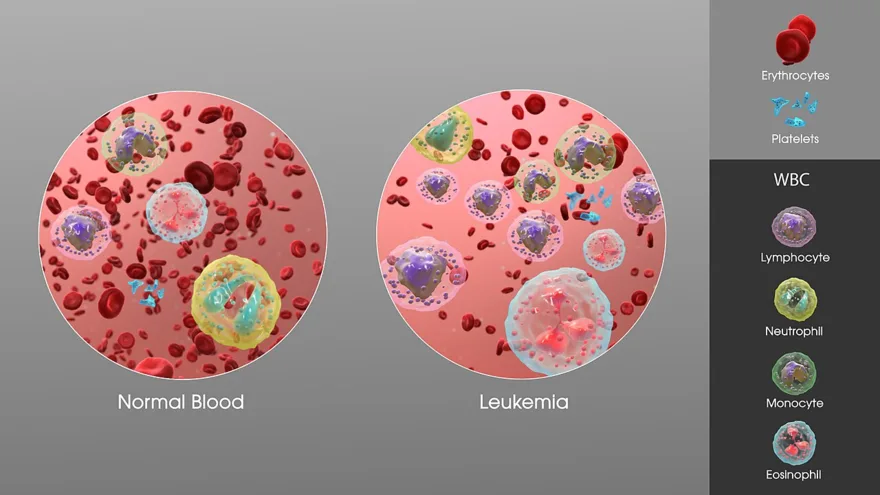
As normal red cells, platelets, and functional white cells are displaced, the patient develops anemia, bleeding, and infection risk. It matters because the patient is simultaneously at high risk for infection (immature WBCs don't fight infection) and bleeding.
Leukemia illustrated
Key points to remember
- Overgrowth of immature leukocytes crowds out red cells, platelets, and normal white cells in the marrow.
- Despite a high WBC count, the cells are nonfunctional, so infection risk is high.
- Anemia causes fatigue, pallor, and dyspnea; thrombocytopenia causes bruising, petechiae, and bleeding.
- Bone and joint pain occur from marrow expansion, along with fever and night sweats.
- Hepatomegaly, splenomegaly, and lymphadenopathy are common.
- Diagnosis is confirmed by bone marrow aspiration showing blast cells.
Signs & symptoms
- infection (↓functional WBC)
- bleeding/bruising (↓platelets)
- fatigue, pallor (↓RBC), bone pain
Nursing priorities
- Implement neutropenic precautions and protect the patient from infection (handwashing, private room, no fresh flowers/raw produce).
- Institute bleeding precautions for low platelets: soft toothbrush, electric razor, no IM injections, no aspirin.
- Monitor temperature closely; a fever may be the only sign of infection.
- Administer chemotherapy, transfusions, and growth factors as prescribed and monitor for tumor lysis.
- Provide meticulous oral care and skin care to prevent breakdown and infection portals.
Labs & values
Patient teaching
- Avoid crowds, sick contacts, and anyone with recent live vaccines; report fever or signs of infection immediately.
- Use a soft toothbrush and electric razor and avoid aspirin/NSAIDs and contact activities while platelets are low.
- Maintain good nutrition and hydration, and keep all follow-up and blood-count appointments.
Red flags: report now
- Report a temperature of 100.4 F (38 C) or higher; neutropenic fever is a medical emergency.
- Report active bleeding, new petechiae/bruising, or signs of intracranial bleed (headache, vision changes, altered mental status).
- Report signs of tumor lysis syndrome (hyperkalemia, hyperphosphatemia, hyperuricemia) after starting chemotherapy.
References
Clinical references for this topic