
Red flag to remember
Report fever or signs of infection during treatment-induced neutropenia.
What is lymphoma?
It usually presents with painless lymph node enlargement plus systemic 'B symptoms.' It matters because staging guides treatment, and the disease and its therapy raise infection and bleeding risk.
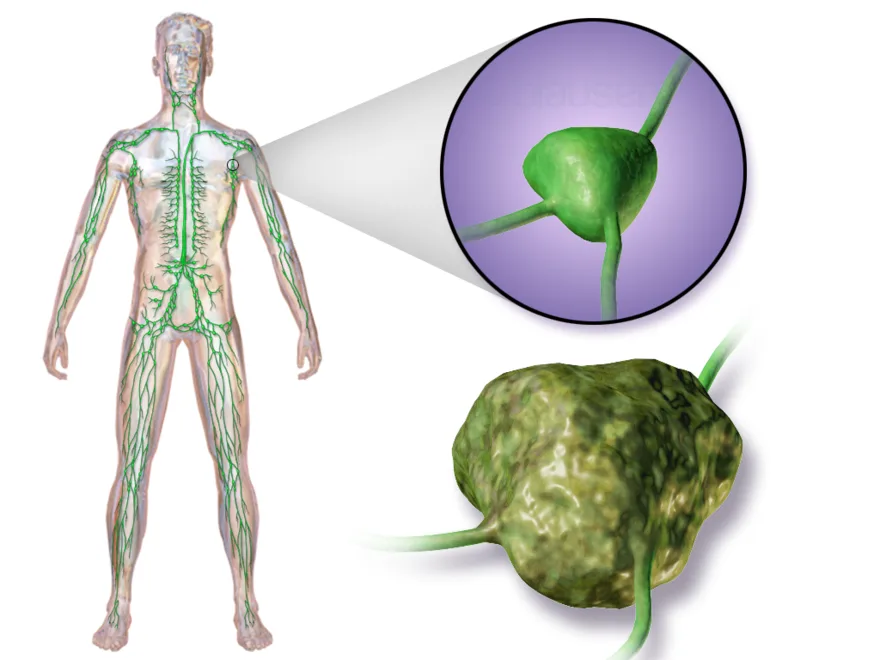
Lymphoma illustrated
Key points to remember
- The hallmark is painless, enlarged, firm lymph nodes, often in the neck or supraclavicular area.
- B symptoms are fever, drenching night sweats, and unexplained weight loss (over 10%).
- Hodgkin lymphoma is identified by Reed-Sternberg cells on biopsy and tends to spread predictably node-to-node.
- Non-Hodgkin lymphoma spreads more diffusely and is often diagnosed at a later stage.
- Pruritus (generalized itching) and fatigue are common.
- Hodgkin lymphoma has a high cure rate, especially when caught early.
Signs & symptoms
- PAINLESS enlarged lymph node
- B sx: fever, night sweats, wt loss
- pruritus, fatigue, ETOH node pain
Nursing priorities
- Prepare the patient for and support lymph node biopsy, which confirms diagnosis and type.
- Protect the patient from infection during chemotherapy or radiation-induced immunosuppression.
- Institute bleeding precautions when platelets are low from treatment.
- Manage treatment side effects such as nausea, fatigue, and skin changes from radiation.
- Provide emotional support and education about staging, fertility preservation, and the treatment plan.
Labs & values
Lymph node biopsy positive for Reed-Sternberg cells (Hodgkin) or malignant lymphocytes
ESR (normal up to ~20 mm/hr) often elevated
WBC, platelets, and hemoglobin may decrease with marrow involvement or treatment
LDH may be elevated
Patient teaching
- Protect irradiated skin: keep it dry, avoid sun, heat, and harsh soaps, and do not wash off radiation markings.
- Report fever, infection, or unusual bleeding promptly during therapy.
- Discuss fertility preservation before starting treatment and follow up for long-term cancer surveillance.
Red flags: report now
- Report fever or signs of infection during treatment-induced neutropenia.
- Report new or rapidly enlarging nodes, superior vena cava syndrome (facial/neck swelling, distended neck veins, dyspnea).
- Report uncontrolled bleeding or severe drop in blood counts.
References
Clinical references for this topic

Study Lymphoma in the app4,000+ NCLEX questions with a rationale on every answer, NGN case studies and timed mock exams.See how CinnaRN works
Start free Want more Physiological Adaptation questions?We'll email you a free set on Lymphoma. No account needed.
Was this helpful?