Dysrhythmias from hyperkalemia - obtain ECG and notify provider immediately.
Before you read
Test yourself first: 5 questions
Question 1 of 5
A client in septic shock develops lactic acidosis. Which arterial blood gas value most directly reflects this metabolic problem?
Answer: A. Lactic acidosis is a metabolic acidosis caused by tissue hypoperfusion and anaerobic metabolism. The bicarbonate is consumed buffering the lactic acid, so a low HCO3 (below 22 mEq/L) most directly reflects the metabolic disturbance, along with a low pH.
Question 2 of 5
Which arterial blood gas indicates uncompensated metabolic acidosis?
Answer: B. Metabolic acidosis: low pH with a low bicarbonate (HCO₃). 'Uncompensated' means the CO₂ is still normal. Example: pH 7.28, CO₂ 40, HCO₃ 16.
Question 3 of 5
A client with severe diarrhea has these ABGs: pH 7.30, PaCO2 36 mm Hg, bicarbonate 17 mEq/L. The nurse identifies which imbalance?
Answer: B. Diarrhea causes loss of bicarbonate-rich intestinal fluid, producing metabolic acidosis. The low pH and low bicarbonate with a near-normal PaCO2 confirm uncompensated metabolic acidosis. Treatment focuses on fluid and bicarbonate replacement and stopping the loss.
Question 4 of 5
A client in acute renal failure is unable to excrete hydrogen ions or reabsorb bicarbonate. Which acid-base imbalance does the nurse anticipate?
Answer: A. The kidneys regulate acid-base balance by excreting hydrogen ions and reabsorbing bicarbonate. In renal failure, retained acids and lost bicarbonate produce metabolic acidosis, characterized by a low pH and low bicarbonate. This is a classic cause of high-anion-gap metabolic acidosis.
Question 5 of 5
The nurse cares for a client with diabetic ketoacidosis. Which arterial blood gas pattern does the nurse anticipate?
Answer: A. Diabetic ketoacidosis produces metabolic acidosis from accumulated ketoacids: a low pH and a low bicarbonate. The body compensates by hyperventilating (Kussmaul respirations) to blow off CO2, so the PaCO2 falls below normal. This is metabolic acidosis with respiratory compensation.
Keep the streak going with more questions like these, each with a full rationale.
What is metabolic acidosis?
Common causes include diabetic ketoacidosis, lactic acidosis (shock), renal failure, and diarrhea (loss of bicarbonate). The body compensates by increasing the respiratory rate and depth (Kussmaul respirations) to blow off CO2 and raise pH. It matters because severe acidosis depresses the heart and central nervous system.
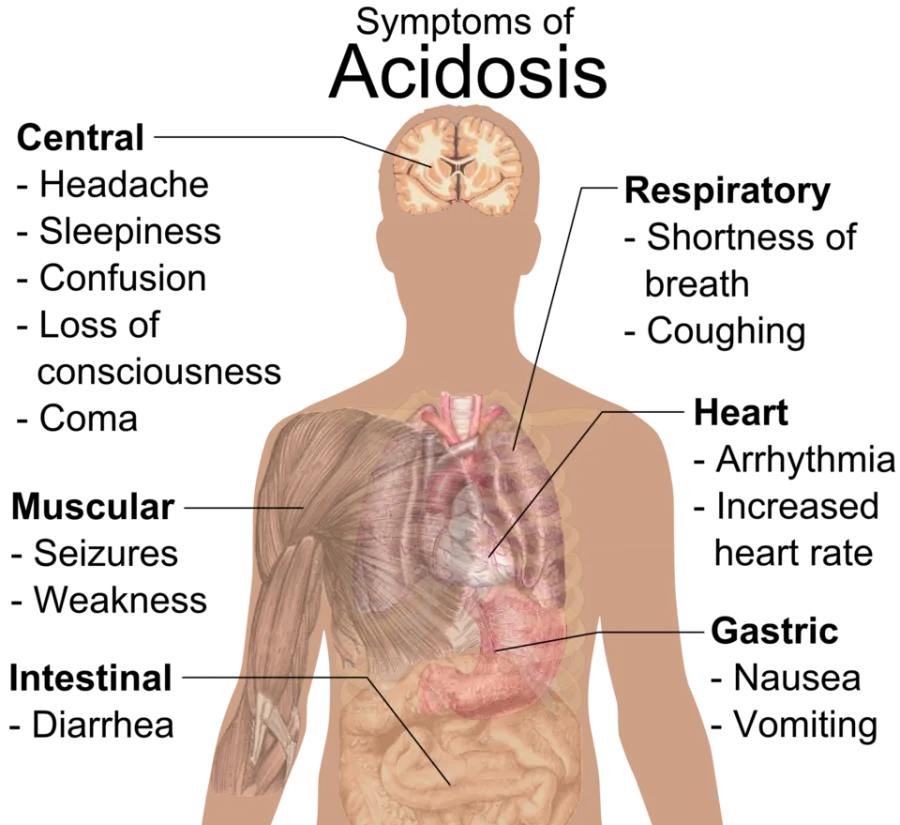
Metabolic Acidosis illustrated
Key points to remember
- ABG pattern: low pH (under 7.35) with low HCO3 (under 22 mEq/L); the bicarbonate change drives the disorder.
- Respiratory compensation produces deep, rapid Kussmaul respirations to exhale CO2 and a low PaCO2.
- Neurologic signs include headache, confusion, drowsiness, and progression to lethargy and coma.
- Acidosis shifts potassium out of cells, so hyperkalemia is often present and causes cardiac dysrhythmias.
- Cardiovascular effects include hypotension, bradycardia, and decreased cardiac contractility.
- GI symptoms include nausea, vomiting, and abdominal pain; warm flushed skin may be seen.
Common causes
- DKA, lactic acidosis, renal fail
- Diarrhea, shock
Signs & symptoms
- Kussmaul breathing (deep/fast)
- Confusion, drowsy, warm flush
- ↑ K (hyperkalemia)
Nursing priorities
- Treat the underlying cause (insulin and fluids for DKA, restore perfusion for lactic acidosis, dialysis for renal failure).
- Monitor ABGs, potassium, and cardiac rhythm closely.
- Support airway and breathing; do not suppress the compensatory Kussmaul respirations.
- Administer IV fluids and prepare to give sodium bicarbonate only for severe acidosis per order.
- Monitor potassium during treatment, as correcting acidosis can shift potassium back into cells and cause hypokalemia.
Labs & values
Patient teaching
- Diabetic clients should monitor glucose and ketones and seek care for persistent high glucose or vomiting.
- Take chronic kidney disease medications and attend dialysis as prescribed.
- Report increasing fatigue, confusion, deep rapid breathing, or persistent diarrhea.
Red flags: report now
- Dysrhythmias from hyperkalemia - obtain ECG and notify provider immediately.
- Decreasing level of consciousness, profound hypotension, or pH below 7.20 - escalate urgently.
- During correction, watch for a sudden drop in potassium that can also cause dysrhythmias.
References
Clinical references for this topic