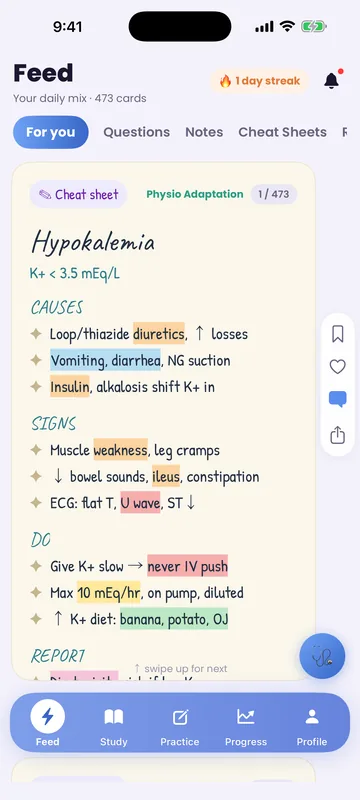
Tetany, seizures, or dysrhythmias - notify provider immediately.
Before you read
Test yourself first: 5 questions
Question 1 of 5
A client who has been vomiting for three days presents with these gases: pH 7.50, PaCO2 42 mmHg, HCO3 32 mEq/L. The nurse identifies this as which acid-base disturbance?
Answer: A. Prolonged vomiting causes loss of hydrochloric acid from the stomach, leading to metabolic alkalosis. The pH is elevated (above 7.45) and the bicarbonate is high (above 26) while the PaCO2 remains normal, confirming an uncompensated metabolic alkalosis.
Question 2 of 5
A client with prolonged vomiting is at greatest risk for which acid-base disturbance?
Answer: B. Vomiting removes hydrochloric acid from the stomach, producing metabolic alkalosis. The loss of hydrogen and chloride ions raises the pH and bicarbonate.
Question 3 of 5
The nurse reviews a gas: pH 7.55, PaCO2 48 mmHg, HCO3 36 mEq/L. Which interpretation is correct?
Answer: A. The pH is high (alkalosis), the HCO3 is high (the primary metabolic alkalosis), and the PaCO2 is elevated, indicating respiratory compensation through hypoventilation to retain CO2. Because the pH is still abnormal, compensation is partial. This is partially compensated metabolic alkalosis.
Question 4 of 5
A client's arterial pH is 7.55 with an HCO3 of 32 mEq/L and a normal PaCO2. Which history finding best explains this result?
Answer: A. A high pH with an elevated bicarbonate indicates metabolic alkalosis. Common causes include prolonged vomiting and nasogastric suctioning, which remove acidic gastric contents.
Question 5 of 5
A client with a high small bowel obstruction is most at risk for which acid-base imbalance?
Answer: B. A high (proximal) small bowel obstruction causes loss of acidic gastric contents through vomiting or NG suction, leading to metabolic alkalosis from loss of hydrogen and chloride ions, along with hypokalemia and hypochloremia. A low (distal) obstruction or prolonged diarrhea more often causes metabolic acidosis from loss of bicarbonate-rich fluids. Recognizing metabolic alkalosis guides electrolyte and fluid replacement.
Keep the streak going with more questions like these, each with a full rationale.
What is metabolic alkalosis?
Common causes include prolonged vomiting or nasogastric suction (loss of stomach acid), excessive antacid use, and overuse of diuretics that waste potassium and hydrogen. The body compensates by slowing and shallowing breathing to retain CO2 and lower pH. Alkalosis increases neuromuscular excitability and is often paired with hypokalemia.
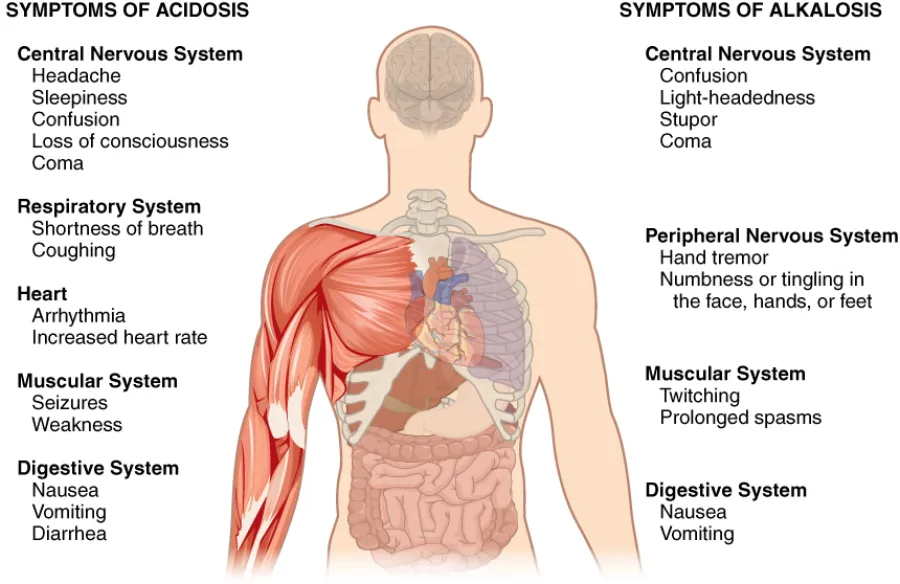
Metabolic Alkalosis illustrated
Key points to remember
- ABG pattern: high pH (over 7.45) with high HCO3 (over 26 mEq/L); the bicarbonate change drives the disorder.
- Respiratory compensation causes slow, shallow breathing to retain CO2, raising PaCO2.
- Increased neuromuscular excitability produces tingling of fingers and toes, muscle cramps, tremors, hyperactive reflexes, and tetany.
- Hypokalemia commonly accompanies metabolic alkalosis and worsens dysrhythmia risk.
- Neurologic signs include dizziness, confusion, irritability, and possible seizures.
- Vomiting and gastric suctioning are the most common causes due to loss of hydrochloric acid.
Common causes
- Vomiting, NG suction
- Antacids, diuretics, ↓ K
Signs & symptoms
- ↓ K → cramps, weakness
- Tetany, tingling, tremor
- Dizzy, confusion, ↑ DTRs
Nursing priorities
- Treat the cause: control vomiting, manage NG suction, and review diuretic and antacid use.
- Replace fluids with isotonic saline and replace potassium as ordered.
- Monitor ABGs, electrolytes (especially potassium and calcium), and cardiac rhythm.
- Institute safety and seizure precautions for clients with tetany or altered mental status.
- Monitor respiratory status, since compensatory hypoventilation can lower oxygenation.
Labs & values
Patient teaching
- Do not overuse antacids or baking soda for stomach upset.
- Use diuretics exactly as prescribed and keep follow-up labs.
- Report persistent vomiting, muscle cramps, tingling, or palpitations.
Red flags: report now
- Tetany, seizures, or dysrhythmias - notify provider immediately.
- Severe hypokalemia with ECG changes - report and treat urgently.
- pH above 7.55 with neuromuscular instability - escalate.
References
Clinical references for this topic