Symptoms are scattered and variable: fatigue, muscle weakness, numbness, tingling, and spasticity.
Before you read
Test yourself first: 3 questions
Question 1 of 3
A client with multiple sclerosis (MS) has an exacerbation. A priority nursing focus is to:
Answer: B. Promote energy conservation and rest (fatigue is a hallmark), prevent injury/falls from weakness and impaired coordination, manage symptoms, and avoid heat (worsens symptoms). Pushing through fatigue worsens it.
Question 2 of 3
A nurse reviews findings for a client with suspected multiple sclerosis. Which diagnostic result best supports the diagnosis?
Answer: A. MS is supported by MRI showing demyelinating plaques (white matter lesions) in the brain and spinal cord, and by oligoclonal bands in cerebrospinal fluid. A resting tremor, elevated acetylcholine receptor antibodies, and albuminocytologic dissociation in CSF point to other neurologic conditions (Parkinson, myasthenia gravis, and Guillain-Barre respectively).
Question 3 of 3
A client reports numbness, blurred vision, and fatigue that come and go over several months. The nurse recognizes that relapsing-remitting symptoms are most characteristic of which disorder?
Answer: B. Multiple sclerosis is a demyelinating disease of the central nervous system that classically presents with relapsing-remitting neurologic symptoms such as numbness, visual disturbances (optic neuritis), weakness, and fatigue that wax and wane. Parkinson, ALS, and myasthenia gravis do not typically follow this relapsing-remitting visual and sensory pattern.
Keep the streak going with more questions like these, each with a full rationale.
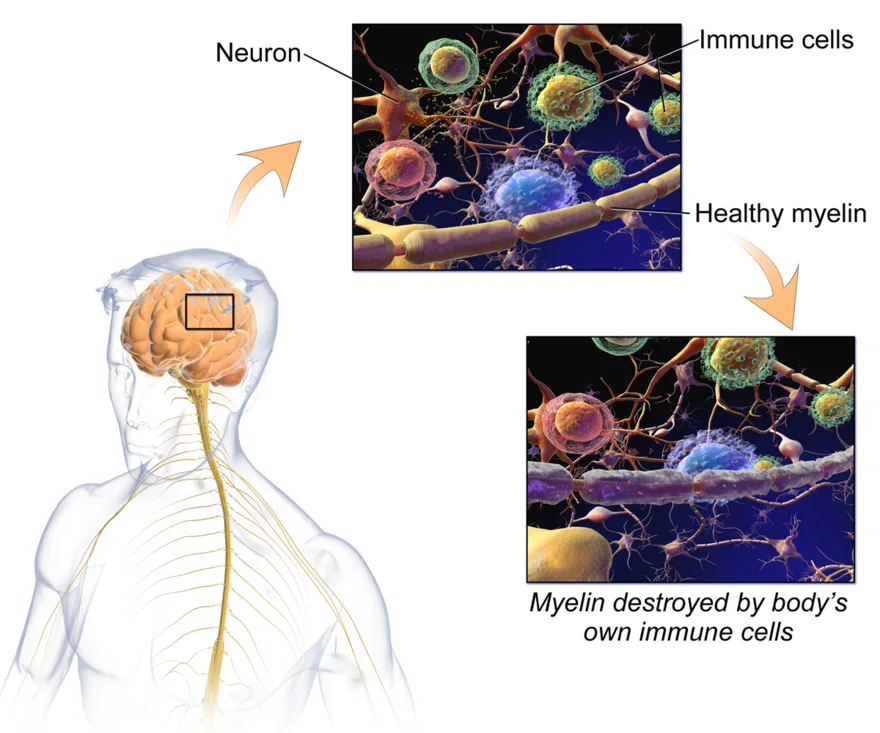
What is multiple sclerosis?
It typically follows a relapsing-remitting course with periods of exacerbation and remission, most often beginning in young adults aged 20 to 40 and more common in women. Heat, stress, fatigue, and infection can trigger exacerbations.
Multiple Sclerosis illustrated
Key points to remember
- Symptoms are scattered and variable: fatigue, muscle weakness, numbness, tingling, and spasticity.
- Visual disturbances such as blurred or double vision (diplopia) and nystagmus are common early signs.
- Patients may have intention tremor, ataxia, slurred or scanning speech, and bowel/bladder dysfunction.
- Heat (hot baths, fever, hot weather) and emotional stress worsen symptoms.
- The course is unpredictable, alternating between exacerbations (relapses) and remissions.
Signs & symptoms
- Fatigue, diplopia, blurred vision
- Weakness, numbness, ataxia
- Intention tremor, bladder issues
Nursing priorities
- Balance activity with rest and pace activities to manage the profound fatigue that limits these patients.
- Keep the patient cool and avoid overheating, since heat worsens symptoms.
- Promote safety and prevent falls through assistive devices and an obstacle-free environment.
- Administer corticosteroids during exacerbations and disease-modifying immunomodulators as prescribed.
- Assess swallowing and implement aspiration precautions; establish a bowel and bladder management routine.
Patient teaching
- Avoid known triggers: overheating, extreme fatigue, stress, and infections.
- Establish a balanced routine of rest and exercise, and use energy-conservation techniques.
- Take prescribed medications consistently, report signs of infection early, and stay active to maintain function.
Red flags: report now
- Choking, coughing, or difficulty swallowing indicates aspiration risk, hold oral intake and reassess.
- Signs of urinary tract or respiratory infection can trigger an exacerbation and must be reported promptly.
- Sudden marked increase in weakness or visual loss may signal an acute exacerbation needing treatment.
References
Clinical references for this topic