
Signs of thrombosis - calf pain/swelling (DVT) or sudden dyspnea/chest pain (PE) - report immediately.
Before you read
Test yourself first: 3 questions
Question 1 of 3
A client with nephrotic syndrome presents to the clinic. Which clinical manifestation does the nurse expect to find?
Answer: A. Nephrotic syndrome is characterized by massive proteinuria, hypoalbuminemia, generalized edema (including periorbital edema), and hyperlipidemia. Loss of protein in the urine lowers serum albumin, reducing oncotic pressure and producing edema.
Question 2 of 3
A client with acute coronary syndrome is having chest pain and receives sublingual nitroglycerin. After the first tablet, the pain persists. What is the nurse's appropriate action?
Answer: B. For ongoing chest pain, the standard teaching is to give one sublingual nitroglycerin tablet every 5 minutes for up to 3 doses, checking blood pressure between doses because nitroglycerin causes vasodilation and hypotension. If pain is unrelieved, emergency care or provider notification is needed. Giving all three at once, waiting 30 minutes, or doubling the dose are unsafe.
Question 3 of 3
A nurse scores a newborn with neonatal abstinence syndrome. Which findings are consistent with NAS?
Answer: A. NAS produces central nervous system signs (high-pitched cry, tremors, irritability, hypertonia, exaggerated Moro, poor sleep), autonomic signs (sweating, sneezing, yawning, nasal stuffiness, fever), and GI signs (poor feeding, vomiting, diarrhea, frantic sucking). A consistently calm, easily consoled infant who sleeps well is not exhibiting NAS.
Keep the streak going with more questions like these, each with a full rationale.
What is nephrotic syndrome?
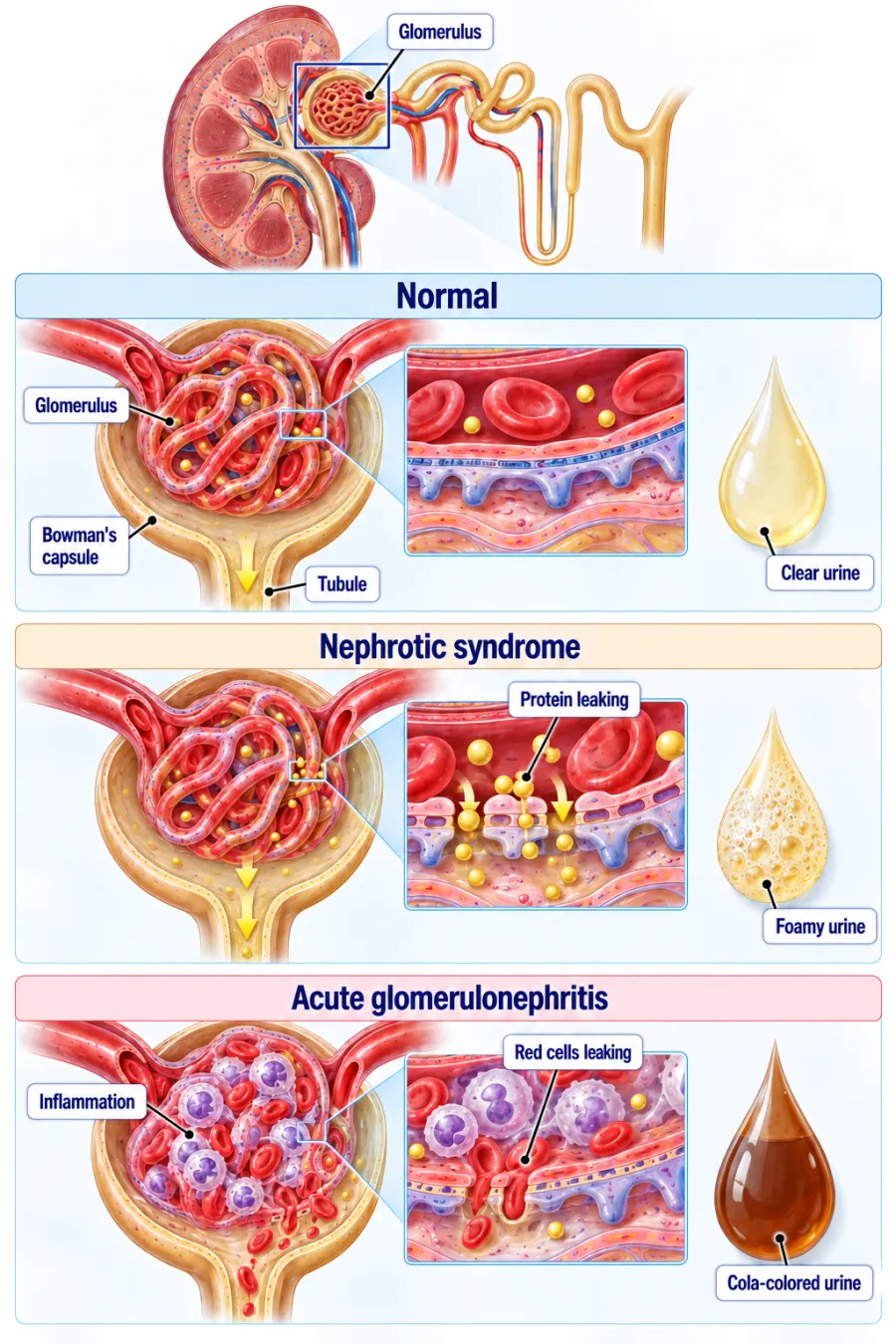
It is defined by the tetrad of heavy proteinuria, hypoalbuminemia, generalized edema, and hyperlipidemia. The loss of plasma protein lowers oncotic pressure, pulling fluid into tissues. It can be primary (kidney disease) or secondary to diabetes, lupus, or infection.
Nephrotic Syndrome illustrated
Key points to remember
- Massive proteinuria (over 3.5 g/day) is the hallmark, with foamy or frothy urine.
- Generalized edema is prominent, including periorbital (around the eyes), often worse in the morning.
- Hypoalbuminemia results from urinary protein loss and drives the edema.
- Hyperlipidemia occurs as the liver increases lipoprotein production in response to low albumin.
- Loss of clotting factors and antithrombin in urine creates a hypercoagulable, thrombosis-prone state.
- Loss of immunoglobulins increases infection risk.
Signs & symptoms
- proteinuria >3.5 g/day
- MASSIVE edema, anasarca
- ↓albumin, ↑lipids, foamy urine
Nursing priorities
- Monitor edema, daily weights, abdominal girth, and strict intake and output.
- Restrict sodium and fluids; provide moderate dietary protein as ordered.
- Administer corticosteroids, diuretics, ACE inhibitors/ARBs (reduce proteinuria), and lipid-lowering agents as prescribed.
- Protect edematous skin and assess for signs of infection and thrombosis.
- Monitor blood pressure and laboratory protein/albumin trends.
Labs & values
Patient teaching
- Follow the low-sodium diet and fluid limits to control swelling.
- Watch for and report signs of infection promptly because immunity is reduced.
- Take steroids exactly as prescribed and never stop them suddenly; report leg pain or breathing trouble.
Red flags: report now
- Signs of thrombosis - calf pain/swelling (DVT) or sudden dyspnea/chest pain (PE) - report immediately.
- Fever or other infection signs - patients are immunocompromised from immunoglobulin loss.
- Rapidly worsening edema with respiratory distress or oliguria - escalate.
- Do not abruptly stop corticosteroids.
References
Clinical references for this topic

