Withdrawal causes flu-like symptoms: muscle aches, yawning, lacrimation, rhinorrhea, and sweating.
Before you read
Test yourself first: 5 questions
Question 1 of 5
A nurse assesses a client suspected of acute opioid intoxication. Which classic triad of findings supports this diagnosis?
Answer: A. The classic triad of opioid toxicity is central nervous system depression (decreased level of consciousness), respiratory depression, and miosis (pinpoint pupils). Dilated pupils with hyperactivity and hypertension are seen in stimulant intoxication, and seizures with autonomic instability point to alcohol or sedative withdrawal, not opioid overdose.
Question 2 of 5
A nurse is teaching about the WHO analgesic ladder for cancer pain. Which statement reflects correct application of stepped pain management?
Answer: A. The WHO ladder begins with nonopioids for mild pain, adds weak opioids for moderate pain, and uses strong opioids such as morphine for severe pain, with adjuvants at any step. Therapy is escalated based on pain severity, by the clock, and by the least invasive route.
Question 3 of 5
A nurse uses the Clinical Opiate Withdrawal Scale (COWS) before giving the first dose of buprenorphine. Why must the client be in at least mild-to-moderate withdrawal before the first dose?
Answer: A. Buprenorphine is a partial opioid agonist with high receptor affinity. If given while full agonists still occupy the receptors, buprenorphine can displace them and precipitate acute, severe withdrawal. Waiting until the client shows objective withdrawal signs (a sufficient COWS score) ensures the receptors are available, avoiding precipitated withdrawal. It is not about preventing sedation, ensuring euphoria, or confirming sobriety.
Question 4 of 5
A nurse is caring for a client withdrawing from a sedative-hypnotic. Which assessment finding most clearly distinguishes sedative-hypnotic and alcohol withdrawal from opioid withdrawal in terms of danger?
Answer: A. Withdrawal from alcohol and sedative-hypnotics (such as benzodiazepines and barbiturates) can cause seizures and delirium and can be life-threatening, requiring a careful medical taper. Opioid withdrawal is intensely uncomfortable but is generally not life-threatening. The defining danger is the seizure and delirium risk in the sedative class. Diarrhea, yawning, and rhinorrhea are typical of opioid, not sedative, withdrawal.
Question 5 of 5
A client who uses heroin is brought to the emergency department with a respiratory rate of 6 per minute, pinpoint pupils, and decreased level of consciousness. What is the nurse's FIRST priority action?
Answer: B. Opioid overdose causes respiratory depression, which is the immediate life threat. Supporting the airway and breathing comes first; naloxone is given to reverse the opioid effect. While naloxone administration is the targeted antidote and follows closely, ensuring oxygenation and ventilation addresses the airway-breathing priority. Restraints and withdrawal scoring are not priorities in an unresponsive, hypoventilating client.
Keep the streak going with more questions like these, each with a full rationale.
What is opioid withdrawal?
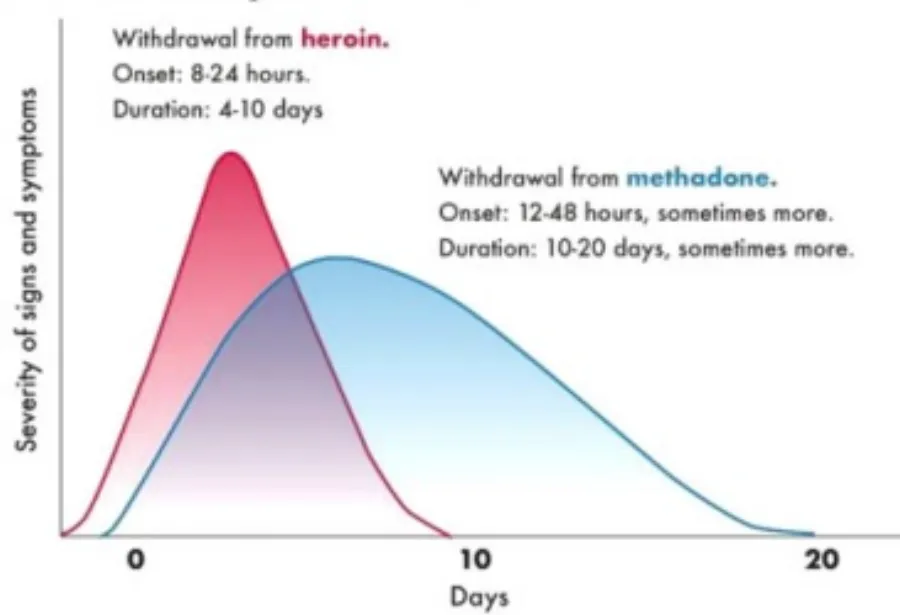
Symptoms resemble a severe flu. Management includes comfort medications, clonidine, and medication-assisted treatment with methadone or buprenorphine.
Opioid Withdrawal illustrated
Key points to remember
- Withdrawal causes flu-like symptoms: muscle aches, yawning, lacrimation, rhinorrhea, and sweating.
- GI symptoms include nausea, vomiting, abdominal cramping, and diarrhea.
- Other signs are dilated pupils (mydriasis), piloerection (gooseflesh), restlessness, and insomnia.
- Opioid withdrawal is extremely distressing but rarely directly fatal in healthy adults.
- Dehydration from vomiting and diarrhea is the main physical danger.
- Clonidine reduces autonomic symptoms; methadone and buprenorphine ease withdrawal and craving.
Signs & symptoms
- Yawning, lacrimation, rhinorrhea
- Dilated pupils, piloerection
- N/V/D, cramps, muscle aches
Nursing priorities
- Assess withdrawal severity (e.g., COWS scale) and monitor hydration and vital signs.
- Administer prescribed comfort medications: clonidine, antiemetics, antidiarrheals, and analgesics.
- Provide medication-assisted treatment such as methadone or buprenorphine as ordered.
- Replace fluids and electrolytes lost to vomiting and diarrhea.
- Offer emotional support and connect the client to recovery and counseling resources.
Labs & values
Patient teaching
- Withdrawal is temporary; medication-assisted treatment greatly reduces discomfort and relapse.
- Stay hydrated and use prescribed comfort medications as directed.
- Reduced tolerance after detox makes relapse overdose deadly; carry naloxone and engage support.
Red flags: report now
- Severe vomiting and diarrhea can cause dangerous dehydration and electrolyte loss requiring prompt fluids.
- Buprenorphine given too early can precipitate acute withdrawal - confirm appropriate timing.
- Pregnant clients in opioid withdrawal risk fetal harm and need specialized management.
- Naloxone reversal can trigger sudden severe withdrawal and must be monitored.
References
Clinical references for this topic