Spreading redness, increased drainage, or new fever during treatment signals worsening infection; report it.
Before you read
Test yourself first: 2 questions
Question 1 of 2
A client with suspected osteomyelitis of the tibia is admitted. Which clinical findings does the nurse expect?
Answer: B. Acute osteomyelitis presents with bone infection signs: localized bone pain and tenderness, swelling, warmth, and erythema over the site, fever, malaise, and often an elevated WBC count and ESR/CRP. Decreased temperature and weight gain are not features.
Question 2 of 2
The nurse reviews labs for a client with osteomyelitis of the femur. Which result would the nurse expect to be ELEVATED with this infection?
Answer: B. Osteomyelitis is a bone infection, so inflammatory markers such as the white blood cell count, erythrocyte sedimentation rate, and C-reactive protein are typically elevated. Serum potassium, platelet count, and serum albumin are not specific markers of bone infection and would not be expected to rise as a result of it.
Keep the streak going with more questions like these, each with a full rationale.
What is osteomyelitis?
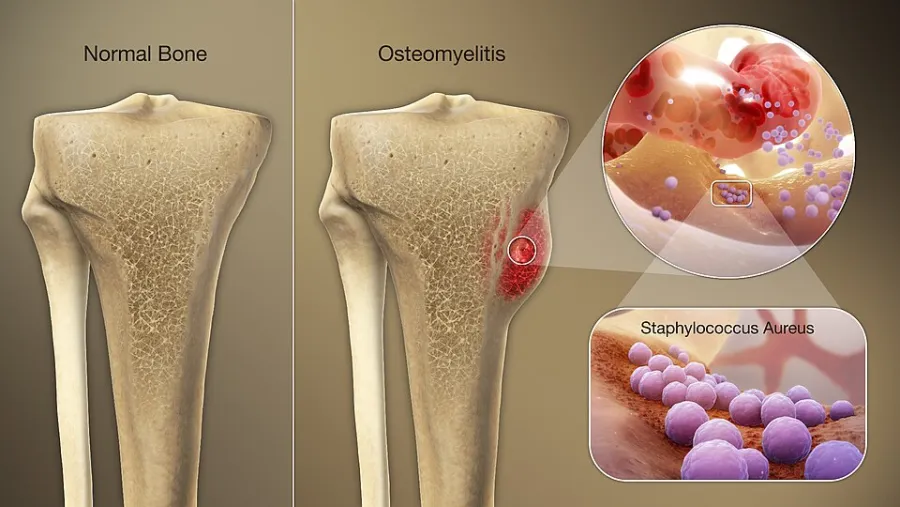
It can become chronic and difficult to treat because antibiotics penetrate infected bone poorly. Diabetics and those with open fractures or orthopedic hardware are at high risk.
Osteomyelitis illustrated
Key points to remember
- Acute signs include bone pain that is constant and worsens with movement, fever, chills, and malaise.
- The affected area is warm, swollen, tender, and erythematous with possible drainage.
- Staphylococcus aureus is the most common causative organism.
- Chronic osteomyelitis features a draining sinus tract and persistent or recurrent infection.
- Diabetes, peripheral vascular disease, open fractures, and prosthetic implants increase risk.
- Treatment requires prolonged IV antibiotics, often 4 to 6 weeks or longer.
Common causes
- S. aureus most common organism
- Open fx, surgery, blood spread
Signs & symptoms
- Bone pain, fever, ↑ WBC/ESR/CRP
- Redness, warmth, drainage at site
Nursing priorities
- Administer long-term IV antibiotics on schedule and monitor for therapeutic response.
- Immobilize and gently handle the affected limb to reduce pain and prevent fracture.
- Maintain strict aseptic technique during dressing changes of any wounds.
- Manage pain and elevate the affected extremity to decrease swelling.
- Provide adequate nutrition with protein and vitamin C to support tissue healing.
Labs & values
Patient teaching
- Complete the entire prolonged course of antibiotics even after symptoms improve.
- Care for a central line at home safely and report fever, increased pain, or new drainage.
- Eat a high-protein, high-vitamin-C diet to promote bone and tissue healing.
Red flags: report now
- Spreading redness, increased drainage, or new fever during treatment signals worsening infection; report it.
- Signs of sepsis (hypotension, tachycardia, high fever, confusion) require immediate escalation.
- Never disrupt aseptic technique during wound care, as it can introduce new organisms.
References
Clinical references for this topic