Intermittent claudication is cramping leg pain with walking that is relieved by rest.
Before you read
Test yourself first: 5 questions
Question 1 of 5
A client with peripheral arterial disease (PAD) reports leg pain that occurs with walking and is relieved by rest. The nurse documents this classic finding as which term?
Answer: A. Reproducible muscle pain with exercise that resolves with rest is intermittent claudication, the hallmark of PAD caused by inadequate arterial perfusion during increased demand. Rest pain is more advanced ischemia. Venous insufficiency and phlebitis relate to venous disease.
Question 2 of 5
Which assessment finding does the nurse expect in a client with peripheral ARTERIAL disease of the lower extremities?
Answer: A. Arterial insufficiency produces cool, pale, shiny, hairless skin with diminished or absent pedal pulses and dependent rubor; pain worsens with elevation. Brown hemosiderin staining, warm extremities, and pitting edema are features of venous insufficiency, not arterial disease.
Question 3 of 5
A nurse is assessing breath sounds and hears loud, high-pitched, hollow sounds, normally heard only over the trachea, now present over the peripheral lung fields where soft vesicular sounds are expected. What does this abnormal finding suggest?
Answer: B. Bronchial (tracheal) breath sounds are normal over the trachea but abnormal when heard over peripheral lung fields. Their presence in the periphery suggests consolidation, as occurs in pneumonia, because dense lung tissue transmits these sounds outward.
Question 4 of 5
A client receiving IV potassium chloride reports burning at the IV site, and the nurse notes the infusion rate is set at 20 mEq/hour through a peripheral line. What is the nurse's priority action?
Answer: B. Potassium chloride is irritating to veins and must never be given by IV push. Peripheral infusion rates are typically limited to about 10 mEq/hour. The nurse should slow the infusion and reassess, never push KCl.
Question 5 of 5
A client sustained a head injury and was lucid immediately after, then rapidly deteriorated into unconsciousness. The CT shows an arterial bleed between the skull and dura. Which injury does this lucid-interval pattern classically describe?
Answer: A. An epidural (extradural) hematoma classically presents with a brief lucid interval followed by rapid deterioration as arterial bleeding (often the middle meningeal artery) accumulates between the skull and dura. Subdural hematomas (venous) develop more slowly; a concussion is transient; a contusion is bruised brain tissue without this hallmark pattern.
Keep the streak going with more questions like these, each with a full rationale.
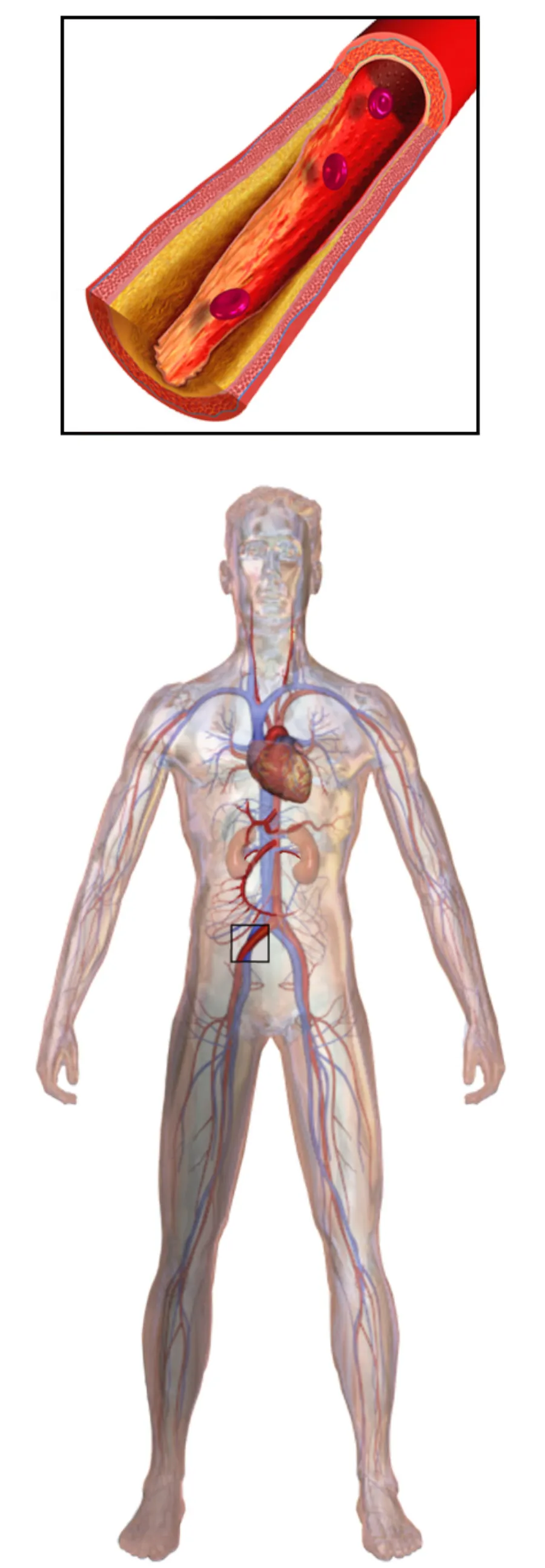
What is peripheral arterial disease?
The reduced arterial supply causes pain with activity (intermittent claudication), cool pale limbs, and poor wound healing. The key contrast for the exam is arterial versus venous insufficiency: arterial problems mean tissue is not getting enough oxygenated blood.
Peripheral Arterial Disease illustrated
Key points to remember
- Intermittent claudication is cramping leg pain with walking that is relieved by rest.
- Affected limbs are cool, pale, shiny, and hairless with diminished or absent pulses and thick toenails.
- Pain worsens with elevation and improves with dependent (dangling) positioning because gravity aids arterial flow.
- Arterial ulcers are painful, round, and on the toes or pressure points with little drainage.
- Major risk factors are smoking, diabetes, hypertension, and high cholesterol.
Signs & symptoms
- Intermittent claudication
- Cool, pale, hairless, shiny skin
- ↓ pulses, pain worse w/ elevation
- Pain relieved by dangling
Nursing priorities
- Assess and document peripheral pulses, skin color, temperature, capillary refill, and pain.
- Position the legs in a dependent or neutral position rather than elevated to promote arterial flow.
- Encourage a gradual walking program to promote collateral circulation as tolerated.
- Promote smoking cessation and protect the extremities from injury and temperature extremes.
- Administer antiplatelet medications and manage diabetes, hypertension, and cholesterol as ordered.
Labs & values
Patient teaching
- Stop smoking completely, as nicotine constricts arteries and worsens the disease.
- Inspect the feet daily, wear well-fitting shoes, avoid going barefoot, and protect the legs from heat, cold, and injury.
- Walk regularly to the point of pain then rest, keep the legs in a dependent position, and avoid crossing the legs or tight clothing.
Red flags: report now
- Sudden severe leg pain with pallor, pulselessness, coldness, and numbness signals acute arterial occlusion and is a limb-threatening emergency.
- A new non-healing ulcer or signs of gangrene must be reported immediately.
- Loss of a previously present pulse requires immediate provider notification.
References
Clinical references for this topic