Bile-stained (green) vomit suggests a different, lower obstruction and must be reported immediately.
Before you read
Test yourself first: 3 questions
Question 1 of 3
An infant with pyloric stenosis has had frequent projectile vomiting for several days. Which acid-base and electrolyte imbalance should the nurse anticipate?
Answer: B. Loss of gastric hydrochloric acid through vomiting in pyloric stenosis leads to hypochloremic, hypokalemic metabolic alkalosis. Metabolic acidosis and respiratory imbalances are not the expected result of prolonged gastric fluid loss.
Question 2 of 3
A 4-week-old infant is brought to the clinic with progressive, forceful, nonbilious vomiting after feedings and is hungry immediately afterward. The nurse suspects which disorder?
Answer: B. Hypertrophic pyloric stenosis classically presents at 3 to 6 weeks of age with projectile, nonbilious vomiting, persistent hunger, and a palpable olive-shaped mass in the right upper quadrant. Intussusception causes currant-jelly stools, GERD causes effortless spitting up, and gastroenteritis causes diarrhea and bilious vomiting.
Question 3 of 3
A client with carotid artery stenosis is scheduled for a carotid endarterectomy. Postoperatively, which assessment finding requires IMMEDIATE intervention?
Answer: A. After carotid endarterectomy, sudden swelling of the neck, difficulty breathing, or stridor may indicate a hematoma compressing the airway, an emergency requiring immediate action. A small amount of serosanguineous drainage, a sore throat, and a blood pressure within ordered parameters are expected. Airway compromise always takes priority.
Keep the streak going with more questions like these, each with a full rationale.
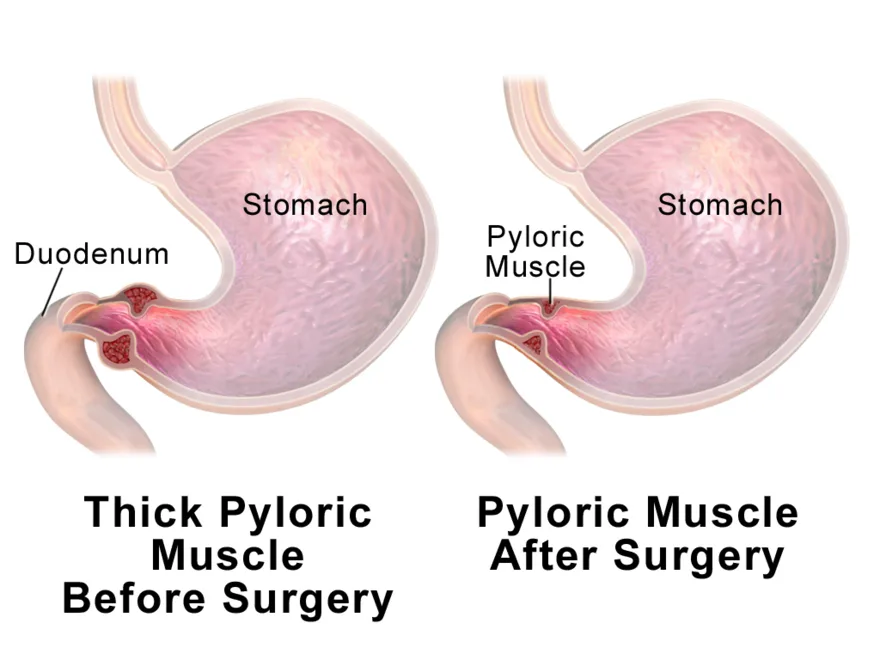
What is pyloric stenosis?
It typically appears in the first few weeks to 2 months of life, more often in firstborn males. The obstruction causes progressive nonbilious projectile vomiting after feeds, leading to dehydration and metabolic alkalosis.
Pyloric Stenosis illustrated
Key points to remember
- The hallmark is forceful, projectile vomiting of nonbilious (no bile) stomach contents shortly after feeding.
- The infant remains hungry and eager to feed again right after vomiting.
- A firm, movable, olive-shaped mass may be palpated in the right upper quadrant.
- Visible peristaltic waves may move left to right across the upper abdomen after feeding.
- Loss of stomach acid through vomiting causes hypochloremic, hypokalemic metabolic alkalosis.
- Progressive dehydration, weight loss or failure to gain, and decreased urine output develop.
Common causes
- Pyloric muscle hypertrophy
- Firstborn males, 2–8 wks old
Signs & symptoms
- Projectile NON-bilious vomiting
- Olive-shaped RUQ mass
- Hungry after vomiting, FTT
Nursing priorities
- Keep the infant NPO and provide IV fluids to correct dehydration and electrolyte imbalances before surgery.
- Correct fluid, chloride, and potassium imbalances and monitor electrolytes; surgery is delayed until the infant is stable.
- Monitor strict intake and output, daily weights, and vital signs.
- Prepare the family for pyloromyotomy (surgical correction), which is the definitive treatment.
- Postoperatively, begin small frequent feeds as ordered, position upright after feeds, and minimize handling.
Labs & values
Patient teaching
- After surgery, feed small frequent amounts as directed and burp the infant frequently.
- Hold the infant upright during and after feeds and avoid excessive handling to reduce vomiting.
- Some vomiting may continue for a day or two after surgery, but report persistent or projectile vomiting.
- Watch for and report fewer wet diapers, dry mouth, or unusual sleepiness as signs of dehydration.
Red flags: report now
- Bile-stained (green) vomit suggests a different, lower obstruction and must be reported immediately.
- Severe dehydration signs (sunken fontanelle, no wet diapers, lethargy) require prompt fluid resuscitation.
- Uncorrected electrolyte imbalance and alkalosis must be addressed before any surgery proceeds.
- Persistent vomiting after pyloromyotomy beyond the expected period should be reported.
References
Clinical references for this topic