New or worsening proteinuria, edema, hypertension, or rising creatinine signals lupus nephritis and must be reported.
Before you read
Test yourself first: 3 questions
Question 1 of 3
A client with systemic lupus erythematosus (SLE) is taught to:
Answer: B. Avoid sun exposure (photosensitivity triggers flares), use sunscreen and protective clothing, balance rest and activity, manage stress, and report signs of flare/infection. Sunbathing worsens the disease.
Question 2 of 3
An infant with a ductal-dependent cyanotic heart lesion is awaiting surgery. The nurse understands that prostaglandin E1 is being infused to:
Answer: B. In ductal-dependent lesions, prostaglandin E1 is infused to keep the ductus arteriosus open, maintaining blood flow between the pulmonary and systemic circulations until corrective surgery can be performed.
Question 3 of 3
A nurse caring for an infant with tetralogy of Fallot observes the infant become acutely cyanotic and irritable during feeding (a hypercyanotic, or tet, spell). Which is the priority nursing action?
Answer: A. During a hypercyanotic spell, placing the infant in the knee-chest position increases systemic vascular resistance and decreases the right-to-left shunt, improving pulmonary blood flow. Supplemental oxygen and calming the infant follow. Lying flat or stimulating the infant would worsen the spell.
Keep the streak going with more questions like these, each with a full rationale.
What is systemic lupus erythematosus?
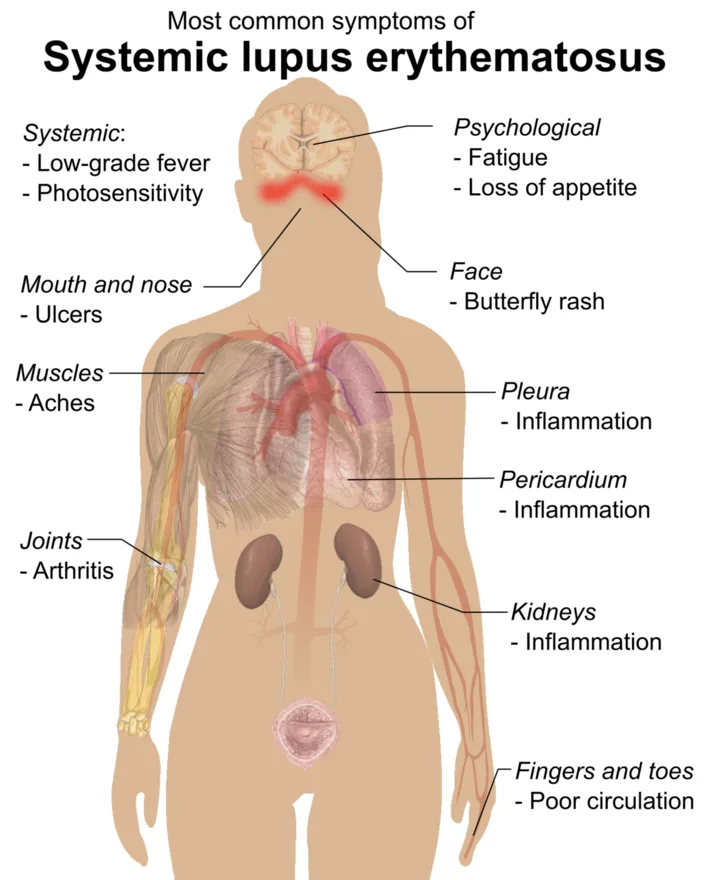
It follows a pattern of flares and remissions and most often affects women of childbearing age. The classic sign is a malar (butterfly) rash across the cheeks and nose that worsens with sun exposure. Lupus nephritis is the most serious organ complication.
Systemic Lupus Erythematosus illustrated
Key points to remember
- A malar butterfly-shaped facial rash and a photosensitive discoid rash are hallmark skin findings.
- Symmetric joint pain, swelling, fatigue, low-grade fever, and oral ulcers are common.
- Renal involvement (lupus nephritis) causes proteinuria, hematuria, and rising creatinine and is a leading cause of morbidity.
- Sun exposure, infection, and stress can trigger disease flares.
- Positive ANA is nearly universal; anti-dsDNA and anti-Smith antibodies are more specific to lupus.
- Serositis, pericarditis, pleuritis, and neurologic changes can occur during active disease.
Signs & symptoms
- Butterfly malar rash, photosensitive
- Joint pain, fatigue, fever
- Remissions + exacerbations
Nursing priorities
- Monitor renal function (urine protein, BUN, creatinine) and blood pressure for lupus nephritis.
- Administer corticosteroids, hydroxychloroquine, and immunosuppressants as ordered and monitor for side effects.
- Promote rest balanced with activity to manage fatigue and protect joints.
- Teach and reinforce strict sun protection and infection prevention.
- Assess for signs of flares and organ involvement at each encounter.
Labs & values
Patient teaching
- Avoid direct sun, wear protective clothing, and use broad-spectrum sunscreen daily to prevent flares.
- Take medications consistently, do not stop steroids abruptly, and keep follow-up appointments for organ monitoring.
- Prevent infection with hand hygiene and vaccines as advised, and report fever, swelling, or new symptoms early.
Red flags: report now
- New or worsening proteinuria, edema, hypertension, or rising creatinine signals lupus nephritis and must be reported.
- Chest pain, dyspnea, or a pericardial friction rub may indicate pericarditis or pleuritis needing urgent evaluation.
- New confusion, seizures, or severe headache can indicate CNS lupus and requires immediate attention.
- Because immunosuppression raises infection risk, any fever should be reported promptly.
References
Clinical references for this topic