
Red flag to remember
Carbamazepine: sore throat, fever, bruising, bleeding, or rash may indicate bone marrow suppression (agranulocytosis, aplastic anemia) or Stevens-Johnson syndrome — report immediately.
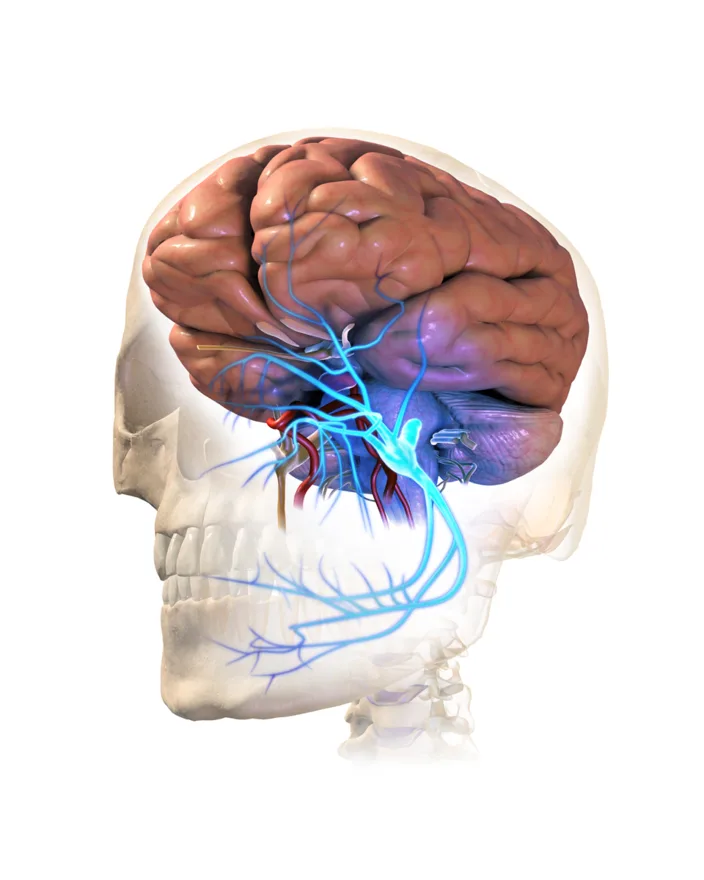
What is trigeminal neuralgia?
Attacks last seconds to a couple of minutes and are triggered by light touch, chewing, brushing teeth, cold air, or talking. The pain is one of the most intense known and is often triggered around the lips, cheek, nose, and gums. It is more common in older adults and may relate to vascular compression of the nerve.
Trigeminal Neuralgia illustrated
Key points to remember
- Involves cranial nerve V and produces brief, unilateral, paroxysmal stabbing or shock-like facial pain along the maxillary or mandibular branches.
- Triggers (trigger zones) include chewing, talking, brushing teeth, washing the face, a draft of cold air, or any light touch to the face.
- Carbamazepine is the first-line drug of choice; other options include oxcarbazepine, gabapentin, and baclofen.
- Microvascular decompression and percutaneous rhizotomy are surgical options for refractory cases.
- Patients often avoid eating, talking, and hygiene to prevent attacks, leading to weight loss, poor nutrition, and social withdrawal.
Signs & symptoms
- Sudden severe stabbing pain
- Unilateral, brief episodes
- Triggered by touch, chewing
Nursing priorities
- Administer and titrate carbamazepine as ordered and monitor for therapeutic effect and toxicity.
- Minimize environmental triggers: avoid drafts, provide lukewarm food and fluids, and avoid touching the face unnecessarily.
- Assess nutritional status and weight; offer small, soft, room-temperature meals chewed on the unaffected side.
- Provide a calm, low-stimulation environment and let the patient perform self-care during pain-free periods.
- Assess pain frequency, intensity, and triggers to evaluate treatment effectiveness.
Labs & values
Carbamazepine therapeutic level:4 to 12 mcg/mL
Monitor CBC and liver function periodically due to risk of marrow suppression and hepatotoxicity
Patient teaching
- Take carbamazepine exactly as prescribed; do not stop abruptly and attend lab monitoring appointments.
- Report sore throat, fever, easy bruising, or rash promptly as these can signal serious blood disorders.
- Use lukewarm water and a soft cloth or small soft toothbrush for gentle face and mouth care.
- Eat soft, room-temperature foods and chew on the unaffected side; maintain adequate nutrition.
- Avoid known triggers such as cold drafts, extremes of food temperature, and unnecessary face touching.
Red flags: report now
- Carbamazepine: sore throat, fever, bruising, bleeding, or rash may indicate bone marrow suppression (agranulocytosis, aplastic anemia) or Stevens-Johnson syndrome — report immediately.
- Sudden new neurologic deficits or persistent dull facial pain (rather than paroxysmal) may suggest a tumor or other secondary cause requiring evaluation.
References
Clinical references for this topic


Study Trigeminal Neuralgia in the app4,000+ NCLEX questions with a rationale on every answer, NGN case studies and timed mock exams.See how CinnaRN works
Start free Want more Physiological Adaptation questions?We'll email you a free set on Trigeminal Neuralgia. No account needed.
Was this helpful?