Sudden unilateral calf pain, warmth, and swelling may indicate deep vein thrombosis — report now.
Before you read
Test yourself first: 3 questions
Question 1 of 3
A client with cirrhosis has caput medusae and internal hemorrhoids. The nurse understands that these findings are direct consequences of:
Answer: A. Caput medusae (dilated periumbilical veins) and hemorrhoids result from portal hypertension. When scarring obstructs blood flow through the cirrhotic liver, pressure rises in the portal system and blood is diverted through collateral vessels, engorging veins around the umbilicus, esophagus, and rectum. These are not caused by low ammonia, excess clotting factors, or pancreatic enzymes.
Question 2 of 3
A client receiving IV potassium chloride reports burning at the IV site, and the nurse notes the infusion rate is set at 20 mEq/hour through a peripheral line. What is the nurse's priority action?
Answer: B. Potassium chloride is irritating to veins and must never be given by IV push. Peripheral infusion rates are typically limited to about 10 mEq/hour. The nurse should slow the infusion and reassess, never push KCl.
Question 3 of 3
A client with ESRD is being assessed before hemodialysis. Which finding indicates fluid volume overload that should be reported?
Answer: A. Signs of fluid volume overload in ESRD between dialysis sessions include weight gain, hypertension, jugular venous distention, peripheral edema, and crackles in the lungs from pulmonary congestion. Flat neck veins, a low blood pressure, and weight loss instead suggest hypovolemia, not overload.
Keep the streak going with more questions like these, each with a full rationale.
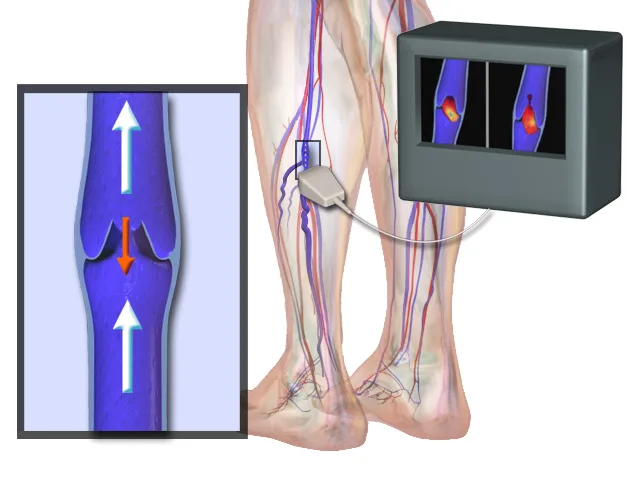
What is varicose veins?
Risk factors include prolonged standing, pregnancy, obesity, and family history. They cause aching, heaviness, and a cosmetic ropey appearance, and can progress to chronic venous insufficiency.
Varicose Veins illustrated
Key points to remember
- Result from incompetent (faulty) valves causing venous blood to pool and dilate the veins.
- Risk factors: prolonged standing, pregnancy, obesity, age, and family history.
- Symptoms include aching, heaviness, fatigue, and itching of the legs, worse with standing.
- Trendelenburg test assesses valve competence; relief comes with leg elevation.
- Conservative care: compression stockings, leg elevation, and weight management.
- Treatments include sclerotherapy, laser/radiofrequency ablation, and vein ligation/stripping.
Common causes
- Faulty valves → backflow
- Prolonged standing, pregnancy
Signs & symptoms
- Dilated, tortuous veins
- Aching, heaviness, edema
- Worse end of day
Nursing priorities
- Teach use of graduated compression stockings, applied before getting out of bed.
- Encourage frequent leg elevation above heart level and regular walking.
- Advise avoiding prolonged standing or sitting and crossing the legs.
- Promote weight management and skin care to prevent breakdown.
- Provide post-procedure care and monitor for bleeding or signs of DVT.
Patient teaching
- Wear compression stockings during the day and remove at night.
- Elevate the legs several times daily and walk regularly to aid venous return.
- Avoid standing or sitting for long periods; do not cross the legs at the knees.
- Maintain a healthy weight and protect leg skin from injury.
Red flags: report now
- Sudden unilateral calf pain, warmth, and swelling may indicate deep vein thrombosis — report now.
- A ruptured varicosity with significant bleeding requires elevation, pressure, and urgent care.
- Skin ulceration or signs of infection over a varicosity need evaluation.
References
Clinical references for this topic