Function is lost below the level of injury; cervical (C3-C5) injuries threaten the diaphragm and breathing.
Before you read
Test yourself first: 5 questions
Question 1 of 5
A client with a spinal cord injury at the T4 level develops hypotension, bradycardia, and warm, dry skin below the level of injury. The nurse identifies this as which type of shock?
Answer: A. Neurogenic shock results from loss of sympathetic tone after a high spinal cord injury, causing widespread vasodilation. The classic triad is hypotension, bradycardia, and warm, dry skin (rather than the cool, clammy skin of most shock states). Bradycardia distinguishes it because the sympathetic compensatory tachycardia is lost.
Question 2 of 5
A client with a spinal cord injury at the T4 level develops hypotension with a heart rate of 50 and warm dry skin below the level of injury. The nurse recognizes this as which type of shock?
Answer: A. Neurogenic shock results from loss of sympathetic tone after a spinal cord injury, typically above T6. It produces hypotension with bradycardia (not the usual compensatory tachycardia) and warm, dry skin due to vasodilation. This distinguishes it from hypovolemic and cardiogenic shock.
Question 3 of 5
A client with an acute spinal cord injury develops hypotension, bradycardia, and warm, dry skin below the level of injury shortly after the trauma. Which condition does the nurse suspect?
Answer: A. Neurogenic shock results from loss of sympathetic tone after a spinal cord injury (typically T6 or above), causing vasodilation with hypotension, bradycardia, and warm, dry skin. Hypovolemic and septic shock cause tachycardia; autonomic dysreflexia causes hypertension and occurs later, not in the acute phase.
Question 4 of 5
A client with a cervical spinal cord injury at C4 is admitted. Which is the nurse's HIGHEST priority assessment?
Answer: A. Injury at or above C4 can paralyze the diaphragm (innervated by C3 to C5), so respiratory status and airway are the highest priority. Loss of ventilatory drive is immediately life-threatening. Bladder distention, skin breakdown, and bowel sounds are important but secondary to airway and breathing.
Question 5 of 5
A client with a spinal cord injury at the cervical level is at risk for which thermoregulation problem?
Answer: A. Cervical and high thoracic injuries disrupt sympathetic control of vasoconstriction and sweating below the lesion, so the client becomes poikilothermic, taking on the surrounding temperature and unable to shiver or sweat to regulate body heat. The nurse monitors temperature and adjusts the environment. The client is not protected from temperature changes.
Keep the streak going with more questions like these, each with a full rationale.
What is spinal cord injury?
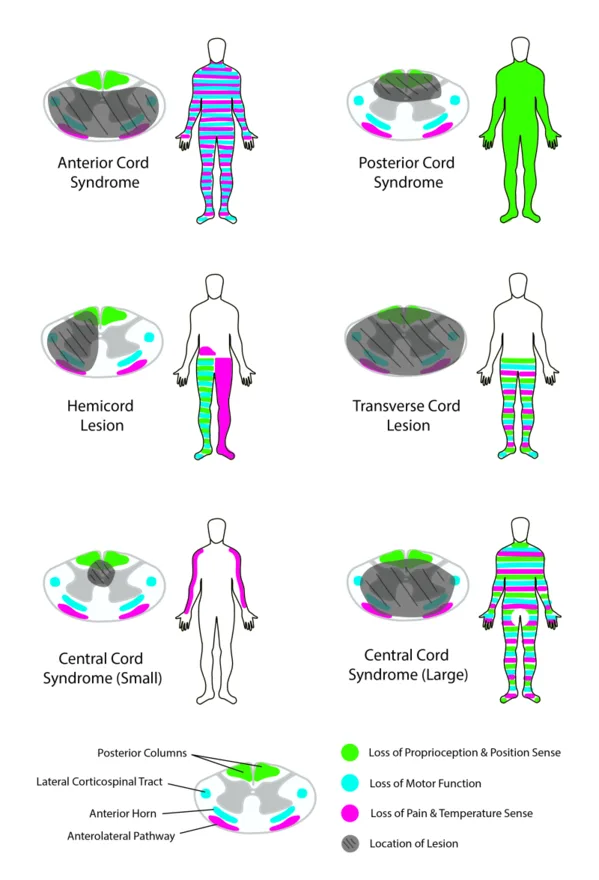
The higher the injury, the greater the loss of function; cervical injuries can impair breathing. Immediately after injury, spinal shock causes flaccid paralysis and loss of reflexes below the lesion. Immobilization to prevent further cord damage is the top priority.
Spinal Cord Injury illustrated
Key points to remember
- Function is lost below the level of injury; cervical (C3-C5) injuries threaten the diaphragm and breathing.
- Spinal shock is a temporary loss of all reflexes, motor, sensory, and autonomic function below the injury, with flaccid paralysis.
- Neurogenic shock (often with high thoracic/cervical injury) causes hypotension, bradycardia, and warm, dry skin from loss of sympathetic tone.
- Paraplegia involves the lower body (thoracic/lumbar injury); tetraplegia/quadriplegia involves all four limbs (cervical injury).
- Autonomic dysreflexia is a later life-threatening complication in injuries at or above T6.
Signs & symptoms
- Spinal shock: flaccid, areflexia
- Neurogenic shock: ↓ BP, bradycardia
- Loss motor/sensory below level
Nursing priorities
- Maintain a patent airway and adequate ventilation first; high cervical injuries may require mechanical ventilation.
- Immobilize the spine and maintain proper alignment to prevent further cord damage; logroll and keep the neck stabilized.
- Monitor for neurogenic shock: assess blood pressure and heart rate, and support circulation as ordered.
- Prevent complications of immobility: DVT prophylaxis, skin care/repositioning, and bowel and bladder programs.
- Perform serial neuro assessments to detect any change in motor or sensory level.
Patient teaching
- Learn skin inspection and pressure-relief techniques to prevent pressure injuries in insensate areas.
- Follow the prescribed bowel and bladder program and recognize early signs of autonomic dysreflexia.
- Participate in rehabilitation and use assistive devices to maximize independence.
Red flags: report now
- Any compromise of breathing in a cervical injury is a life-threatening emergency requiring immediate airway support.
- Hypotension with bradycardia (neurogenic shock) needs urgent intervention.
- Improper movement or removal of immobilization can cause permanent additional cord damage.
- Sudden severe hypertension with pounding headache in a T6-or-higher injury signals autonomic dysreflexia, an emergency.
References
Clinical references for this topic