
A good cheat sheet is not a shortcut — it is the last-mile format for knowledge you have already studied once. The night before a shift, the week before your NCLEX, on the bus to clinical: nobody re-reads a 40-page chapter. You scan one page that holds the labs, the danger signs, and the first action. That is what this library is: 509 one-page nursing cheat sheets, free to read, organized by the same eight client-need categories the NCLEX itself uses.
Browse by NCLEX category
The exam blueprint has eight client-need categories. So does the library — if your practice-test report says you are weak in one, start with that hub:
- Management of Care — delegation, prioritization, scope, consent (the largest slice of the RN exam)
- Pharmacological Therapies — the single most failed content area: meds, antidotes, safe dosing
- Safety & Infection Control — precautions, restraints, error prevention
- Physiological Adaptation — the deteriorating patient: DKA, shock, hemorrhage
- Reduction of Risk Potential — labs, diagnostics, post-procedure care
- Basic Care & Comfort — mobility, nutrition, elimination, rest
- Health Promotion & Maintenance — development, maternity, newborn, screening
- Psychosocial Integrity — mental health, coping, therapeutic communication
Start with the ten sheets the exam loves most
If you have two weeks and no plan, these ten topics show up relentlessly in practice banks and on test day:
- Lab values — the complete pack (know normals cold; know which abnormal value is an emergency)
- Standard & transmission-based precautions — airborne vs droplet vs contact
- Prioritization: ABCs first — the decision order behind every "who do you see first"
- The five rights of delegation
- What you can delegate to a UAP · and to an LPN/LVN
- Insulin types, onset & peak times — when each one crashes a patient
- DKA — recognition and first actions
- Heart failure — left vs right, meds, daily weights
- TB precautions — the N95/negative-pressure details examiners test
- Fall precautions — the least-restrictive-first logic
How to actually study from cheat sheets (so they stick)
Reading a reference sheet feels easy — that is its danger. Passive re-reading builds recognition, not recall. Use them like this instead:
- After questions, not instead of them. Miss a digoxin question → read the dig sheet → re-attempt the question in 48 hours. The sheet is the repair kit, the question is the diagnosis.
- Cover-and-recite. Cover the values column and say the normals out loud. If you can't produce them, you don't own them yet.
- One category per day, ten sheets max. Thirty half-read sheets beat nothing, but ten recited sheets beat thirty skimmed ones.
- Screenshot the five that scare you. Lock-screen-level familiarity is legitimate strategy the week of the exam.
For NCLEX-PN candidates
Most "nursing cheat sheet" collections are written for RNs and quietly assume RN scope. That breaks exactly where the PN exam is pickiest: scope of practice and delegation direction. The sheets here mark scope-sensitive content, and the app has a dedicated PN track whose questions are written to PN scope — reinforcing, monitoring, and contributing to the care plan rather than initiating it. If you are a PN candidate, drill delegation principles until the "who can do what" table is reflex.
Read them here, or take them offline
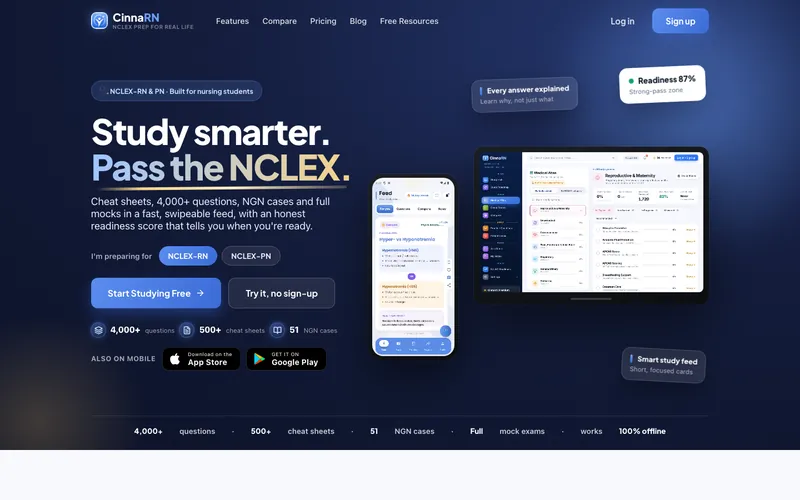
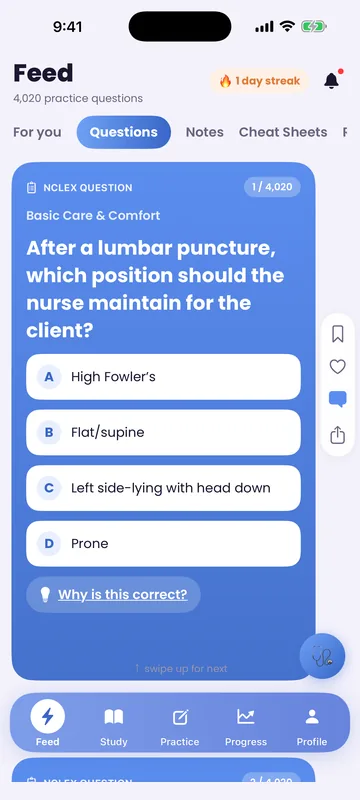
Every sheet on this site is free to read in your browser. The same 509 sheets ship inside the CinnaRN app — searchable, organized, and fully offline, next to 4,000+ practice questions with rationales and an on-device AI tutor that explains any sheet you're stuck on. Clinical sites with no signal, commutes, break rooms: the library goes with you.