Stable angina is triggered by exertion, emotion, heavy meals, or cold and is relieved by rest and nitroglycerin within minutes.
Before you read
Test yourself first: 3 questions
Question 1 of 3
A client with stable angina takes nitroglycerin for chest pain that does not resolve after three doses (5 minutes apart). The nurse teaches the client to:
Answer: B. When chest pain persists despite nitroglycerin (current guidance: as soon as the first dose fails to relieve it; here after the maximum doses), call 911 — unrelieved pain may indicate a myocardial infarction. Waiting at home risks worsening damage.
Question 2 of 3
A client receiving an IV nitroglycerin infusion for unstable angina reports a throbbing headache. The nurse understands that this finding indicates which of the following?
Answer: B. Headache is a very common and expected effect of nitroglycerin because the drug causes vasodilation of cerebral vessels; it is not a sign of an allergic reaction or overdose. The infusion is typically continued and the headache managed with acetaminophen unless hypotension develops. It does not signal that the drug should be stopped immediately or that it is ineffective.
Question 3 of 3
A nurse is caring for a client with aortic stenosis. Which classic triad of symptoms should the nurse monitor for?
Answer: B. The classic triad of symptomatic aortic stenosis is angina, syncope (especially exertional), and exertional dyspnea from heart failure. The narrowed valve obstructs left ventricular outflow, limiting cardiac output. Fever, productive cough, and peripheral cyanosis at rest are not the defining triad.
Keep the streak going with more questions like these, each with a full rationale.
What is angina pectoris?
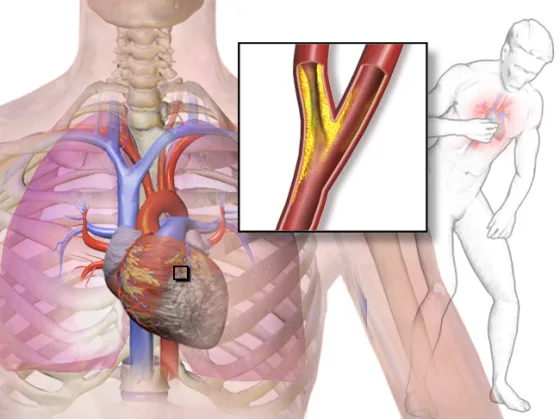
Unlike a myocardial infarction, the ischemia is reversible and does not cause permanent muscle death. Stable angina is predictable and relieved by rest or nitroglycerin; unstable angina occurs at rest or with increasing frequency and is a medical emergency on the path to MI.
Angina Pectoris illustrated
Key points to remember
- Stable angina is triggered by exertion, emotion, heavy meals, or cold and is relieved by rest and nitroglycerin within minutes.
- Unstable angina occurs at rest, lasts longer, and is increasing in frequency or severity, signaling impending infarction.
- Variant (Prinzmetal) angina is caused by coronary artery spasm and often occurs at rest, frequently overnight.
- Pain is typically substernal pressure or tightness that may radiate to the arm, jaw, or back, lasting less than 15 minutes.
- Cardiac biomarkers such as troponin remain normal in angina, which distinguishes it from myocardial infarction.
Signs & symptoms
- Pressure/tightness < 15 min
- Relieved by rest + nitro
Nursing priorities
- Stop activity, have the patient rest, and assess pain, vital signs, and obtain an ECG.
- Administer sublingual nitroglycerin every 5 minutes up to 3 doses, checking blood pressure before each dose.
- Apply oxygen if the patient is hypoxic and provide continuous cardiac monitoring.
- If pain is unrelieved after 3 nitroglycerin doses, treat as an evolving MI and notify the provider immediately.
- Reduce myocardial oxygen demand by promoting rest and calm and managing anxiety.
Labs & values
Patient teaching
- Carry nitroglycerin at all times, store it in a dark container, and replace it every 6 months as potency fades.
- Take nitroglycerin sitting down because it can cause dizziness and low blood pressure, and expect a brief headache.
- Avoid known triggers such as heavy exertion, large meals, extreme cold, and smoking, and report any change in pain pattern.
Red flags: report now
- Chest pain unrelieved by 3 nitroglycerin doses over 15 minutes may indicate myocardial infarction and requires emergency care.
- New onset of pain at rest or pain that is increasing in frequency or duration (unstable angina) must be reported immediately.
- Do not give nitroglycerin if systolic blood pressure is below 90 mmHg or the patient has taken erectile dysfunction drugs (risk of severe hypotension).
References
Clinical references for this topic