Inflammation is transmural and discontinuous with healthy skip areas between diseased segments.
Before you read
Test yourself first: 4 questions
Question 1 of 4
The nurse is comparing Crohn disease and ulcerative colitis. Which feature is most specific to Crohn disease?
Answer: B. Crohn disease is characterized by transmural inflammation with discontinuous skip lesions that can affect any part of the GI tract from mouth to anus, often with fistula and stricture formation. Ulcerative colitis involves continuous mucosal inflammation limited to the colon and rectum and is more associated with bloody diarrhea and a higher colon cancer risk. Skip lesions with transmural involvement are the hallmark distinguishing Crohn disease.
Question 2 of 4
The nurse is assessing a newborn for Hirschsprung disease. Which finding in the first 48 hours of life is most suggestive of this disorder?
Answer: A. Failure to pass meconium within 24 to 48 hours of birth is a hallmark of Hirschsprung disease, caused by absence of ganglion cells in a segment of the distal colon. Frequent loose stools, projectile vomiting, and excessive meconium passage are not characteristic.
Question 3 of 4
A child is diagnosed with hand-foot-and-mouth disease. The nurse expects to find which characteristic lesions?
Answer: A. Hand-foot-and-mouth disease, caused by coxsackievirus, produces painful vesicular lesions in the mouth and on the palms and soles. It is usually self-limiting, and care focuses on hydration and comfort.
Question 4 of 4
A nurse is assessing a 78-year-old client. Which finding is a normal age-related change rather than a sign of disease?
Answer: A. Decreased skin elasticity and turgor is an expected aging change due to loss of subcutaneous tissue and collagen. Resting tachycardia, productive cough, and a new confusion onset are not normal aging and warrant evaluation.
Keep the streak going with more questions like these, each with a full rationale.
What is crohn disease?
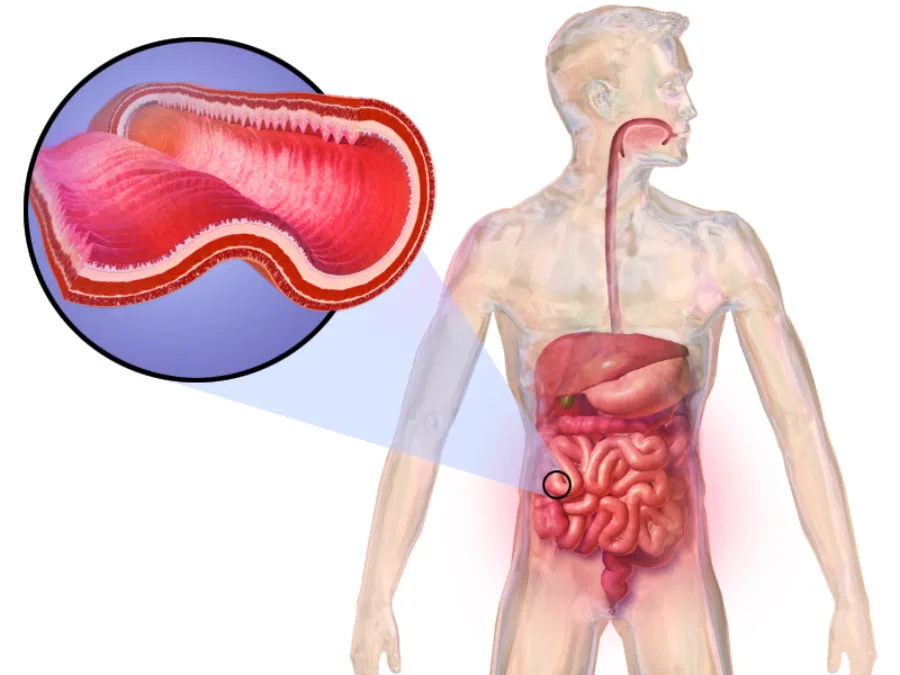
Inflammation is transmural (through all bowel wall layers) and occurs in patchy skip lesions, giving a cobblestone appearance. This deep, segmental inflammation predisposes to fistulas, strictures, and abscesses. It causes malabsorption and weight loss.
Crohn Disease illustrated
Key points to remember
- Inflammation is transmural and discontinuous with healthy skip areas between diseased segments.
- It commonly affects the terminal ileum but can occur anywhere from mouth to anus.
- Chronic non-bloody diarrhea, right lower quadrant cramping pain, and weight loss are typical.
- Transmural disease leads to fistulas, abscesses, strictures, and bowel obstruction.
- Malabsorption causes nutritional deficiencies, including B12, iron, and fat-soluble vitamins.
- Steatorrhea (fatty, foul stools) reflects impaired fat absorption.
Signs & symptoms
- RLQ pain, NON-bloody diarrhea
- 5+ loose stools/day, wt loss
- steatorrhea, malabsorption
Nursing priorities
- Administer prescribed anti-inflammatory and immunosuppressive therapy (aminosalicylates, corticosteroids, biologics).
- Monitor nutrition status, weight, and electrolytes; provide high-calorie, high-protein, low-residue diet as tolerated.
- Assess for complications such as fistulas, abscesses, and obstruction.
- Track stool frequency and characteristics and maintain fluid and electrolyte balance.
- Provide perianal skin care due to frequent stools and possible fistula drainage.
Labs & values
Patient teaching
- Identify and avoid trigger foods; eat small frequent low-residue meals during flares.
- Take medications consistently even when feeling well to maintain remission.
- Report increasing pain, fever, drainage, or signs of obstruction promptly.
Red flags: report now
- Signs of bowel obstruction (distention, vomiting, absent stool/flatus) require urgent evaluation.
- Fever, severe abdominal pain, and rigidity may indicate abscess or perforation.
- Sudden increase in pain with peritoneal signs must be reported immediately.
References
Clinical references for this topic