Pyrosis (heartburn) is the hallmark, often worse after meals and when lying down or bending over.
Before you read
Test yourself first: 2 questions
Question 1 of 2
A client with gastroesophageal reflux disease (GERD) is taught lifestyle measures including:
Answer: B. GERD measures: avoid large/fatty/spicy meals, caffeine, alcohol, and lying down for 2–3 hours after eating; elevate the head of the bed, maintain a healthy weight, and stop smoking. Lying down right after a large meal worsens reflux.
Question 2 of 2
A 4-week-old infant is brought to the clinic with progressive, forceful, nonbilious vomiting after feedings and is hungry immediately afterward. The nurse suspects which disorder?
Answer: B. Hypertrophic pyloric stenosis classically presents at 3 to 6 weeks of age with projectile, nonbilious vomiting, persistent hunger, and a palpable olive-shaped mass in the right upper quadrant. Intussusception causes currant-jelly stools, GERD causes effortless spitting up, and gastroenteritis causes diarrhea and bilious vomiting.
Keep the streak going with more questions like these, each with a full rationale.
What is gerd?
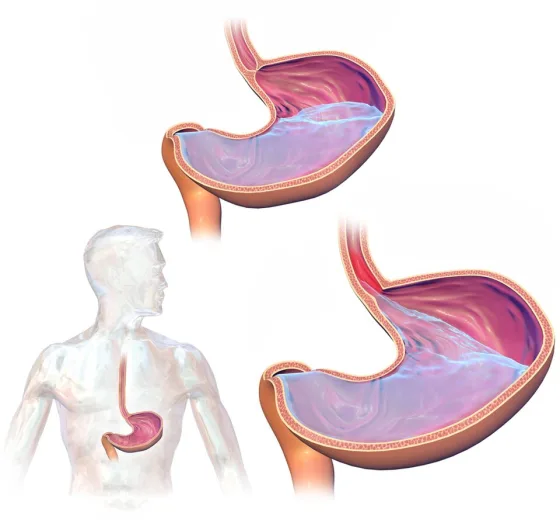
Chronic acid exposure irritates the esophageal lining, causing heartburn and, over time, esophageal damage. Risk factors include obesity, hiatal hernia, smoking, and certain foods. Untreated GERD can lead to Barrett esophagus, a precancerous change.
GERD illustrated
Key points to remember
- Pyrosis (heartburn) is the hallmark, often worse after meals and when lying down or bending over.
- Regurgitation, a sour or bitter taste, and a sensation of food sticking (dysphagia) may occur.
- A weakened lower esophageal sphincter allows acidic gastric contents to reflux into the esophagus.
- Chronic cough, hoarseness, and nighttime symptoms can result from acid irritation.
- Barrett esophagus, a precancerous mucosal change, can develop from long-term reflux.
- Reflux pain can mimic cardiac chest pain and must be differentiated from angina.
Signs & symptoms
- heartburn, regurgitation, dyspepsia
- dysphagia, chronic cough, hoarse
Nursing priorities
- Teach the patient to remain upright for 2-3 hours after eating and to elevate the head of the bed.
- Administer proton pump inhibitors or H2 blockers as prescribed to suppress acid.
- Encourage small, frequent meals and avoidance of trigger foods.
- Promote weight loss and smoking cessation to reduce reflux.
- Educate on avoiding late-night eating and lying down soon after meals.
Patient teaching
- Avoid caffeine, chocolate, peppermint, fatty/fried foods, citrus, tomatoes, and alcohol that relax the sphincter or increase acid.
- Stay upright after meals, elevate the head of the bed, and avoid eating within 3 hours of bedtime.
- Lose weight if overweight, stop smoking, and avoid tight clothing around the abdomen.
Red flags: report now
- Chest pain must be evaluated to rule out cardiac causes before assuming reflux.
- Progressive dysphagia, weight loss, or vomiting blood warrants prompt evaluation for complications.
- Persistent symptoms despite therapy require provider follow-up for possible Barrett esophagus.
References
Clinical references for this topic