Report signs of acute chest syndrome: chest pain, fever, dyspnea, or falling oxygen saturation.
Before you read
Test yourself first: 3 questions
Question 1 of 3
A client with sickle cell disease is admitted in vaso-occlusive crisis. Which intervention is the nurse's priority?
Answer: C. Vaso-occlusive crisis causes severe ischemic pain from sickled cells obstructing capillaries. Priority care is hydration with IV fluids and oxygen to reduce sickling, along with prompt analgesia. Tissue oxygenation and rehydration directly target the pathophysiology of the crisis, so administering oxygen and IV fluids is the priority intervention.
Question 2 of 3
A nurse is reviewing a hemoglobin electrophoresis result that confirms sickle cell trait. What does the nurse understand about this result?
Answer: B. Sickle cell trait means the client is a heterozygous carrier with one normal hemoglobin A gene and one sickle hemoglobin S gene. These individuals are usually asymptomatic but can pass the gene to offspring and may sickle under extreme hypoxia, dehydration, or high altitude. It is not the same as sickle cell disease, which is the homozygous form.
Question 3 of 3
A client with burns covering 40% of the body surface area is 18 hours post injury. Which electrolyte shift does the nurse expect during this emergent phase?
Answer: B. In the first 24-48 hours after a major burn (emergent/fluid shift phase), fluid and potassium move out of damaged cells into the extracellular space, and massive capillary leak occurs. The result is hyperkalemia (from cell destruction) along with hyponatremia as sodium is trapped in edema fluid. Hypokalemia develops later in the diuretic (recovery) phase.
Keep the streak going with more questions like these, each with a full rationale.
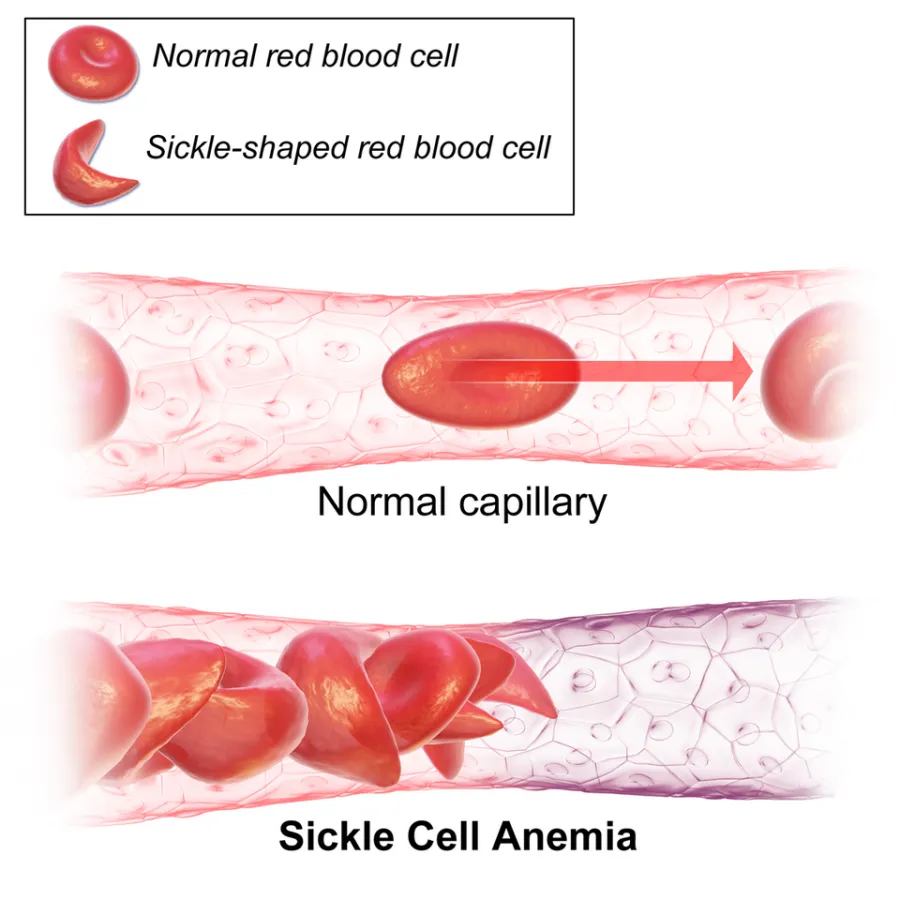
What is sickle cell crisis?
Triggers include hypoxia, dehydration, infection, cold, stress, and high altitude. It matters because severe pain and ischemic organ/tissue damage result, and untreated crises can be life-threatening. Memory aid for prevention: avoid the things that deoxygenate or dehydrate.
Sickle Cell Crisis illustrated
Key points to remember
- Vaso-occlusion causes severe pain, most often in the chest, abdomen, back, and joints.
- Dehydration, hypoxia, infection, and cold are the main precipitating triggers.
- Acute chest syndrome (chest pain, fever, hypoxia, infiltrate) is a leading cause of death.
- Splenic sequestration causes a sudden drop in hemoglobin and circulatory collapse.
- Priapism, swelling of hands and feet (dactylitis), and jaundice can occur.
- This is an autosomal recessive disorder seen most in patients of African descent.
Signs & symptoms
- SEVERE pain (vaso-occlusion)
- swelling joints, jaundice, fever
Nursing priorities
- Provide oxygen to relieve hypoxia and reduce further sickling.
- Hydrate aggressively with IV fluids to reduce blood viscosity.
- Manage pain with scheduled opioids (often morphine) and avoid undertreating pain.
- Keep the patient warm and at rest to lower metabolic and oxygen demand.
- Monitor for infection and administer antibiotics promptly when ordered.
Labs & values
Patient teaching
- Drink plenty of fluids daily and avoid dehydration, especially in hot weather or with exercise.
- Avoid known triggers: high altitude, unpressurized flights, cold exposure, smoking, and strenuous exertion.
- Get recommended vaccines and seek care early for any fever, since infection can trigger a crisis.
Red flags: report now
- Report signs of acute chest syndrome: chest pain, fever, dyspnea, or falling oxygen saturation.
- Report a sudden enlarging spleen with falling hemoglobin (splenic sequestration) or signs of shock.
- Report new neurologic deficits suggesting stroke, or priapism lasting over a few hours.
- Never apply cold; cold promotes sickling and worsens the crisis.
References
Clinical references for this topic